


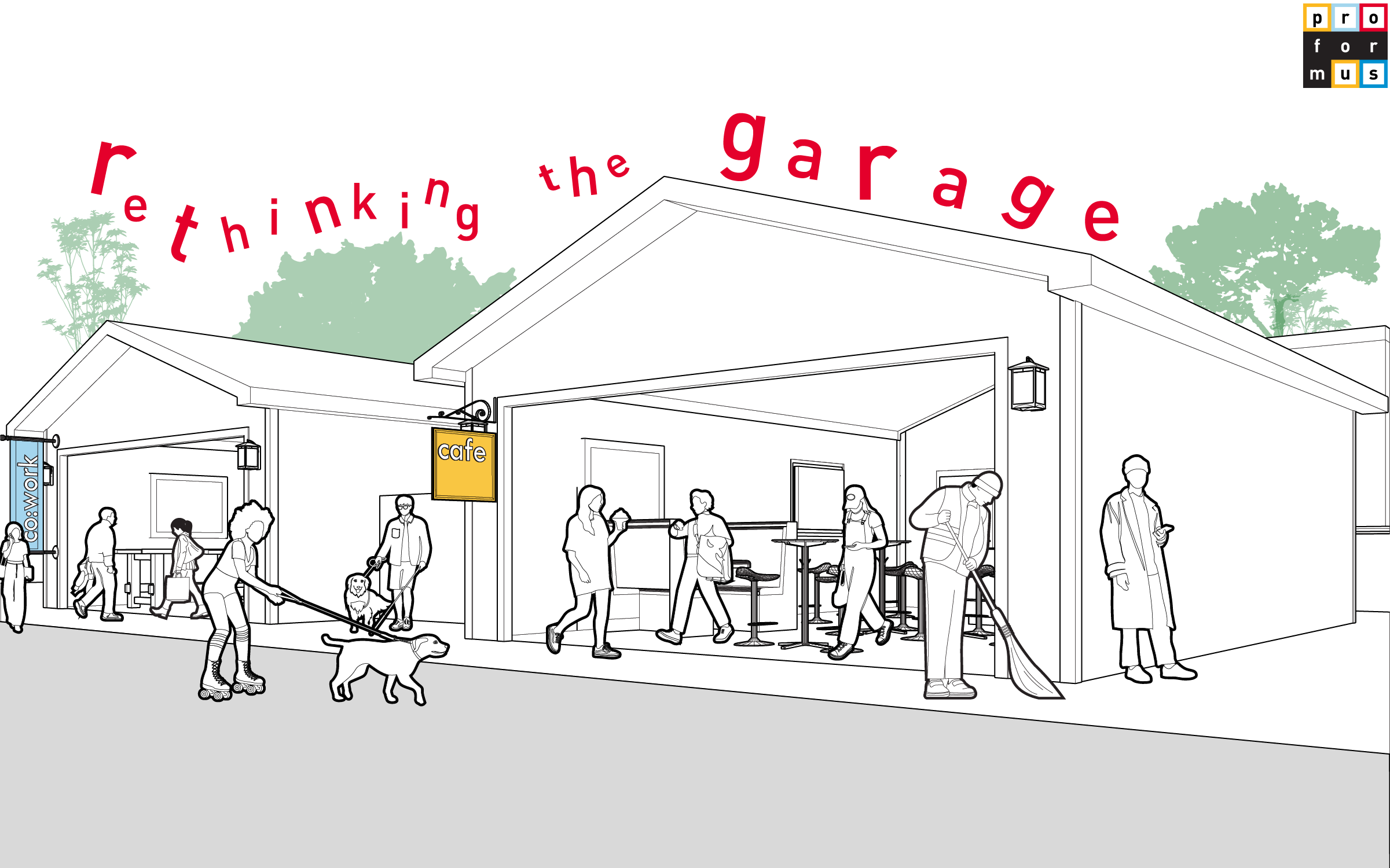
The next wave of urban reinvention isn’t rising in skylines, it’s right underneath them. Or, rather, next to them.
Across cities, garages are being redefined. Once car temples, they’re now studios, micro-homes, workshops, even cafés. As driving declines and housing demand surges, these overlooked spaces are proving to be one of the most flexible and affordable building types we have.
This isn’t about big plans or bold gestures, it’s about small, cumulative change.
A garage here, a garage there until the alley becomes a place again.
“The garage is no longer an afterthought. It’s a new threshold between private and public, work and life, storage and story.”
Why Garages Are Turning Inside Out
Several converging forces are reshaping this most ordinary of structures:
Automobility in retreat → Space in cities is running out, and efficiency now asks what we’ve long avoided: maybe the car shouldn’t own so much of it. Emerging data show that Gen Z is less attached to cars with fewer licenses, less reliance, and lower priority placed on ownership. Meanwhile, because car access is now nearly universal and per-capita vehicle use has likely peaked, the growth of car-dominated spatial regimes is entering a limit.
The housing squeeze → Cities need new units, but large developments often stumble on financing or zoning. A garage conversion can add gentle density at human scale. In places like California, thousands have already (perhaps illegally) turned their garages into living quarters for themselves or renters.
Work-from-home trends + microbusinesses → The pandemic and its aftermath have stimulated growth (or resurgence) in craft, artisan, boutique, and small-scale creative businesses. The garage offers privacy, acoustic buffer, and flexibility for post-pandemic work-from-home lifestyles that makes it perfect for studios, makers, or small entrepreneurs. The cheapest place to build your business is in the property you already live in. With a continuing increase in hyperlocal small businesses across the country, garages are easy places to start.
Who wants a table saw in the house, anyway?
Regulatory cracks opening → ADU ordinances and zoning overlays are turning the once-illegal emergent garage unit into the possible, finally!
Affordability & incrementality → Garages are cheap, adaptable, and reversible, essentially a playground for emergent urbanism.
Typologies of the New Garage
Before we get to what garages become, it helps to remember what they are.
We can think of them in two primary forms: street-facing and alley-facing.
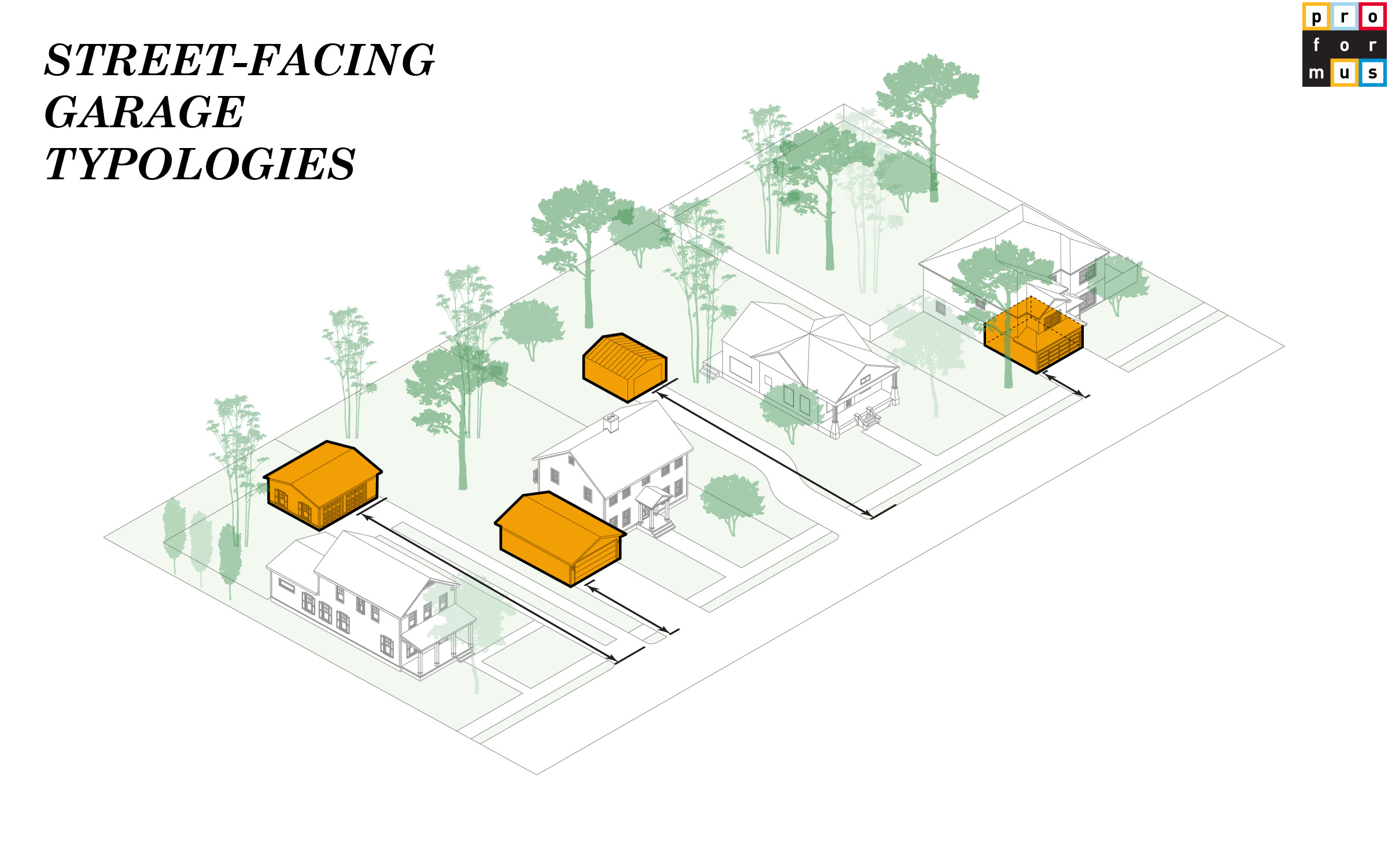


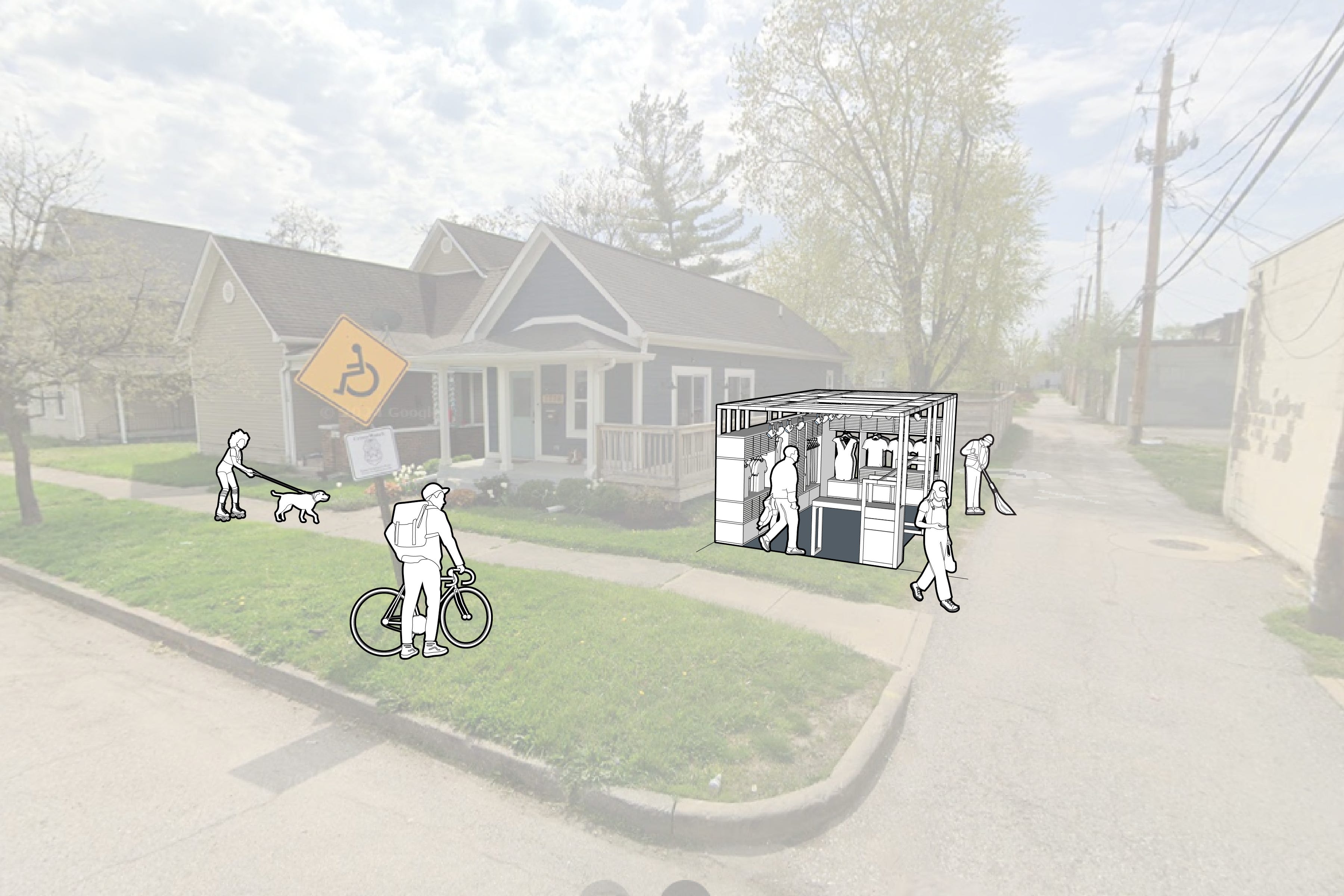
Typically embodied by more suburban development, street-facing garages sit at the front line of neighborhood life. They shape the public edge and how a parcel greets the sidewalk. When reimagined, they can repair the street, turning blank doors into transparent thresholds, or transforming dead facades into small civic rooms, studios, or micro-shops that invite eye contact and activity. In best case scenarios, they can replace the best emergent properties that porches originally held before they themselves were replaced with garages. Depth of the garage setback from the street is crucial for any sort of future activation: those closer to the street can create a more porch-like atmosphere, while those away create more of a sense of intrigue and intimacy - both have their advantages.
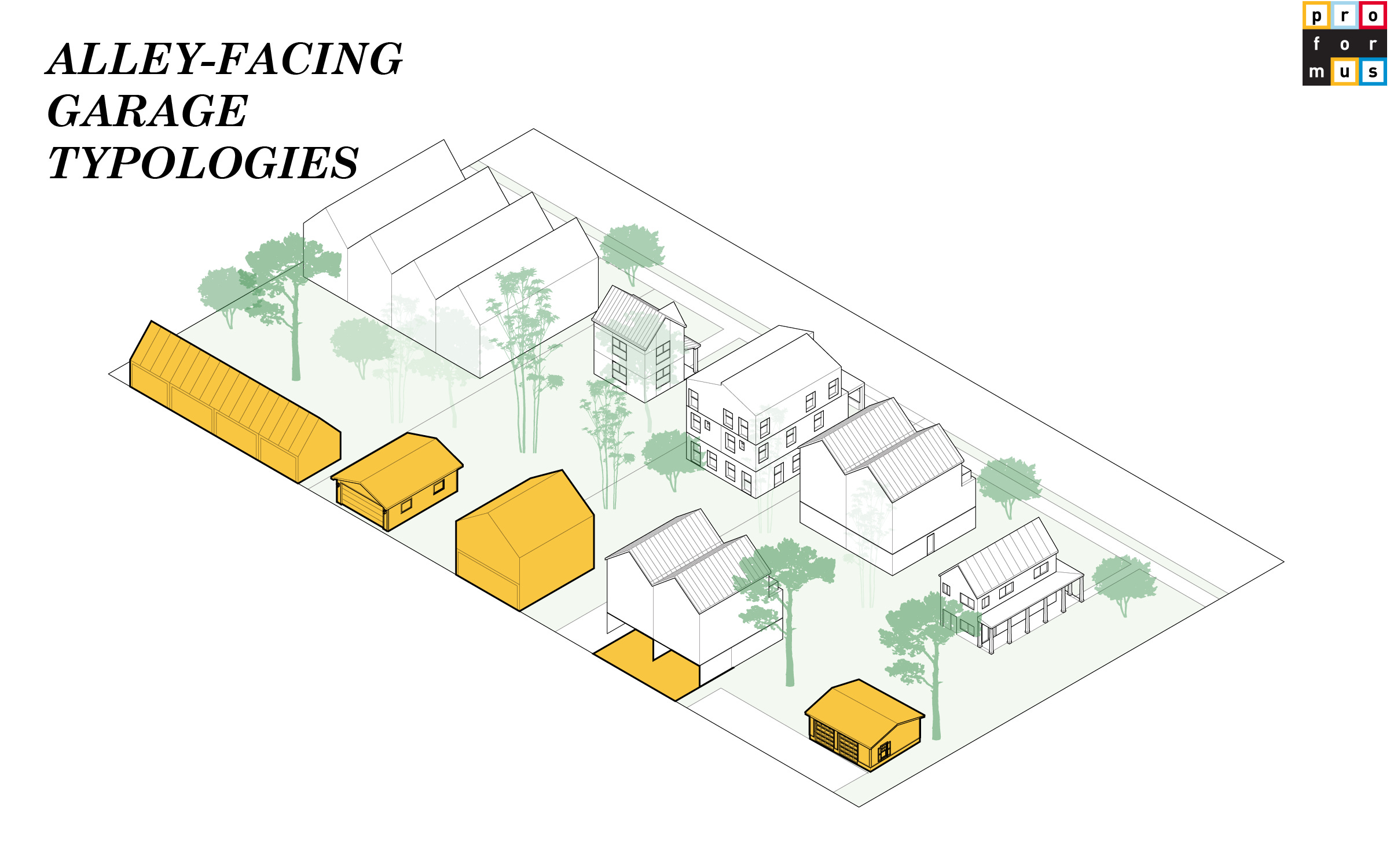
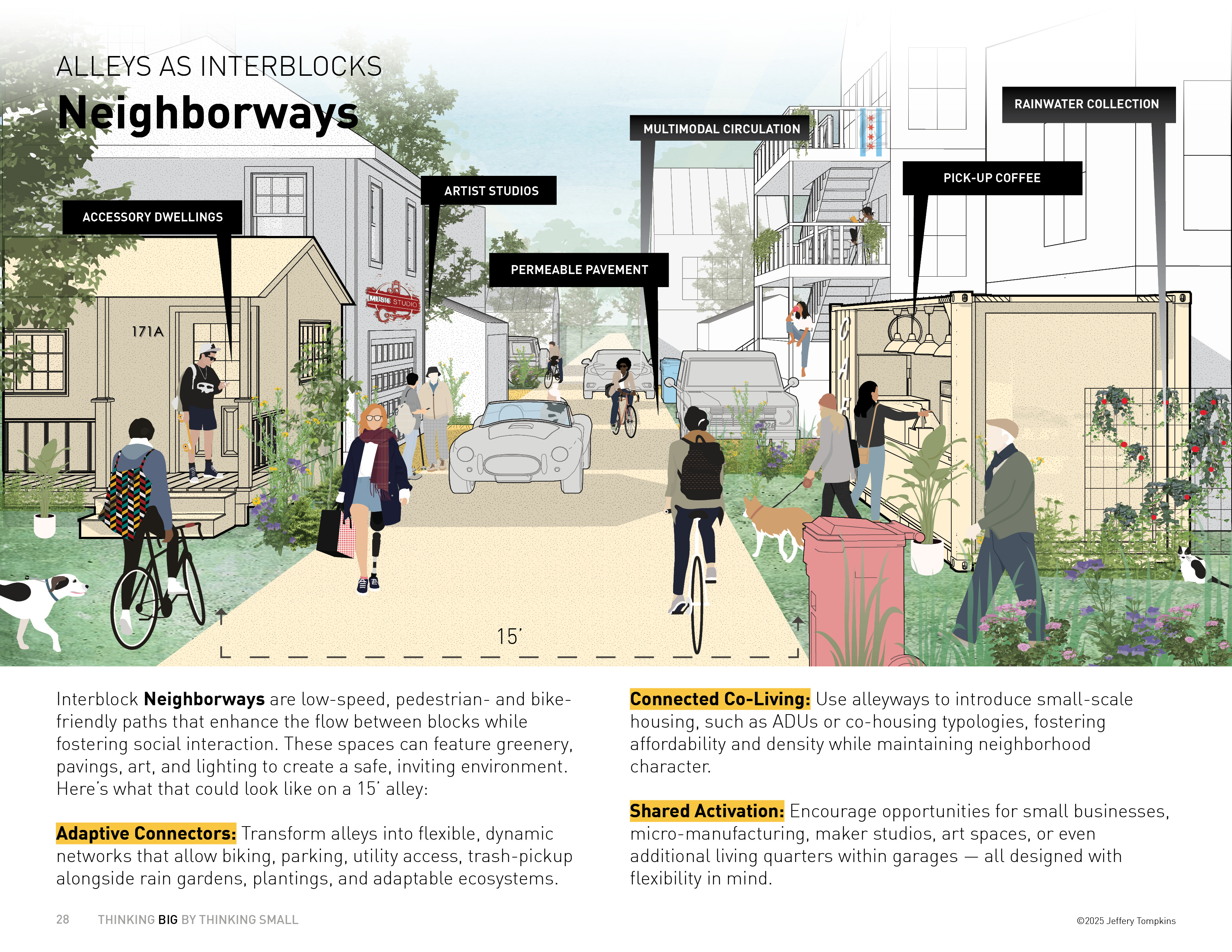
Alley-facing garages, by contrast, occupy the city’s hidden spine: the back-of-house realm of bins, fences, and utility poles. Usually found in older neighborhoods built before advent of automobile-centric development, they’re the quiet, forgotten spaces now primed for reuse. Their challenge is activation. How do we turn storage into social space? How do we make the alley walkable, livable, and alive again?
Both forms matter. One repairs the front, the other reclaims the back. Together, they expand the vocabulary of what a lot could be - the idea is that there is no true “front” of a lot if there doesn’t have to be.
We can rethink the lot to be two sides - and a microvillage of its own.
How to Make Garages into Places
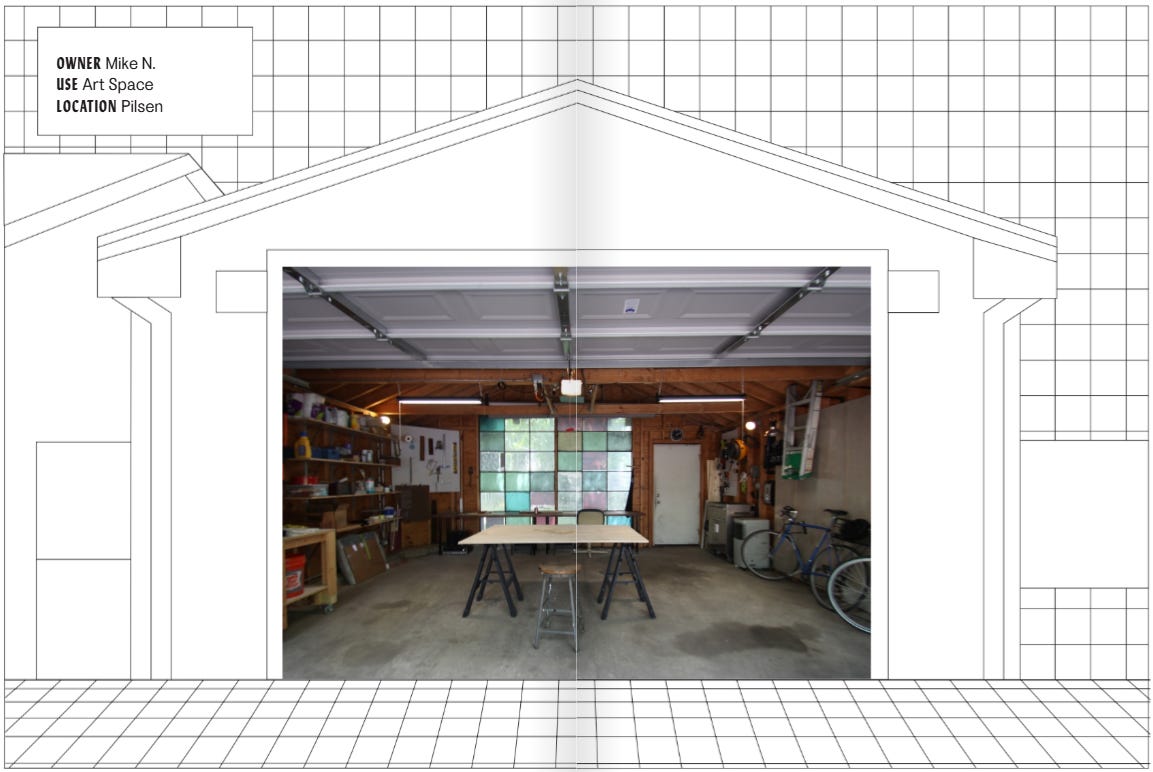
Garages are blank canvases but small moves matter.
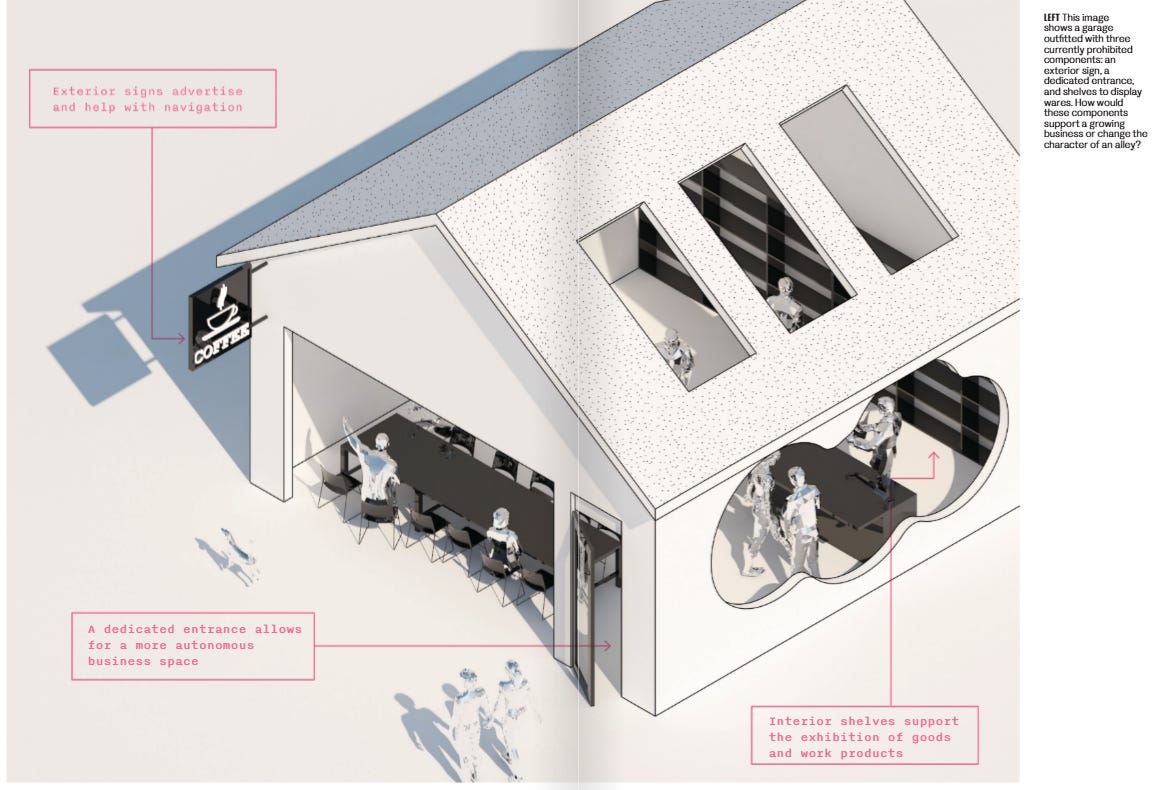
Face the lane → If alley-facing, treat alleys as real streets. Add windows, lights, and entry doors that open outward.
Stay flexible → Sliding walls or folding doors let interiors breathe.
Bring in light → Skylights and vents turn “storage” into “habitat.”
Be honest → Keep original shells. Retrofit instead of rebuild, it’s greener and more authentic.
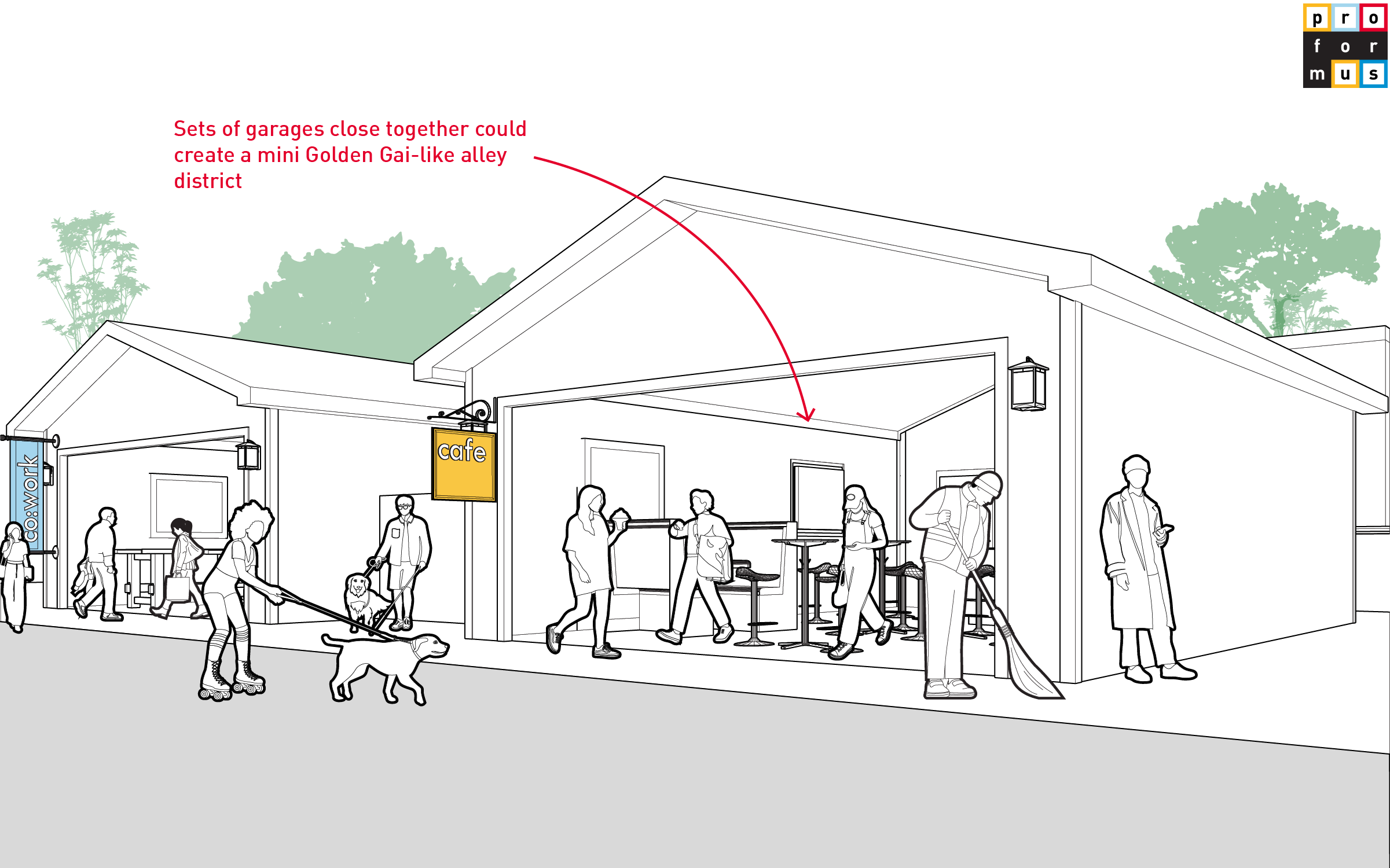
Link don’t isolate → Stitch garages together with shared paths, planting, and lighting.
Remember that design is less about transformation than revelation, it’s letting a space become what it could be.
The Place Effects
When garages come alive, the neighborhood does too.
Positive outcomes:
→ More active edges and connected centers of activity
→ A broader mix of uses and scales
→ Affordable, incremental density
→ New micro-economies and creative energy
Look out for:
→ Infrastructure strain (plumbing, fire access)
→ Regulatory friction (setbacks, zoning regulations on accessory structures)
→ Neighborhood buy-in (it should go without saying, but please establish relationships with your neighbors before opening a pop-up coworking hub in your garage - people like to be in the know.)
→ HOA restrictions
Cities can channel the positive and buffer the risks - if they design for coherence and permission.
How Cities Can Help
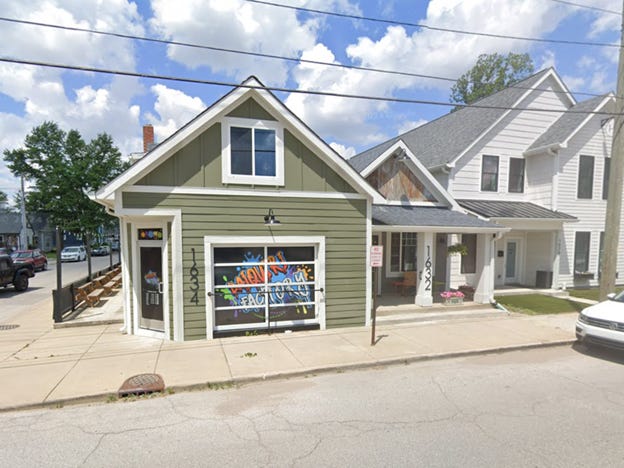
Land use, at its best, does two things: it creates wealth and it creates connection. The smallest regulatory gesture can unlock the largest field of imagination. When we permit garages to host small enterprises like a studio, a café, or a makerspace, we invite both economy and empathy to grow in place. Entrepreneurship and belonging start at home.
Pilot a block. Two or three visible conversions can shift public imagination.
Get ahead of HOAs: Bar HOA restrictions on garage resuse and adaptability → many subdivisions require garage doors to remain closed, for instance.
Create a garage pattern book: Show how it’s done → façades, details, and retrofit kits.
Re-allow Accessory Commercial Units → Many cities across the United States once had no problem allowing for stores to open in front of houses as demand for space increased - converting a garage into a shop is cut from the same cloth.
Rezone alleys/corridors. Make it easier to convert than to demolish → Allow garage conversions by-right in emphasis areas to spur redevelopment and economic activity.
Fund the first movers. Micro-grants and low-interest loans spark clusters → imagine a Creative Garage District designation that incrementally turns alleys into Golden Gai-lite shops ways.
(Slowly) Upgrade the infrastructure. Repaving, relighting can turn an alley into a civic corridor → Facade grants for street-facing garages can help to make it feel more like a place than just a home for cars.
Imagine a quiet midwestern block. Behind each home, a row of garages faces a narrow alley.
At first, it’s dark and forgotten. Then, one garage becomes a ceramics studio with a roll-up glass wall. Another turns into a micro-flat. The city adds string lights and brick paving.
A year later, there’s a print shop, a tiny café serving cyclists, and a corner garage hosting Friday-night open mics. Kids play between doorways. Neighbors linger.
What was once a service corridor becomes the neighborhood’s living room.
The garage door is the new front door. The alley is the new main street.
Takeaway
The garage isn’t obsolete. It’s latent.
Like the porch before it, it sits at the edge of public and private and waiting for a new social role.
When we think small - one lot, one door, one block at a time - we rediscover how cities actually change: not through grand masterplans, but through the quiet accumulation of adaptation.
The garage could the new porch. But it could also be much more.