


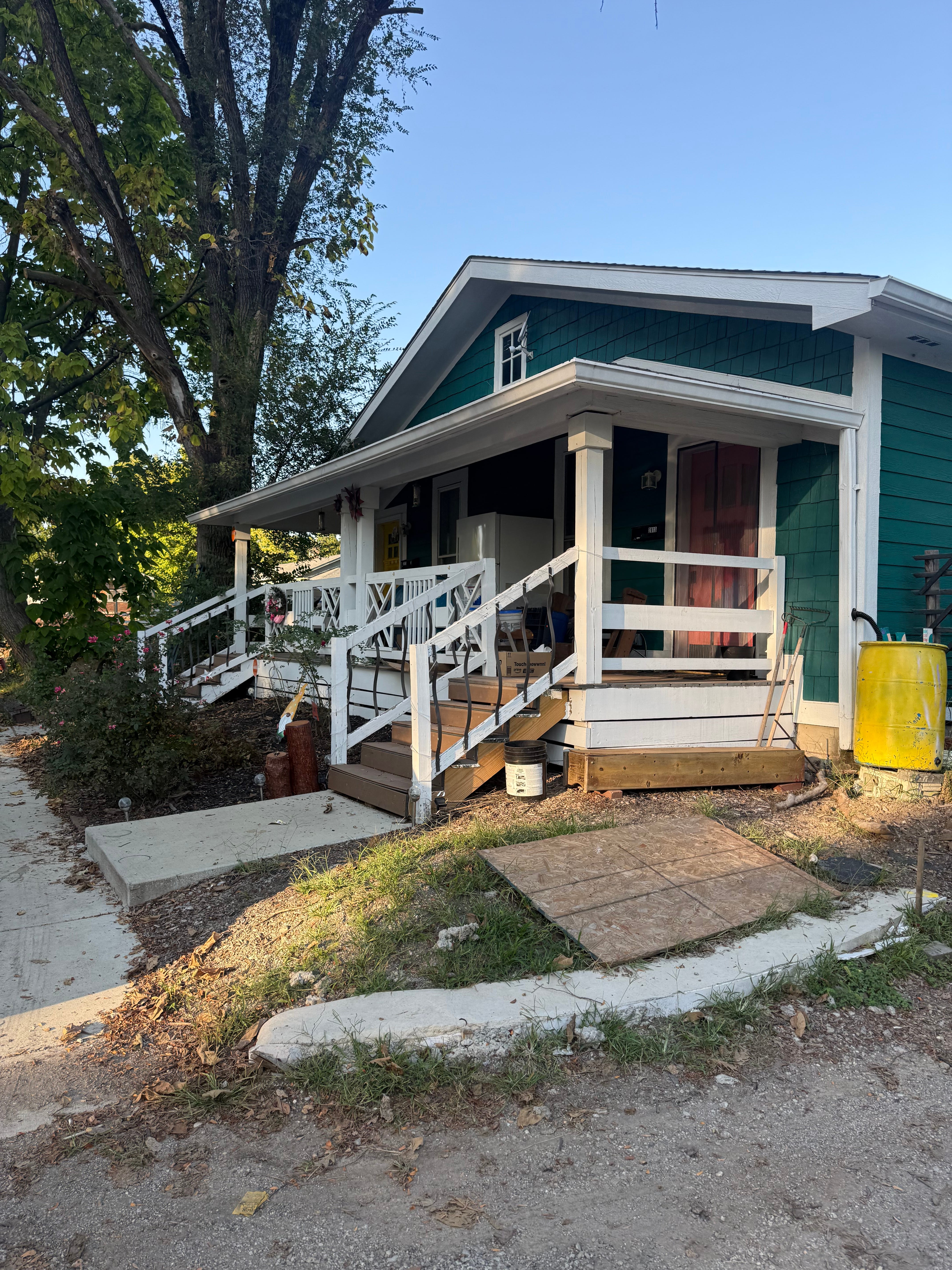
Cities aren’t only made of buildings and streets.
They’re made of thresholds - those in-between spaces where private life meets public experience. Few architectural inventions bridge that divide better than the porch. Neither fully public nor fully private, the porch operates in a liminal zone that is both buffer and bridge. It’s the handshake between the house and the city. Yeah, I’ll say it. Porches are underrated.
The porch teaches us something fundamental about urbanism: intimacy requires proximity without intrusion. The most meaningful civic encounters happen not in plazas or parks, but right around six to ten feet from the sidewalk. This is close enough to greet, far enough to feel safe. It’s the handshake of development.
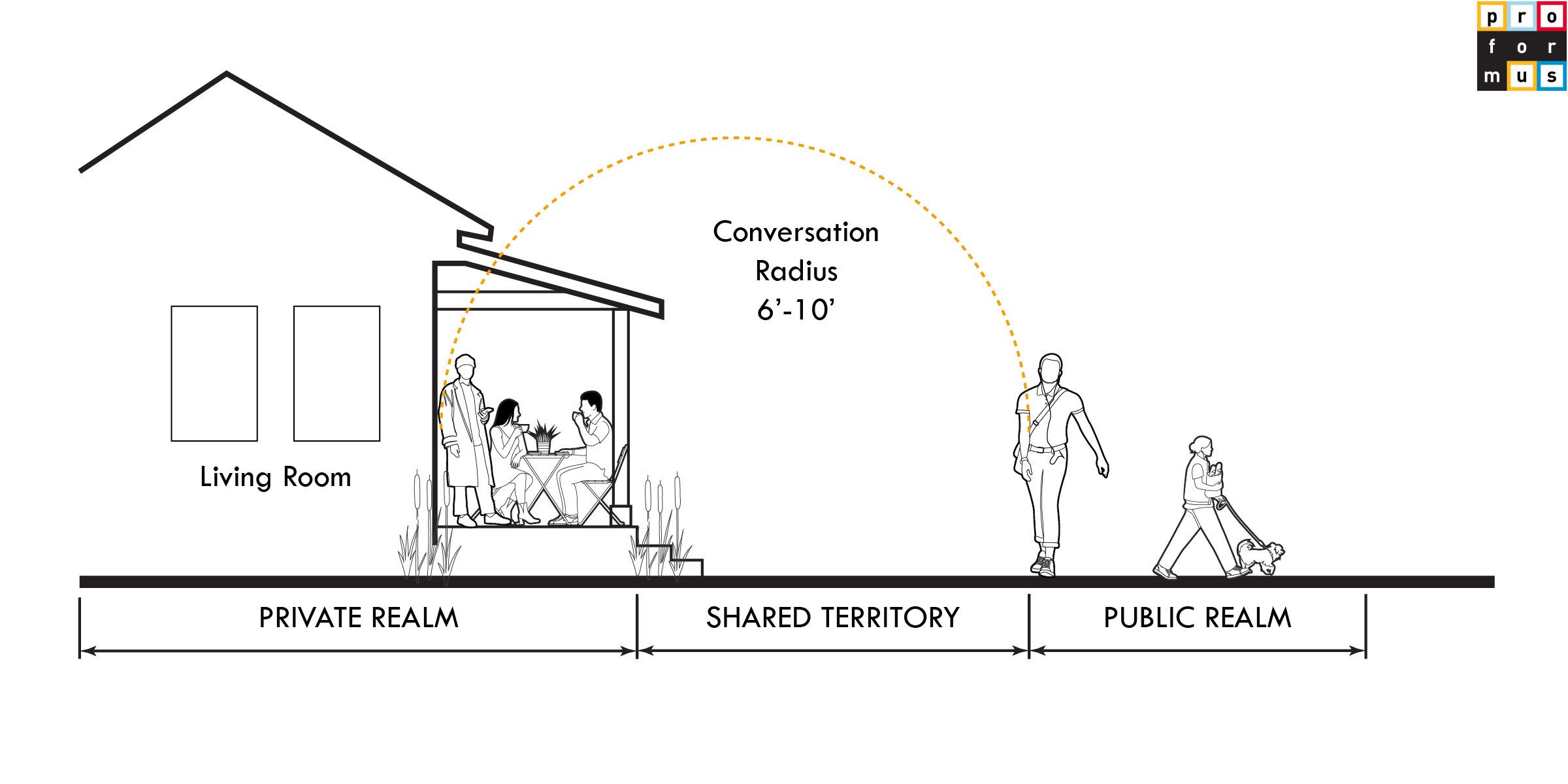
That narrow band of shared awareness, repeated across a block, can build an entire culture of belonging. And they’re a marriage between place and space that can make places go.
The Lost and Found Art of “Porching”
Before air conditioning, television, and two-car garages pulled life indoors, porches were our living rooms. They were cooling devices, gossip forums, and front-row seats to the neighborhood. People leaned out, waved across the street, shared a drink, or simply sat in quiet recognition of one another’s presence.
Porching is and was an art form. It balanced distance and intimacy, privacy and exposure. It was how neighbors tested the temperature of the street, how cities learned to breathe together.
Then we planned it out of existence.
A new generation of Americans post-World War II took to affordable mass-produced cars that offered a new transportation option rather than the walk-bike-transit options that had always existed before. And cars created a convenience which made sense - folks could live further away, travel farther with a new sense of autonomy. But mid-century planners took this as the only future and subsequently planned and designed explicitly around the car instead of simply with it. Developers simply followed their lead.
New zoning setbacks stretched the front yard into a moat. Garages replaced stoops. Subdivision requirements meant garages could not remain open. Building codes prioritized curb appeal over community. Fire separation, parking minimums, and floor-area ratios all combined to turn what had once been a stage for daily life into an architectural afterthought. Our houses began to look like cars, not people, lived there.
The result was a generation of houses that look at the street but do not speak to it. Streets became corridors of movement rather than rooms of encounter. Front yards became useless strips of grass, with the insular grilling and parties happening in a fenced-off, private backyard that eschewed any potential spontaneous community-building. In the planning field, we call these “snout houses”, since the large street-facing garage resembles a large snout of a pig.
No more was it easy to begin a new friendship with a simple wave from your porch.
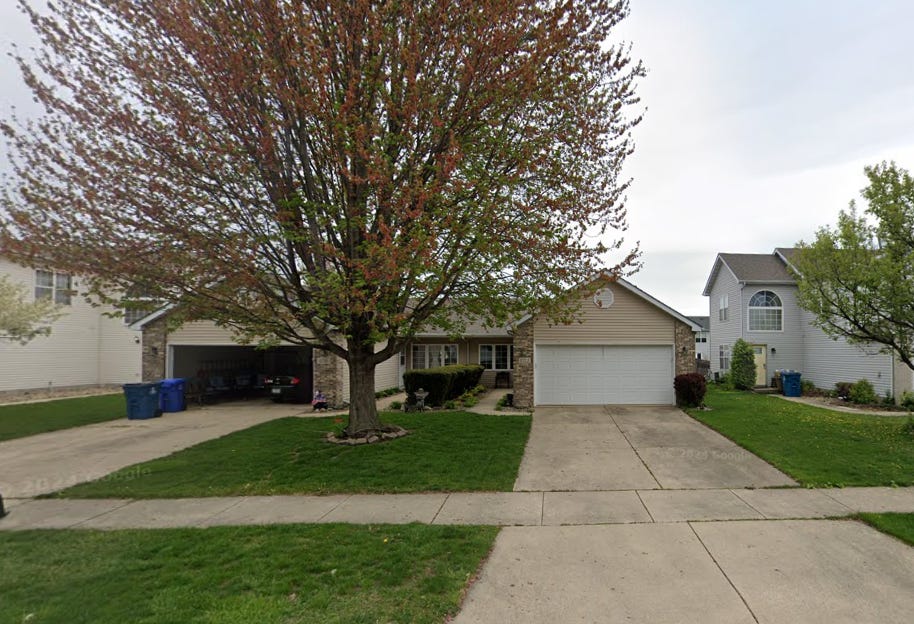
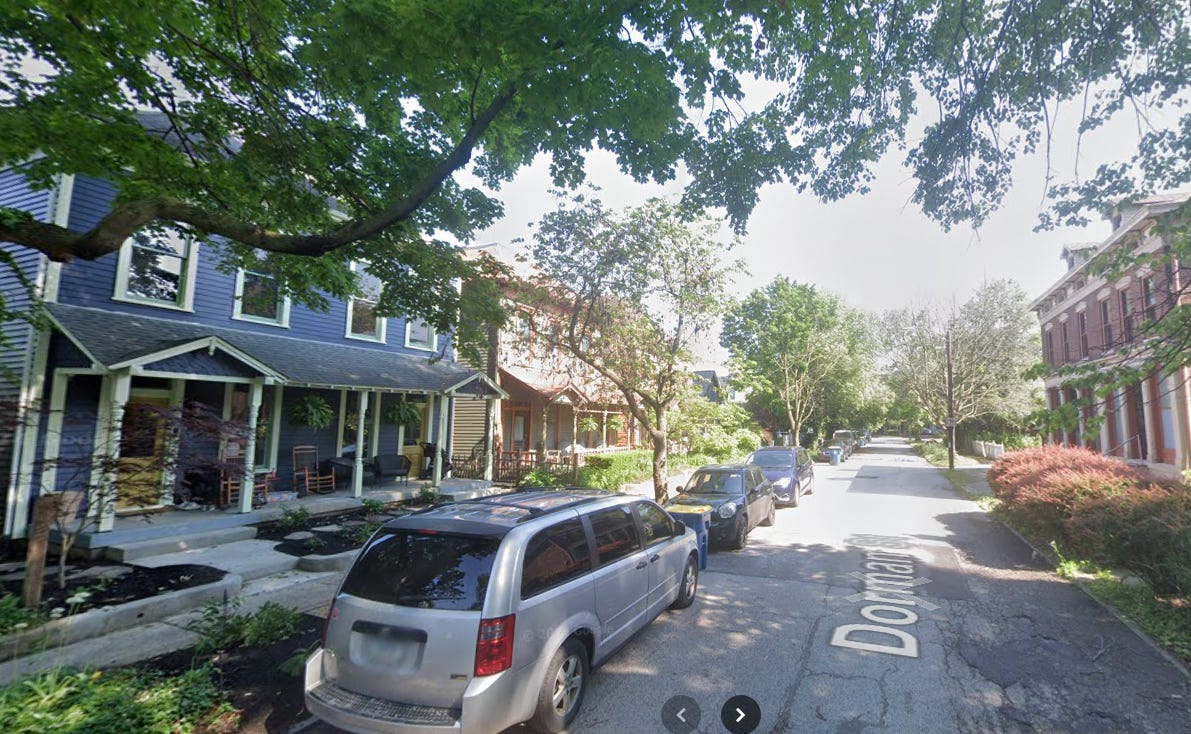
Yet the instinct to porch never disappeared; it only went underground. It reemerges in sidewalk chairs, pop-up parklets, and balcony lights. It shows up in people turning their stoops into micro-cafés, or setting a folding table at the trail’s edge. These are not nostalgic gestures. They are acts of emergence.
Porching is one of our most democratic forms of urbanism. It does not need a permit or a public meeting. It creates “third places” without passing through a maze of zoning and capital. It reminds us that community was once built from wood, shade, and the willingness to sit near a stranger or to say hello to a passerby. It many ways, it symbolizes the idyllic, small-town Americana feel of a yesteryear that was “great”.
It is time to bring re-emphasize the porch.
The Intimate Distance
Urban sociologists have long noted a sweet spot of social trust, a band of space between six and ten feet where strangers become acquaintances and neighbors become friends.
Anthropologist Edward T. Hall’s proxemics theory (1960s) introduced the concept of “personal distance” in human interaction: intimate, personal, social, and public distances. While Hall’s typology is not a perfect template for architecture, it helps us see that humans calibrate comfort zones in social settings. A social distance (several feet) is where strangers can nod or speak without violating personal space.
Sociologist Erving Goffman’s concept of civil inattention describes how urban strangers acknowledge one another with a glance and then disengage, enough to affirm mutual recognition without intrusion. Civil inattention works best when the distance is neither so close that privacy feels threatened nor so distant that recognition is impossible. This is between that 6’-10’ space.
At that distance, you can exchange a glance, a wave, or a few words without invading someone’s privacy. It is close enough for empathy, yet far enough for comfort.
Bruce K. Ferguson’s work Architectural and Personal Influences on Neighboring Behaviors shows that front porches and low fences facing the street positively correlate with informal neighbor interactions. The presence of a porch facing the street makes it easier for residents to sit outside, watch the street, and engage socially.
When a porch or threshold sits roughly six to ten feet from the walk it does four things reaaaally well.
Visibility is preserved. A person seated can see the sidewalk clearly, and passersby can look up without visual obstruction.
Acoustic permeability is plausible. A voice at conversational volume can carry across that span (especially outdoors) without needing to shout.
Psychological comfort is maintained. The distance allows enough buffer so the sitter still feels private, yet not isolated.
Gesture works. A wave, a glance, or a short comment is possible without stepping off one’s porch or crossing the sidewalk.
This, in essence is the invisible geometry of community. Porches that sit within that range invite contact. Those set too far back break it.
If you cannot see the sidewalk from your chair, you are not part of the street’s life.
Elastic Architecture
The power of the porch lies in its flexibility. It is the smallest room with the biggest range.
It can host dinner, serve as workspace, or become a stage for small concerts. Curtains and vines shift its permeability with the seasons. At dawn, it is quiet and contemplative. At dusk, it becomes communal.
Porches are small arenas of agency. They let people decide how public they want to be. They do not prescribe behavior. They invite it. They imbue flexibility and creativity that helps support the emergent, cultural economy.
Porches and Balconies in Multi-Family Living
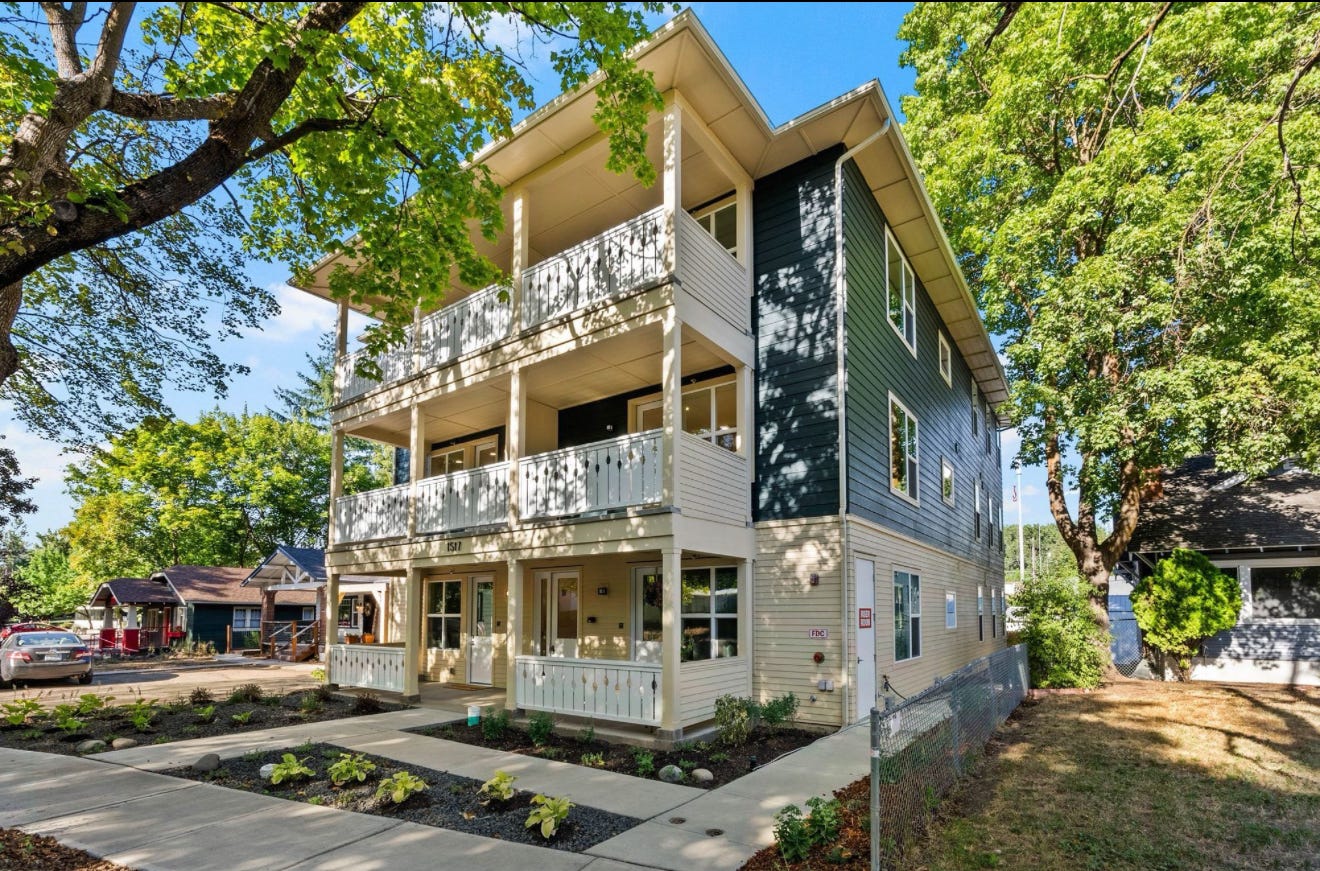
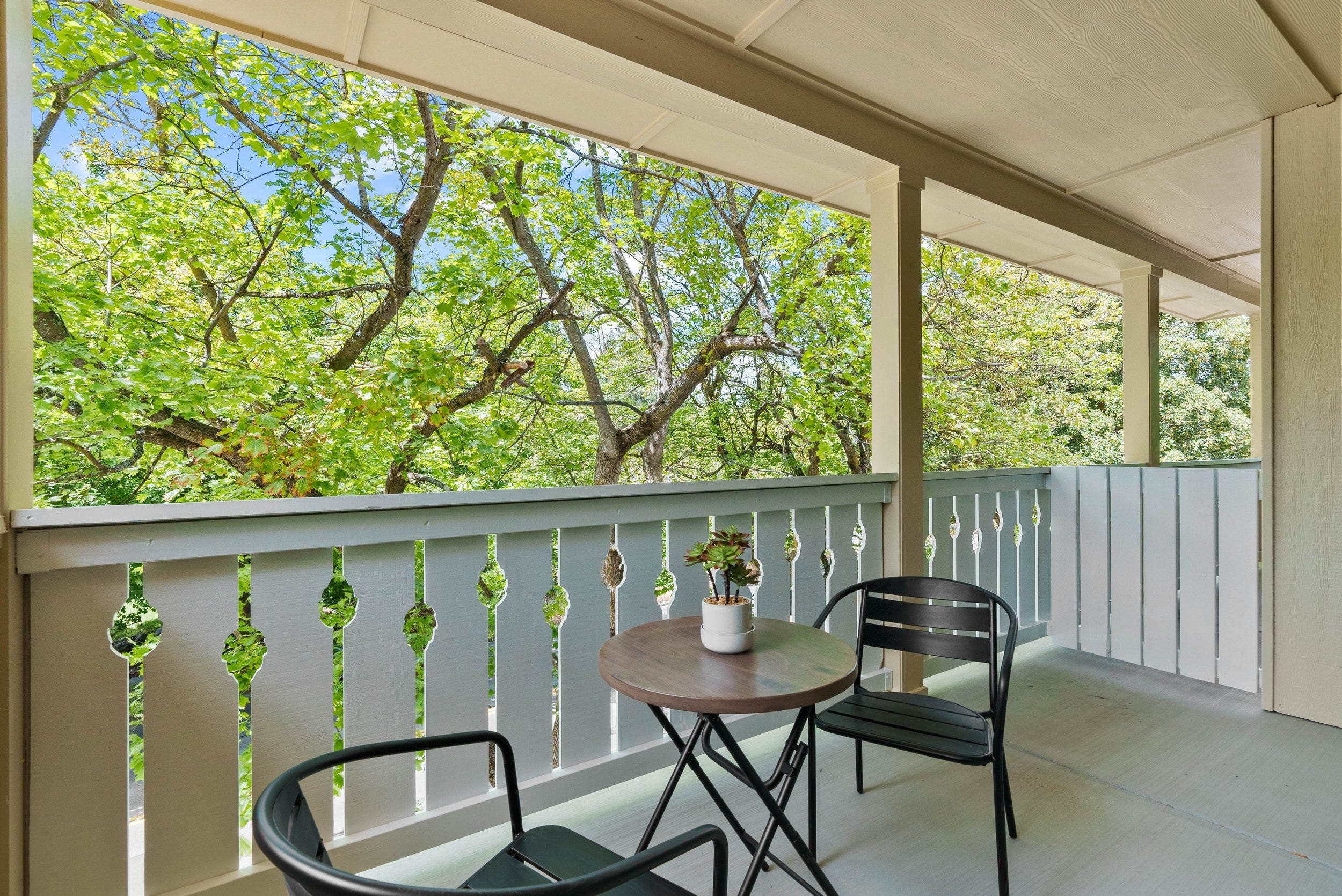
Porches are not exclusive to single homes. While porches are often a first floor element, we can consider patios and balconies the porches of multi-story and multi-family. buildings.
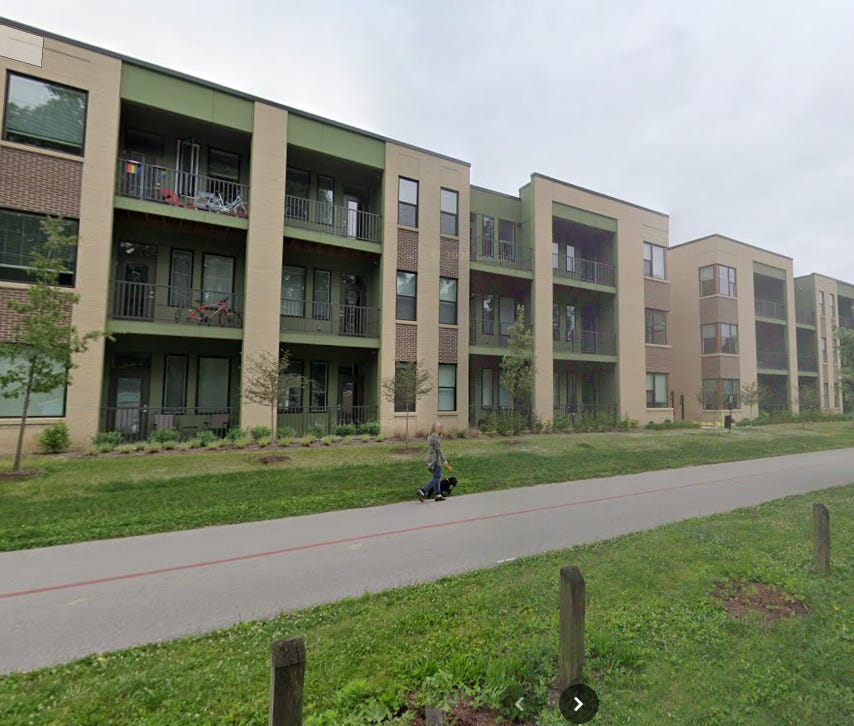
In apartments, duplexes, and mid-rise buildings, balconies and stoops perform the same civic role, often with amplified effect. Extra-floor patios and balconies can become arenas for public life just as well as first floor porches if developed intentionally.
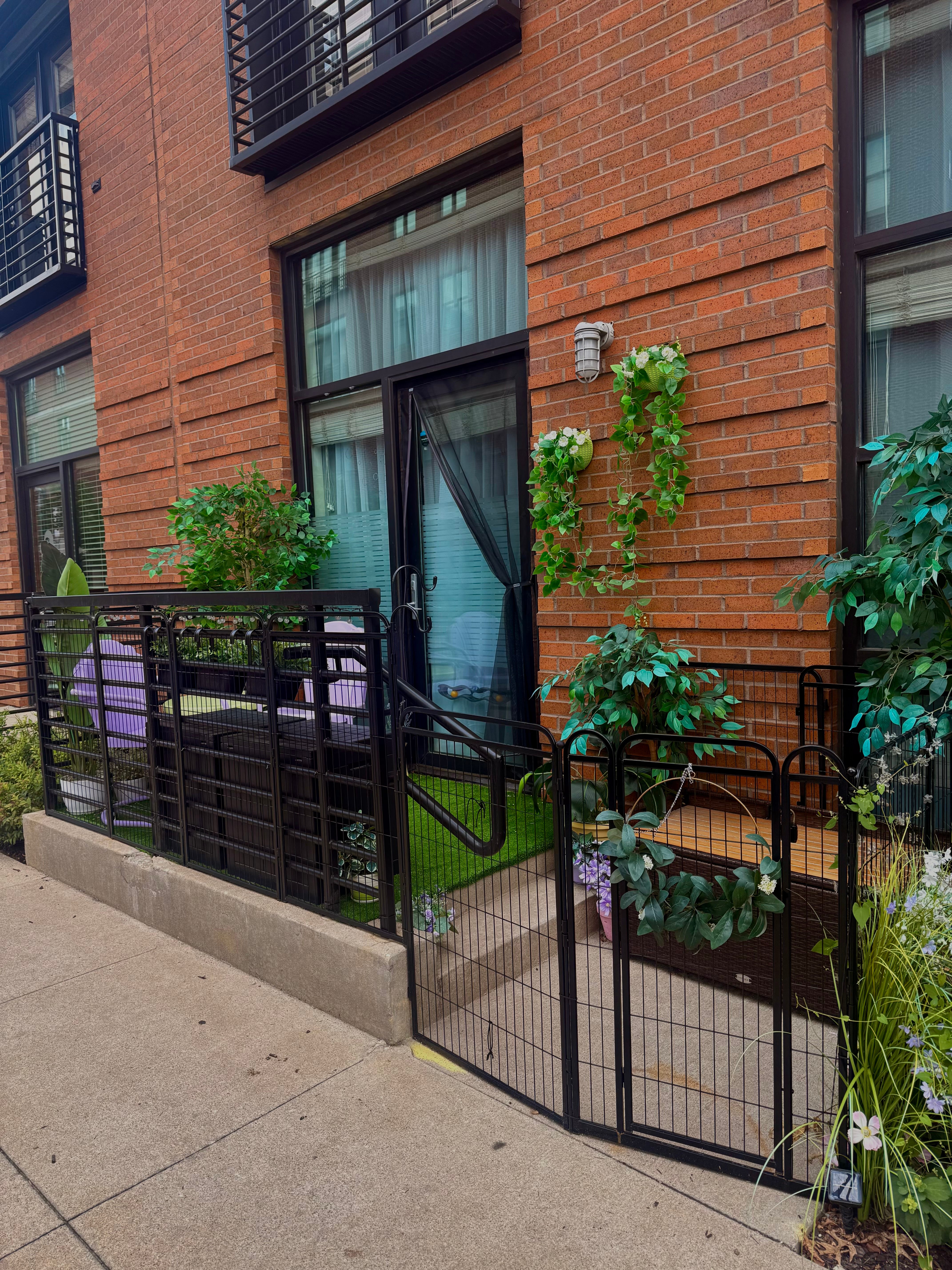
Where multi-story isn’t possible or a full 6’-10’ width isn’t possible to fit in, developers and architects should think through how their future tenants may use the space, even sidewalk-adjacent patios or spaces can act as personal balconies.
Missing Middle Porchin’
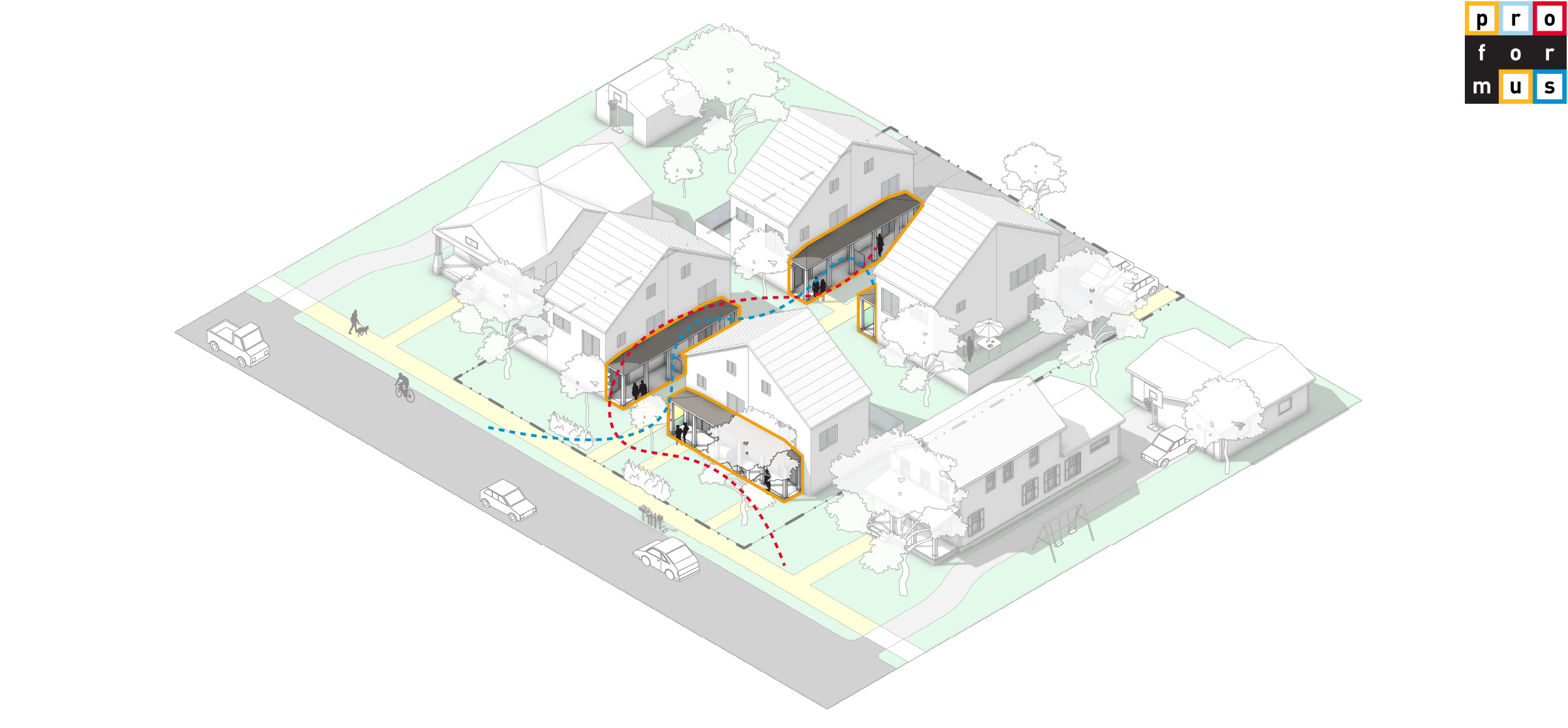
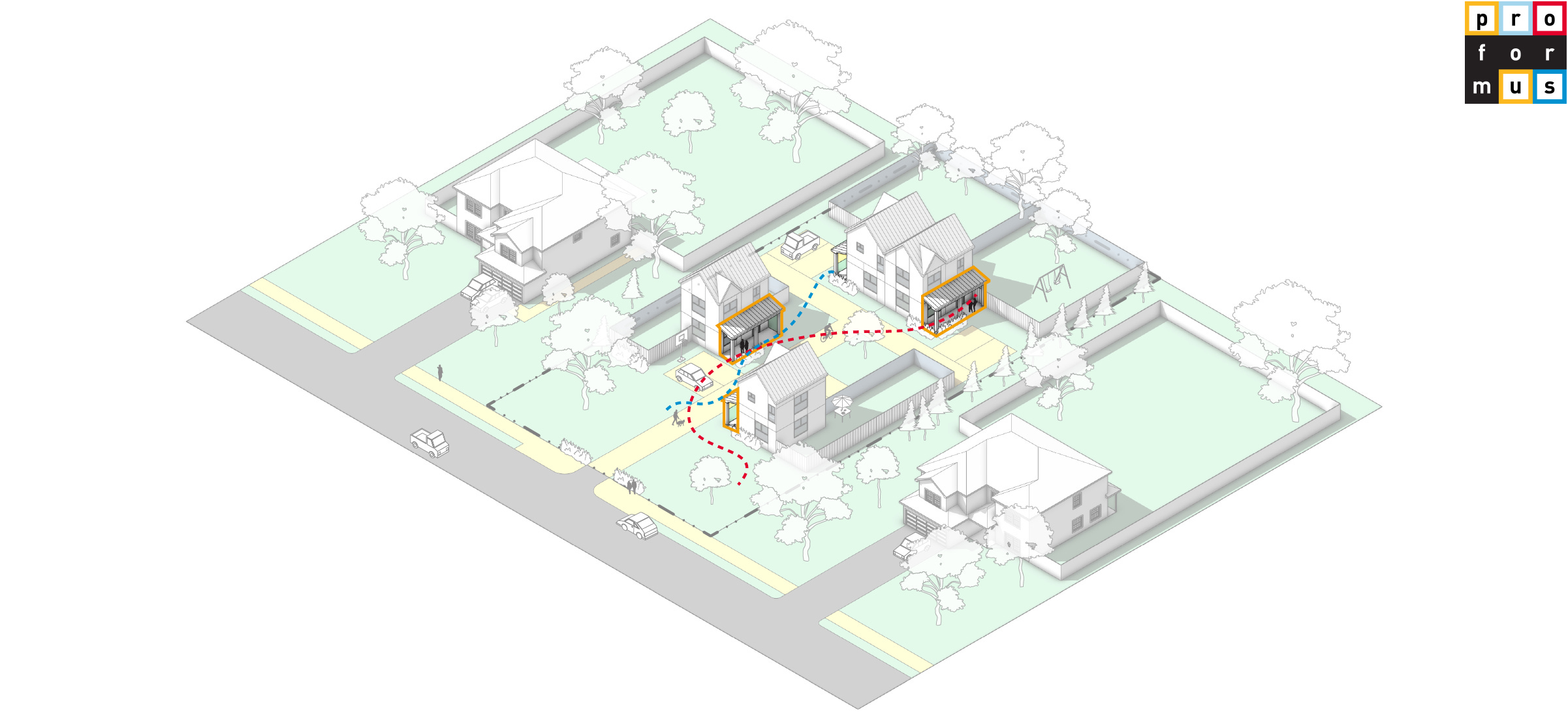
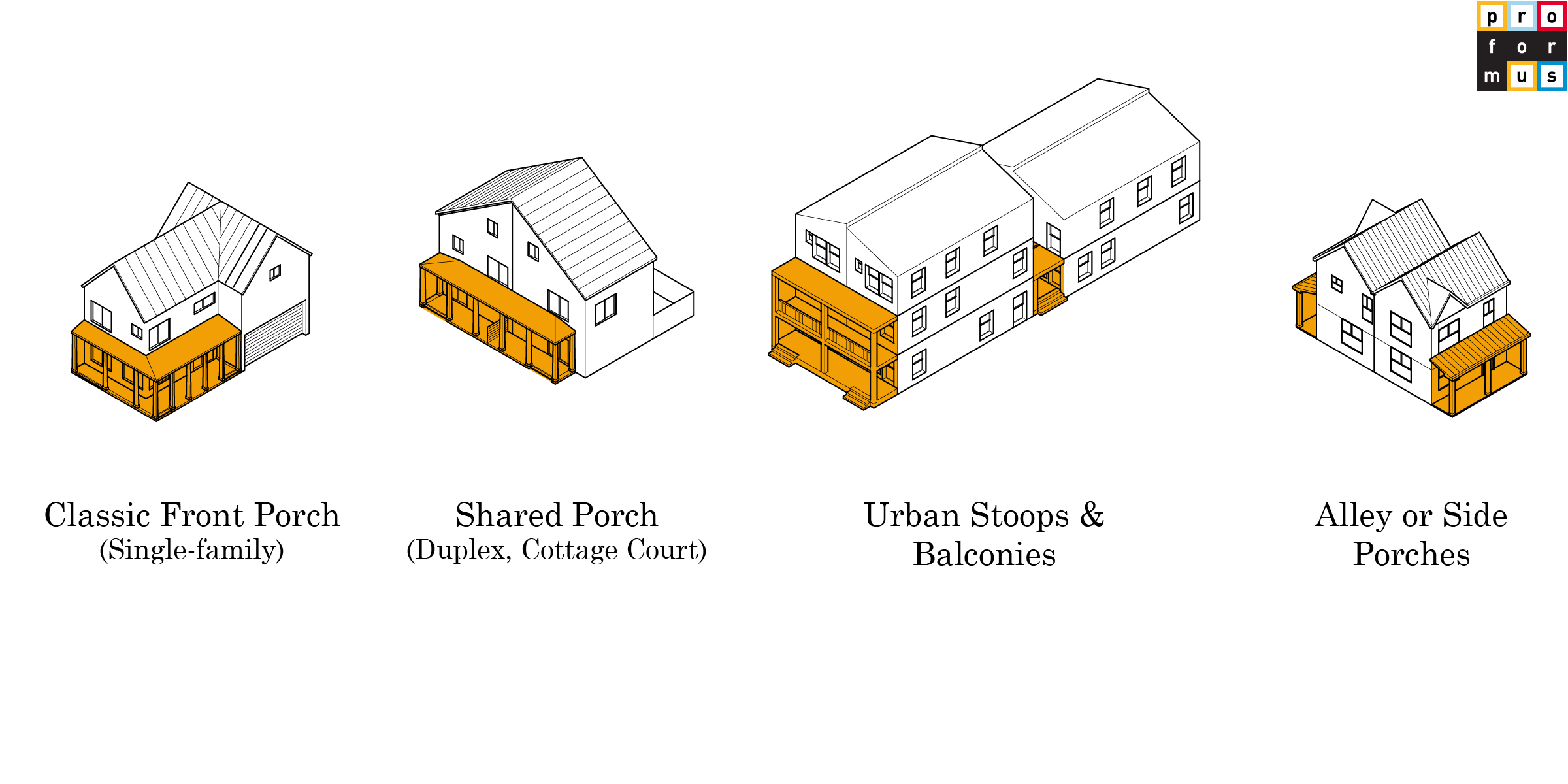
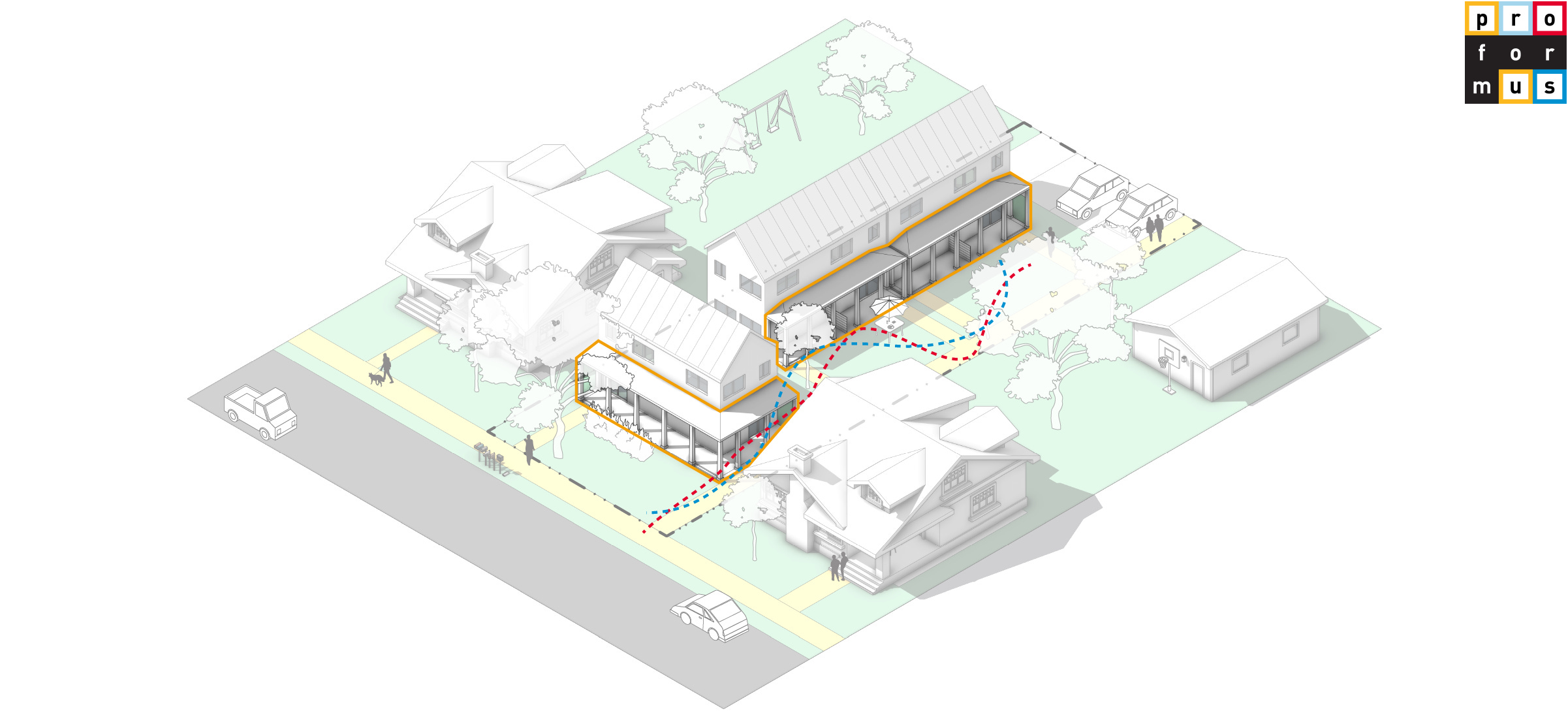
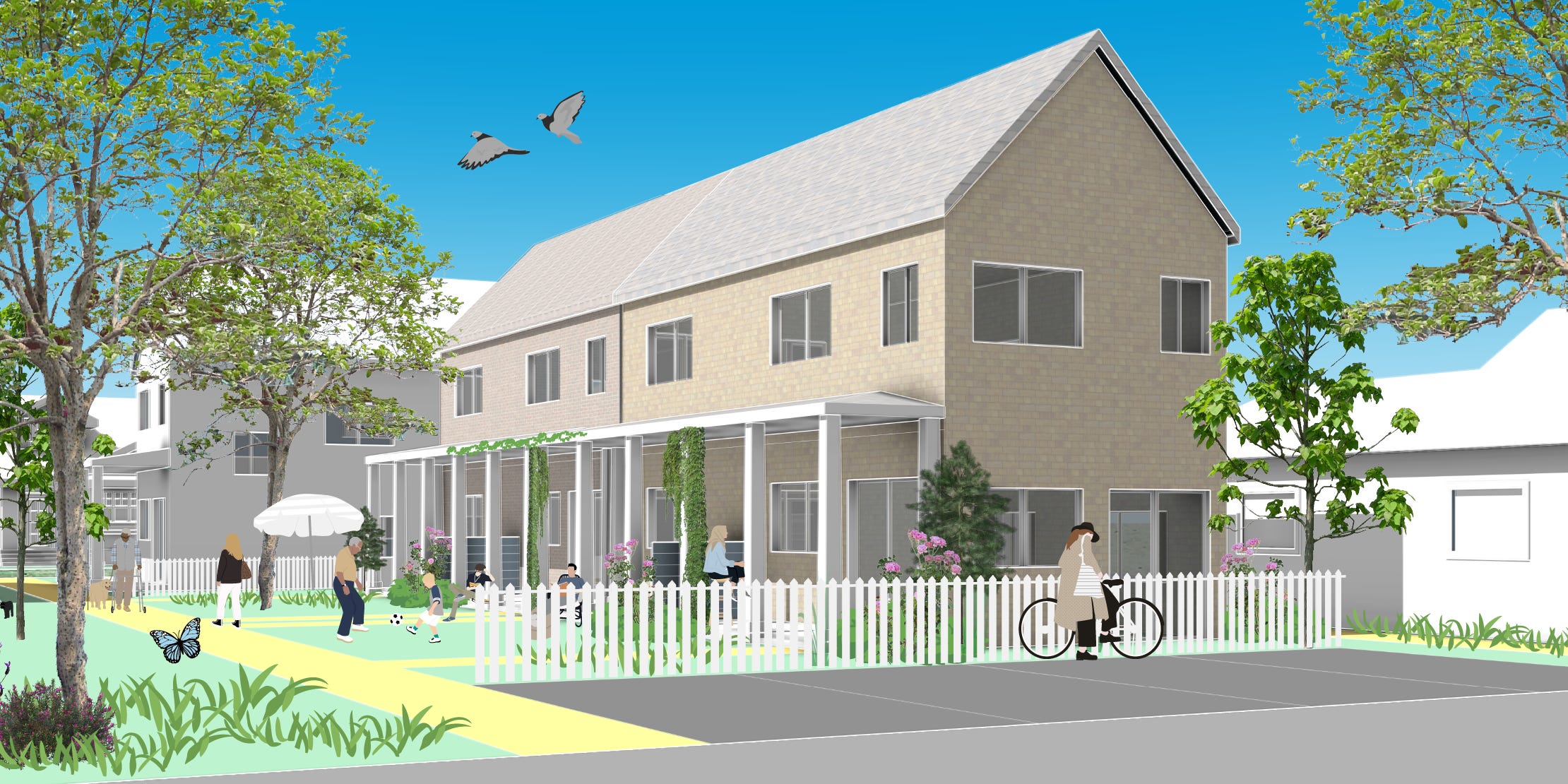
A recent study by my firm Proformus ideates missing middle housing options in North Carolina. Our study relied heavily on porches to create intimacy between multi-family housing units. These simple diagrams showcase how triangulating and locating porches to share sightlines and frontages creates additional opportunity for community building. These simple typologies showcase how gentle density can afford both communal and private charm - acknowledging each is desired and needed for people, especially families with young children. The porchin’ helps to develop the famed “eyes on the street” Jane Jacobs once discussed.
Trails
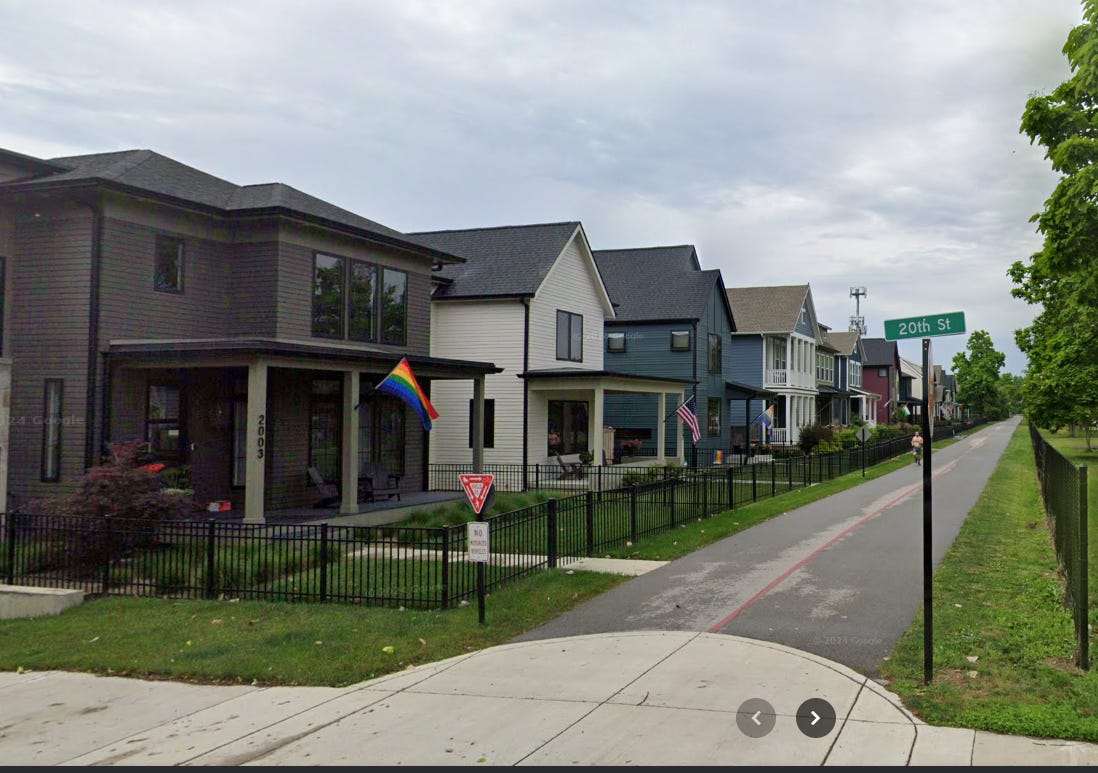
Along trails and greenways, balconies can create a vertical version of the porch. Walk the Monon Trail in Indianapolis or the BeltLine in Atlanta and you can see it. Residents lean on railings, wave to joggers, or light string lamps at dusk. Private life spills out just enough to be visible. When deep enough to occupy and transparent enough to see through, they turn trails into social corridors. A cyclist, a dog walker, and a resident above all share the same theater of life in motion.
Trails can be the new quiet streets. And the best ones are porched on both sides.
But developers and planners must be careful to not create insularity along these sides. Sometimes, restrictions over liability concern mean porches open out onto trails, but with no access. Without access, these porches or patios create an air of osmosis but neglect the possibility of it. This means these activity nodules can be treated more like back porches or storage than front yards stimulating socialization.
Emergent Urbanism, One Threshold at a Time
Porches reveal the logic of emergent urbanism. They do not require a plan or a grant, only repetition. One porch becomes two, becomes ten, and the pattern multiplies.
When enough thresholds are occupied, a neighborhood gains self-awareness. The porch is the smallest civic sensor. It monitors the street and strengthens trust.
Every person sitting outside is participating in an invisible act of city-making. Together, they form a distributed network of care.
A porch is not decoration. It is soft infrastructure for democracy.
Designing for the Six-to-Ten-Foot Zone
Whether designing a cottage or an apartment, a few principles hold. Here are my thoughts on how developer and planners can maximize the porch:
For houses and cottages:
→ Place porches within six to ten feet of the public walk.
→ Elevate them about two feet for privacy and visibility.
→ Make them at least eight feet deep so they can be used, not just admired.
For apartments and mixed-use buildings:
→ Provide balconies that are at least five to six feet deep.
→ Use transparent railings or screens to balance openness and shade.
→ Orient balconies toward public space, not inward courtyards.
→ Allow porches and patios to interface with public right-of-way, not block access to it.
Depth, height, and transparency are not aesthetic details. They are behavioral tools that decide how a building participates in public life.
How Do We Make Better Places Happen with Porches?
Municipal policy:
→ Allow porches to extend into setbacks.
→ Incentivize balcony depth instead of quantity.
→ Recognize the social value of the six-to-ten-foot zone.
→ Allow porches to extend to public right-of-way along trails.
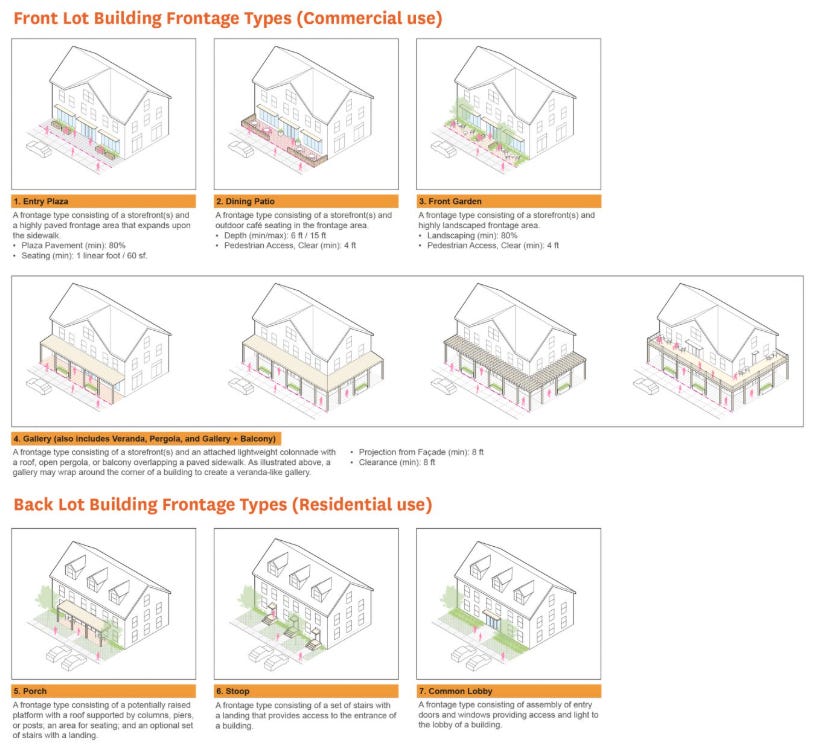
Many form-based codes or zoning codes don’t discuss porches or even patios. What if cities developed a pre-approved “kit of parts” that could be added on to residential or even commercial properties by right? This could allow for emergent uses over time and placetypes that develop with residents as they see fit.
Developers and designers:
→ Treat porches as primary frontages, not decorative extras.
→Align them along shared corridors, alleys, or trails.
→ Publish design guides that normalize usable porches and balconies. Juliet balconies are out, deep boys are in.
Neighborhoods and residents:
→ Host porch nights, stoop concerts, and front-yard gatherings.
→ Use porches for posting events, sharing produce, or informal exchange.
→ Celebrate visible occupation as a civic act, not a nuisance.
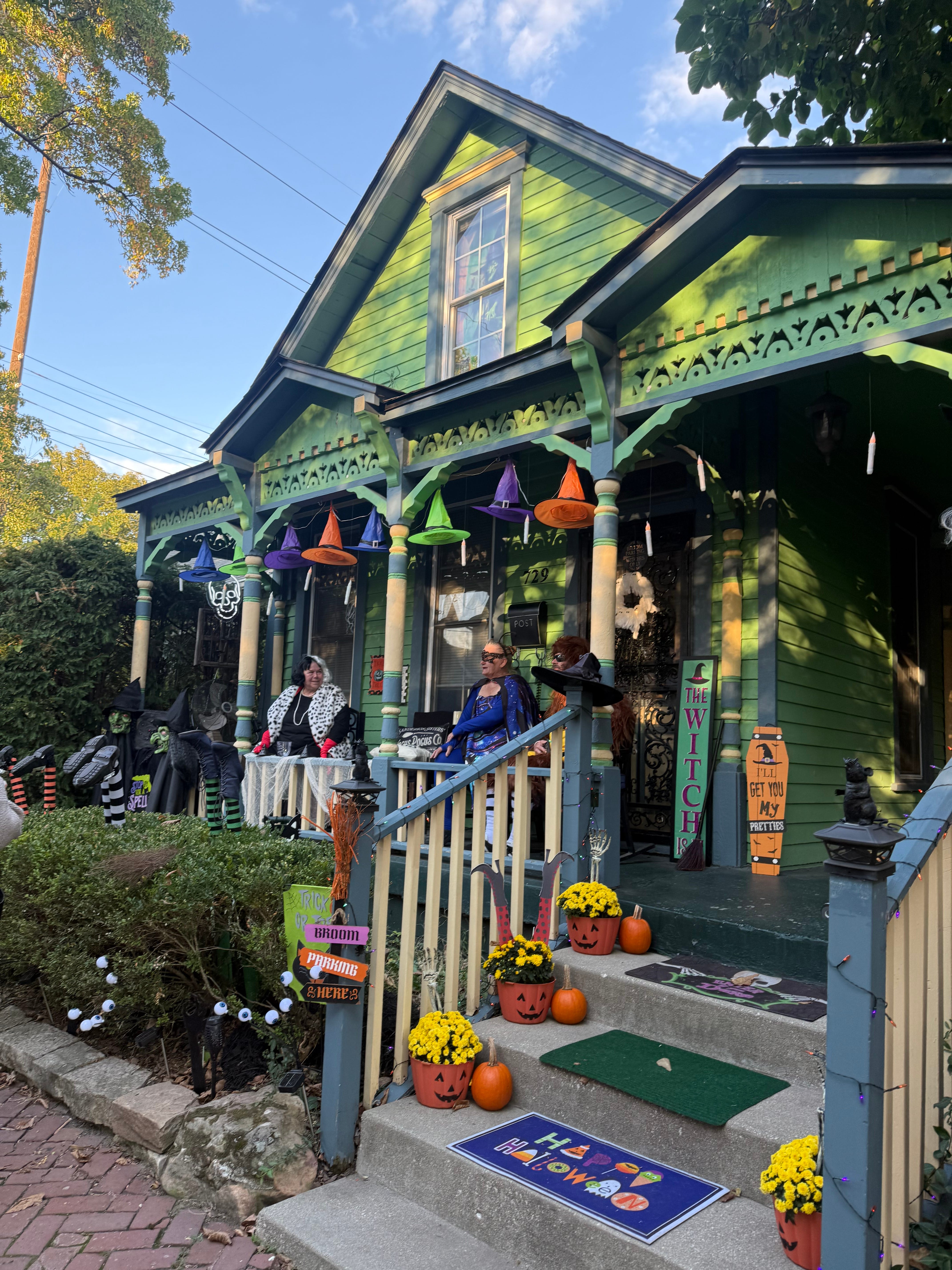
Building and allowing development without elements like porches is taking a toll on our society. Continuous studies show we are getting lonelier, having a harder time making friends and keeping friends, even though now we all have cell phones.
If we want to get back to traditional, small-town America where we know our neighbors, we have to rethink our neighborhoods and relax rules on what land use should be to allow more emergent uses in and around our places.
We need to go back to guide the future. Porches are an easy start.