


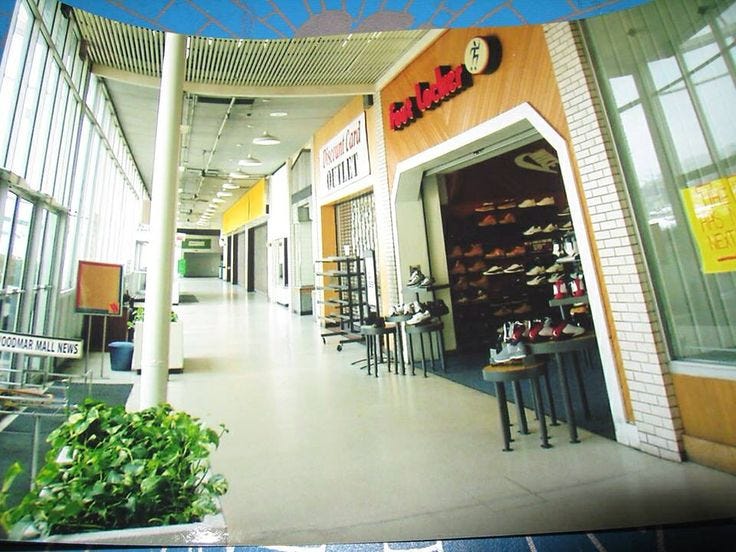
If the 1990s taught us anything, it’s that everything huge eventually needs a reinvention. Just as music videos gave way to reality TV, the enclosed shopping mall, the cathedral of American commerce, is facing its own existential crisis. But we shouldn’t just look back in anger.1
In my previous piece, From Strip to Hip, I talked about how we can surgically repair strip malls. But the shopping mall is the final boss of suburban retrofits. It is massive, monolithic, and often surrounded by a moat of asphalt so wide you could lose a Ford Bronco in it.
Here is why some malls are destined to become villages, why others are just “Fake Plastic Trees,”2 and our six-step Mall to Village Model© for making the transformation happen.
The “Why”: Reasons to Convert a Ghost Mall
It’s not just nostalgia. From Austin Community College to Mashpee Commons, it’s easy to see why some developers have municipalities salivating over their own shopping center conversions.
→ Property tax revenue: Shopping centers (for better or for worse) are often one of a municipality’s greatest sources of tax revenue. When a shopping center collapses, it takes with it a large tax bill. This means cities across the United States are losing billions of dollars of potential revenue from dead malls. Cities are thus anxious to make sure they at the very least offset future tax losses with a revived mall campus - whatever that looks like.
→ Infrastructure Goldmine: Malls are already plugged into the grid. They have massive sewer capacity, heavy-duty electrical loads, and major arterial road access. In a world where extending infrastructure to greenfield sites is prohibitively expensive, the mall is a “plug-and-play” density node.
→ The “Third Place” Vacuum: Suburbs are desperate for walkable centers. People don’t want to just buy things; they want to be somewhere. They want to be seen. The demand for “experiences” over “goods” is the economic engine that makes a mixed use village model viable.
The Dealbreakers (Why Some Won’t Work)
As I discussed in From Strip to Hip, not every carcass can be revived. To separate the comatose from the corpses, we utilize the Shopping Center Potential Index (SCPI), a planning filter or triage tool designed to calculate a site’s “Re-Use Readiness Score.”3
We don’t guess; we measure four distinct “buckets” of viability: A. Physical Bones, B. Market Demographics, C. Connectivity, and D. Municipal Alignment.
For a mall to qualify for the full MTV treatment, it must score as a Tier 1: Catalytic Candidate. In this specific case, the SCPI flagged the site as a prime target because it passed the “Fatal Flaw” filter, avoiding the nightmare of fragmented, condo-ized ownership, and scored high in Bucket B (Market & Demographics). The data revealed a massive arbitrage opportunity: the surrounding 1-mile radius had high residential density and growing income, yet the site suffered from extreme “Retail Leakage.” In short, the algorithm confirmed a town was trying to get out, but the building or parcel was holding it back.
If you’ve gotten this far, it means our shopping center may just be perfect for the Mall to Village (MTV) six step strategy. Here we go.
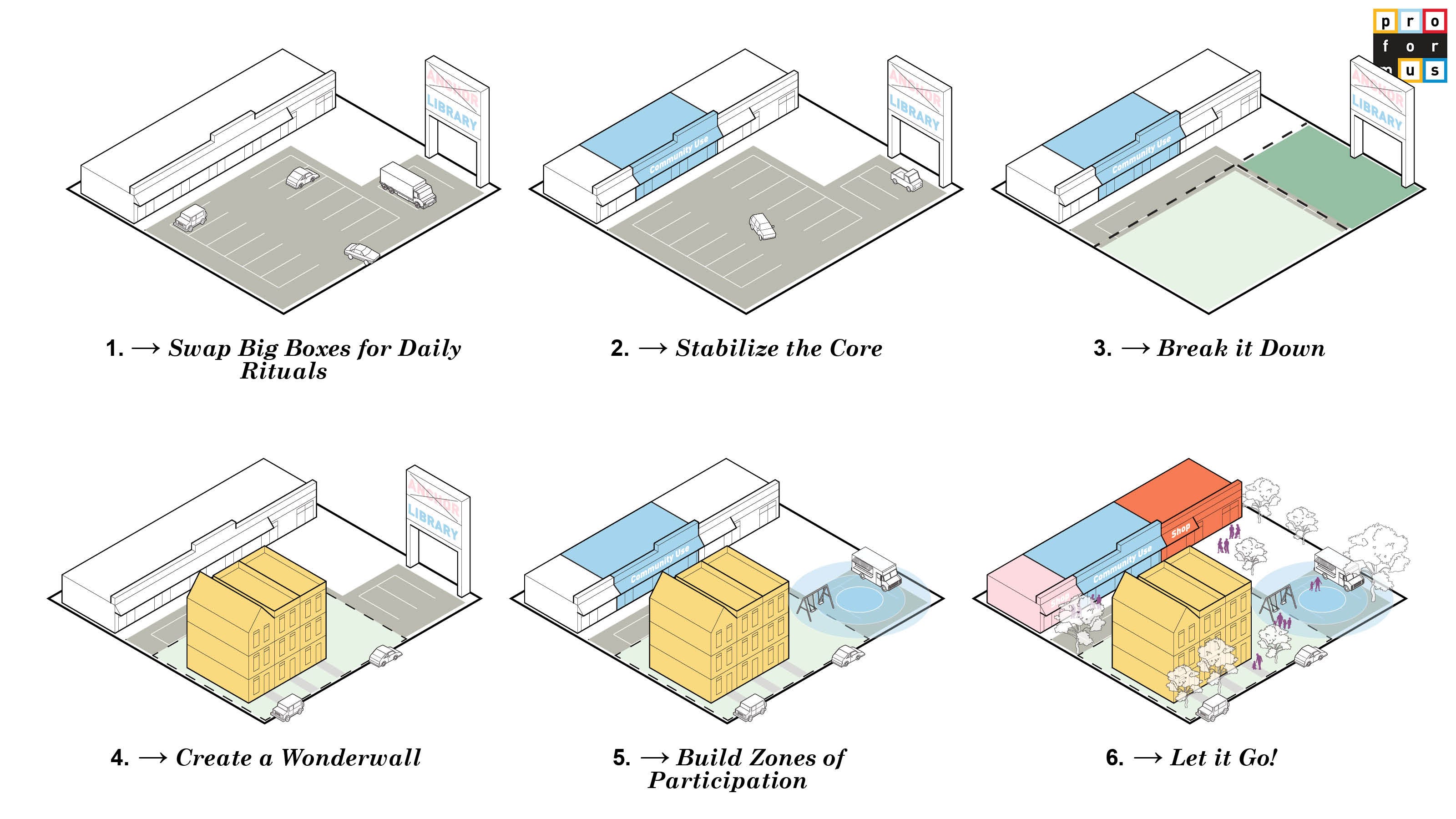
The Mall to Village Model in 6 Steps
So, you have a high-SCPI site. The zoning is receptive. The anchors are playing ball. How do we get from “U Can’t Touch This” to a walkable neighborhood?
We use the MTV Model.
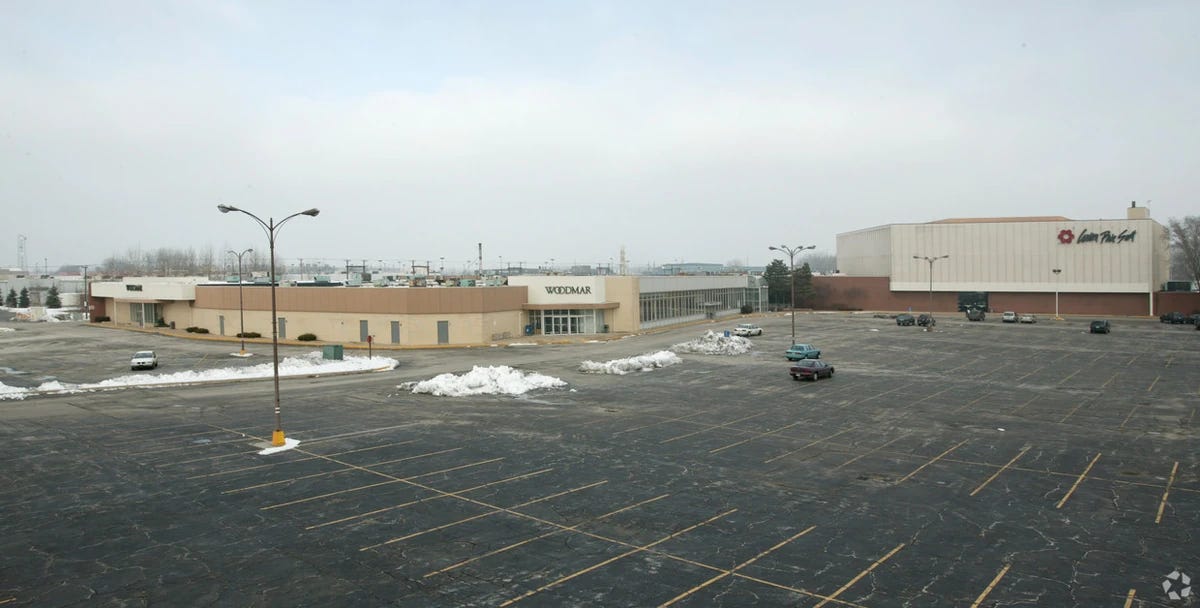
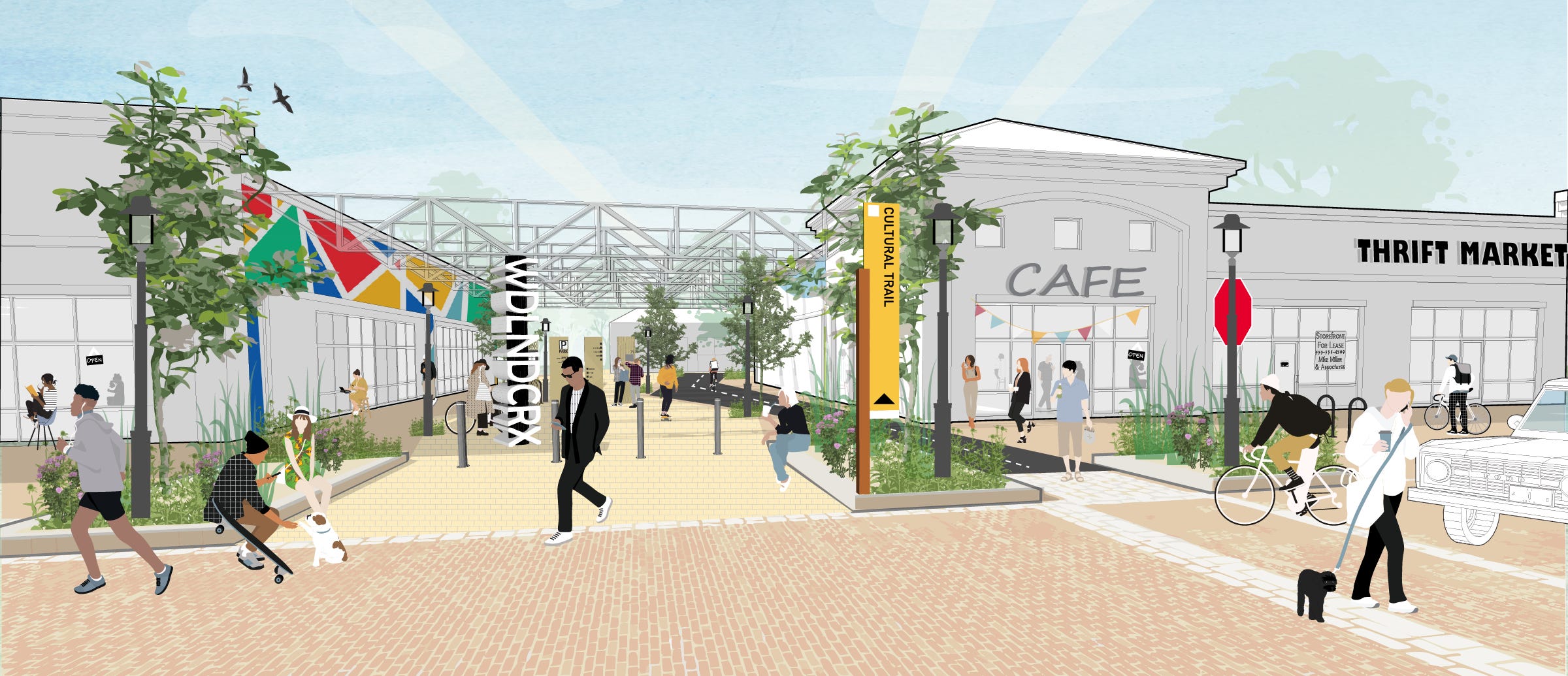
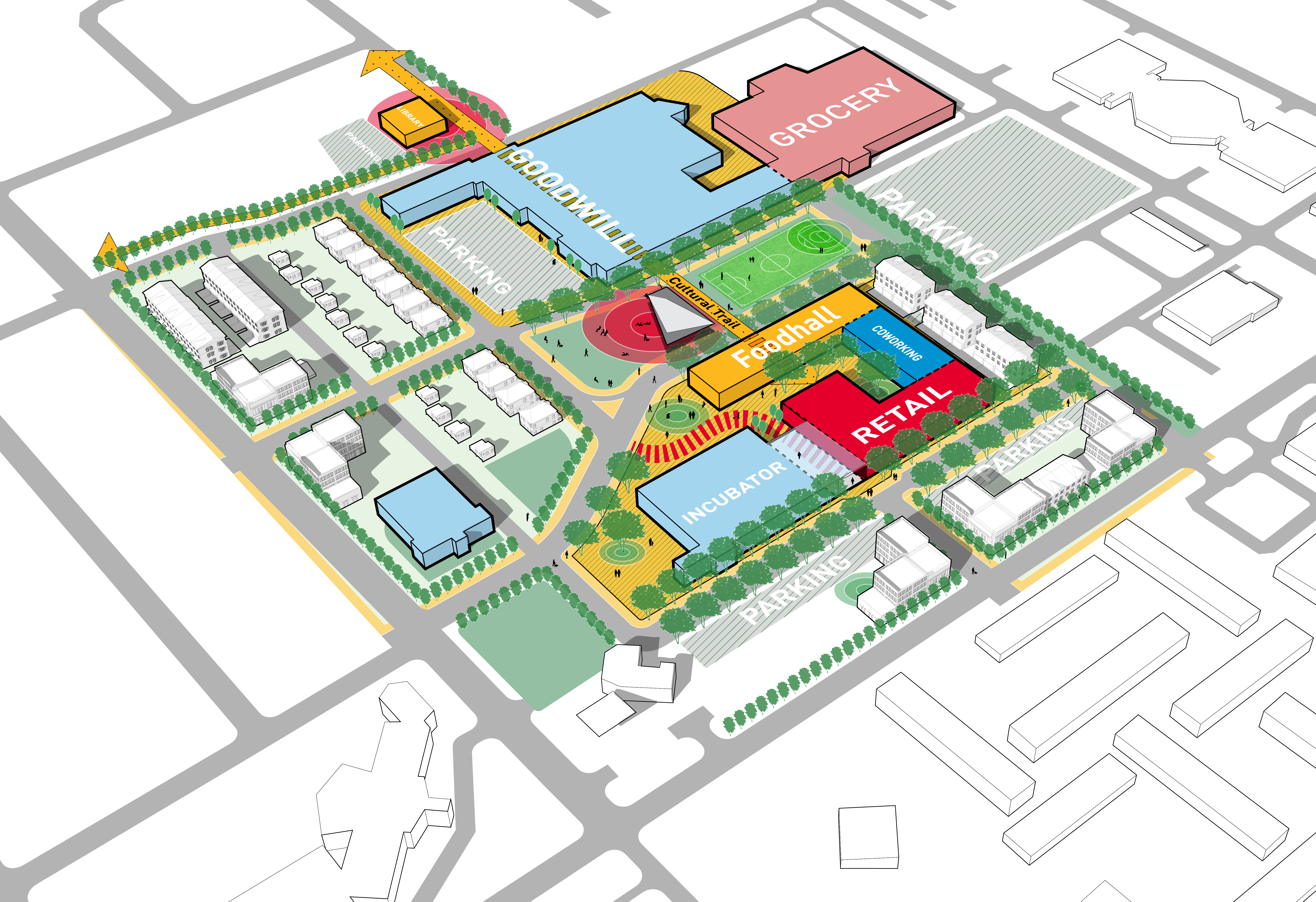
A textbook example of this model in action is some of the concept work I did4 with the City of Elkhart at the Woodland Crossing Shopping Center (formerly Pierre Moran Mall). While we only did concept work for a couple of the first steps, this playbook is fully in motion. Recently, funds were released from the State of Indiana’s READI 2.0 initiative for up to $12M for Elkhart’s redevelopment of the Woodland Crossing Retail Center into a vibrant, walkable neighborhood featuring housing, retail, healthcare, and educational services.
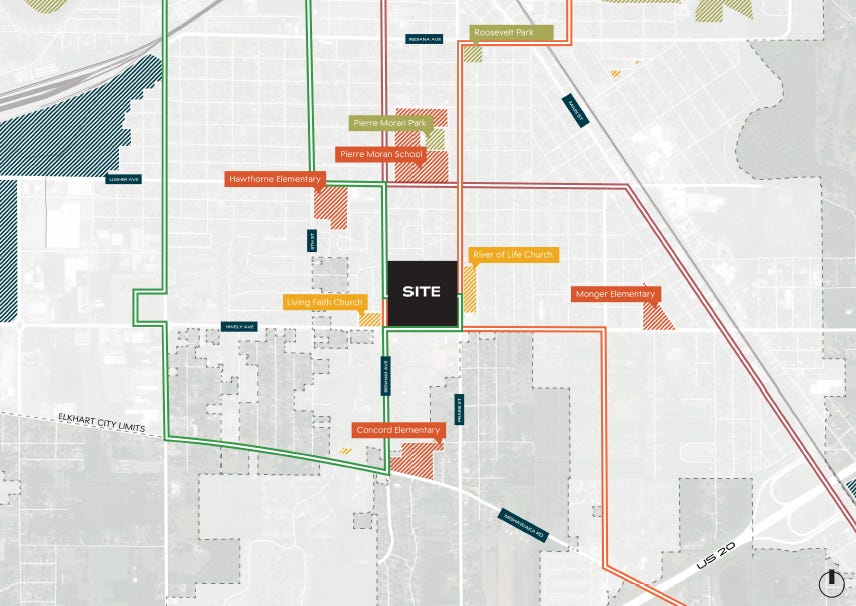
The city didn’t want a facelift. Instead, they wanted to fundamentally change the site’s function from underperforming shopping center to a place where residents could get everything they needed within a short walk or drive. They organized the redevelopment around the concept of a “Neighborhood Opportunity Hub”— a centralized campus designed to anchor essential services within the community’s daily path.
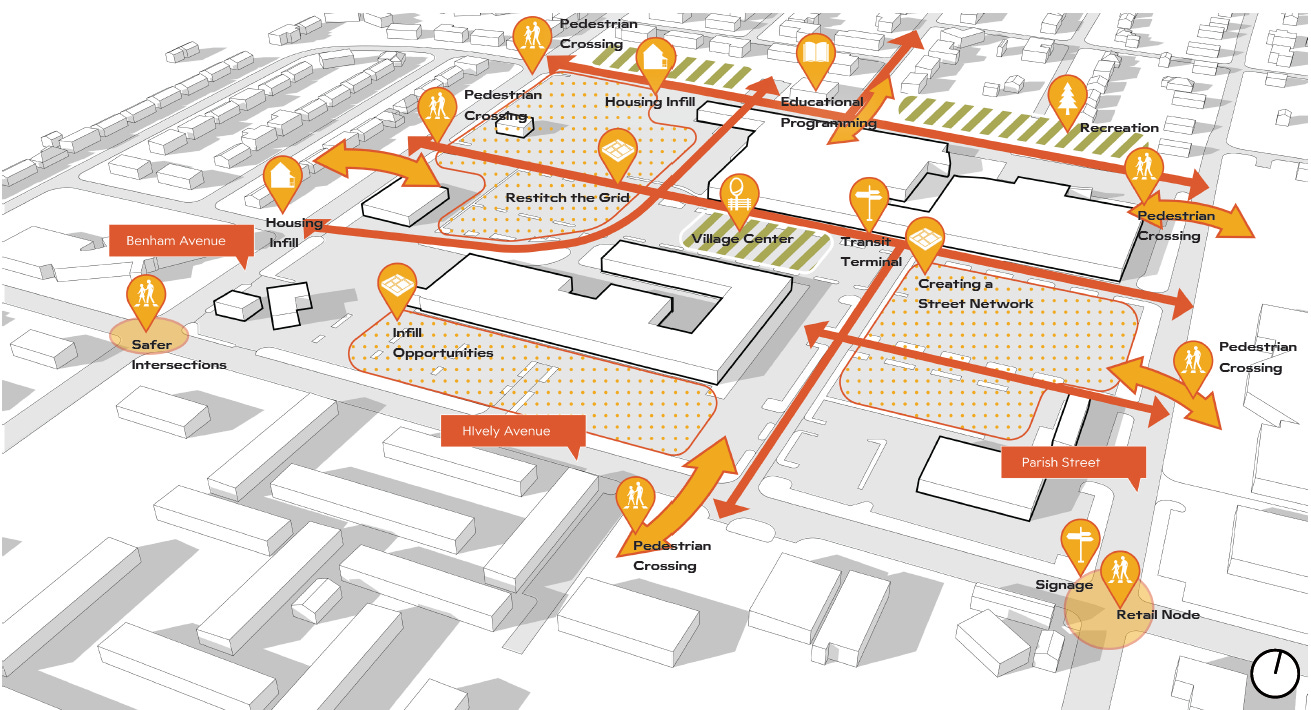
By partnering with Goodwill Industries and Heart City Health, the city is helping to transform a dormant retail strip into a vital engine for economic mobility, healthcare, and job training. This shift proved that a dying mall could be reborn as a Town Village Center, a place where commerce, care, and community intersect. It’s truly a Mall to Village in the works.
How do you execute a pivot that massive? You follow these six steps:
Step 1 → Swap Big Boxes for Daily Rituals
Stop hunting for “Department Stores”; start hunting for “Daily Habits.”
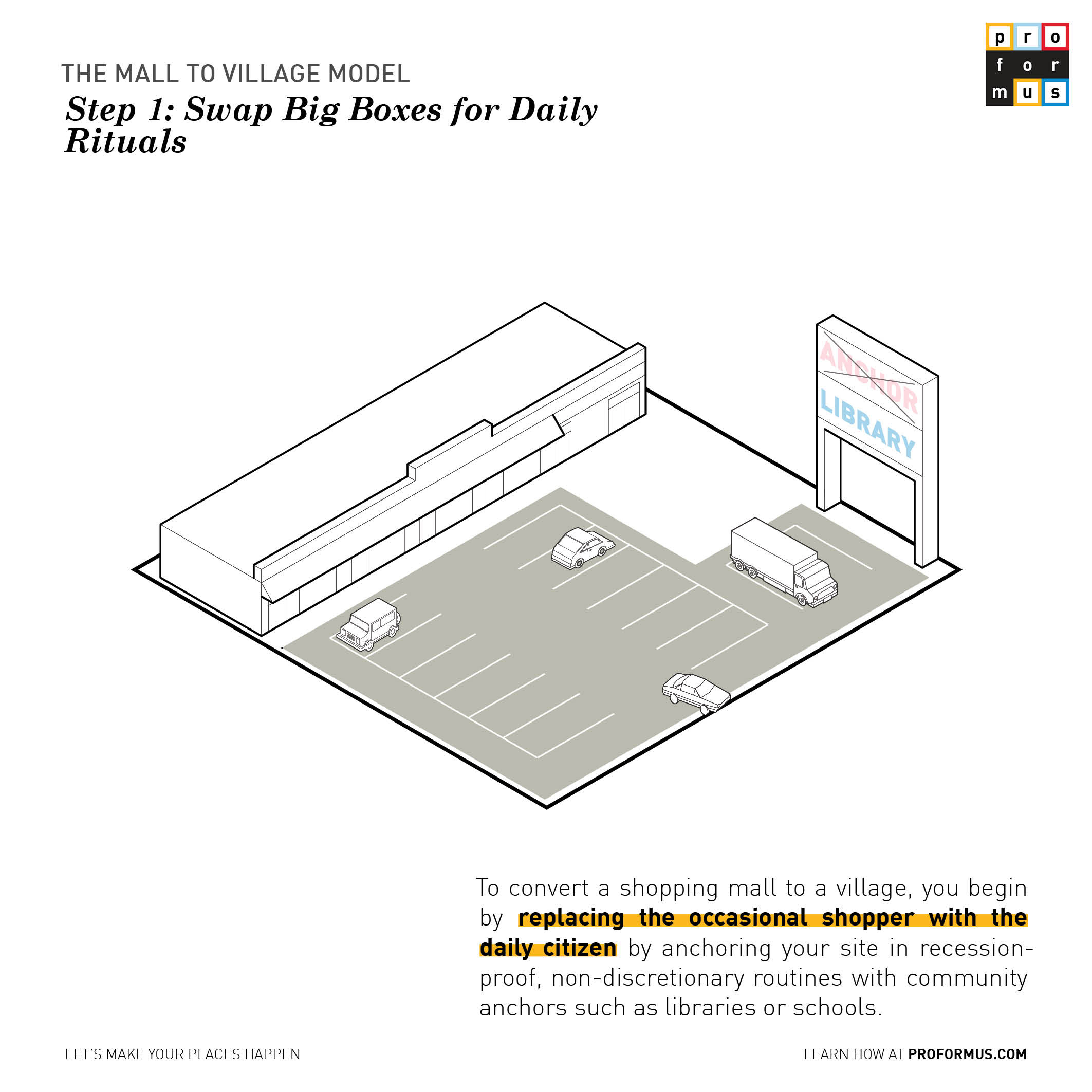
Strategy: The first step is accepting that no new Macy’s is coming. Like town centers used to work, folks had to come into town for necessary tasks like mailing a letter or selling wares, then perhaps shopped around incidentally to that initial action. Shopping is becoming more experiential, not merely consumptive. Folks can get things online, why do we still insist on going shopping then if not for the idea of seeing and being seen. The Mall-to-Village Model works because it swaps discretionary retail anchors (clothes, electronics) for non-discretionary civic anchors.
Keep in mind, some of this will involve “right sizing” or breaking down the mall into smaller components to make leasing and redevelopment easier. It’s the same path that places like Glendale Mall in Indianapolis have taken, as I’ve spoken about here. Once right sized, the real work can begin.
You must identify partners who generate guaranteed daily foot traffic regardless of the economy: a Community College (students), a Library (families), or a Grocery Store (residents). Anchors could include post offices, community gyms, or a non-consumptive use that allows citizens to interact with themselves as equals – this is essential to build the idea of Commons, or “the village”.
Elkhart did this right and took the lead by acknowledging a reset was needed, but starting from a place from advantage (an existing grocer and a public library) that could be leveraged. This is the right lesson: build around assets, but don’t sink them with oversaturation. Complement, don’t suffocate.
At this point, it’s also helpful to identify where strategic “breaking up the massing” might work to create better overall site circulation down the road.
Step 2 → Stabilize the Core (The “Public-Facing” Phase)
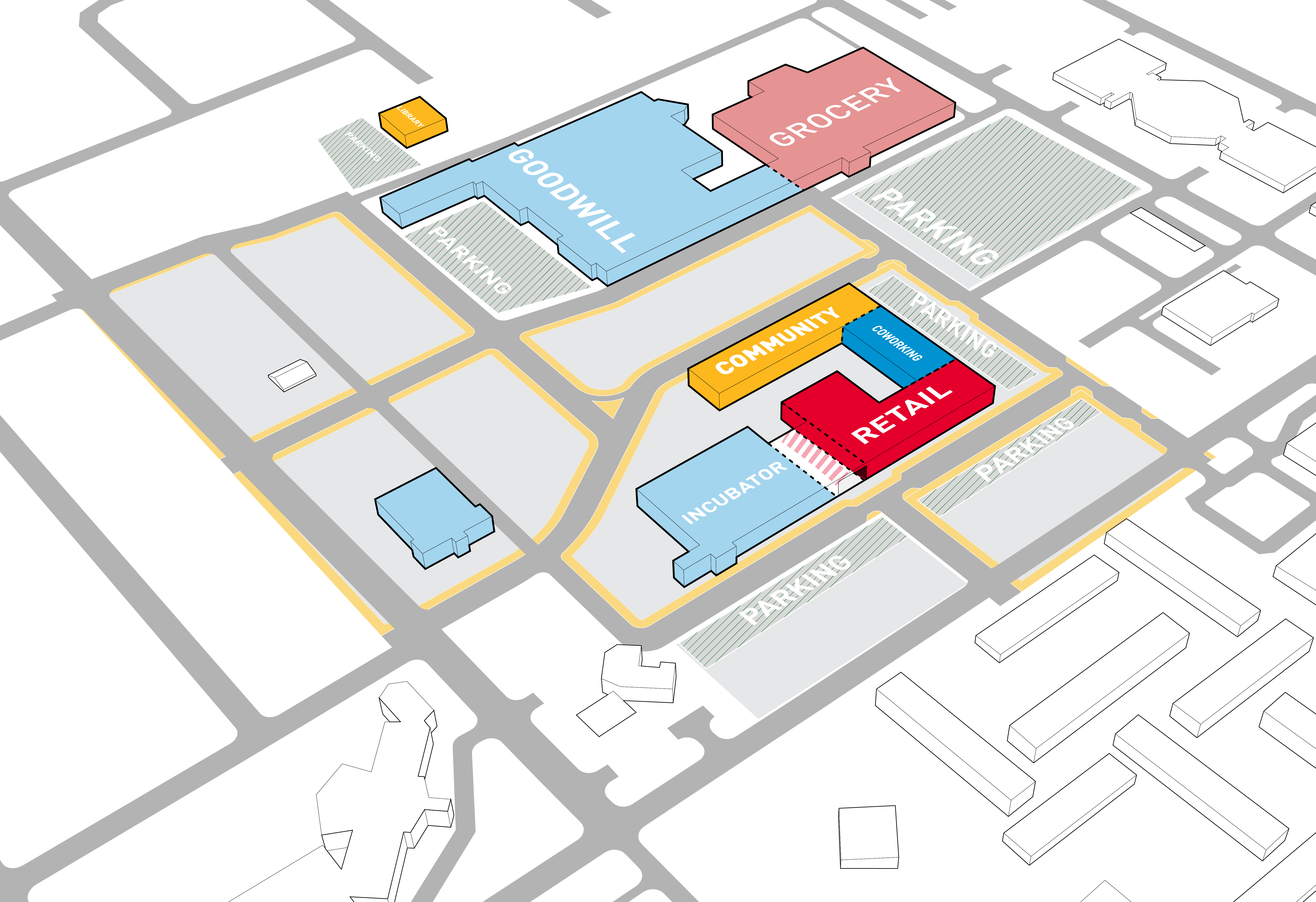
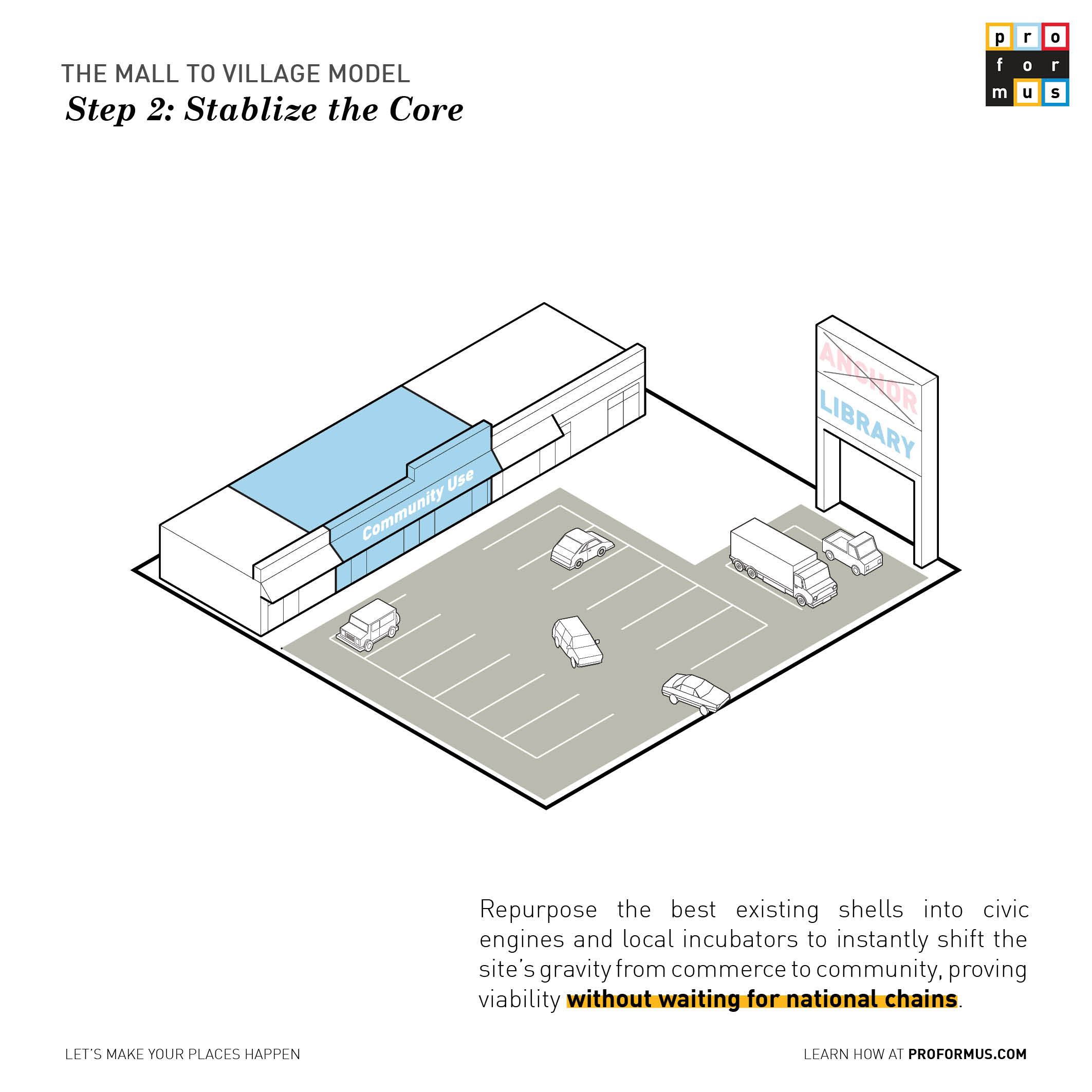
The Public Phase: Insert the Civic Engine into the existing shell. Before building anything new, repurpose the best existing box (e.g., the old Sears or J.C. Penney) for your new civic-focused Anchor. These cavernous spaces are structurally perfect for libraries, community colleges, or large-format workforce hubs.
The Strategy: Be honest about your current tenants. If they are dying, plan for their exit. If they are thriving, elevate them to “Mid-Anchors.”
→ Case Study: Woodfield Crossing. The city didn’t hunt for a Dillard’s replacement; they secured Goodwill Industries for the former Sears. This wasn’t a thrift store if that’s what you’re thinking. Instead, this complex includes their Excel Center School and CTE training academy. Instantly, the site’s function shifted from “commerce” to “community,” bringing daily foot traffic that doesn’t depend on retail spending.
The “Pulse” Check: Luckily, this specific mall already has a huge advantage: a functioning Kroger. This removes the stigma of “blight” and proves to private developers that there is a pulse on site. Take cues from what is working and what is not.
The “Test Lab”: For the smaller empty stalls, think flexibly. Or, think like the stae fair. Merge several inline units to create an “Exposition Hall”; think of it as a retail incubator that functions like a curated flea market for local artisans. Small stalls, an agglomerative economy. This lowers the barrier to entry for entrepreneurs who might become your future long-term tenants. It builds a creative culture that national chains can’t replicate
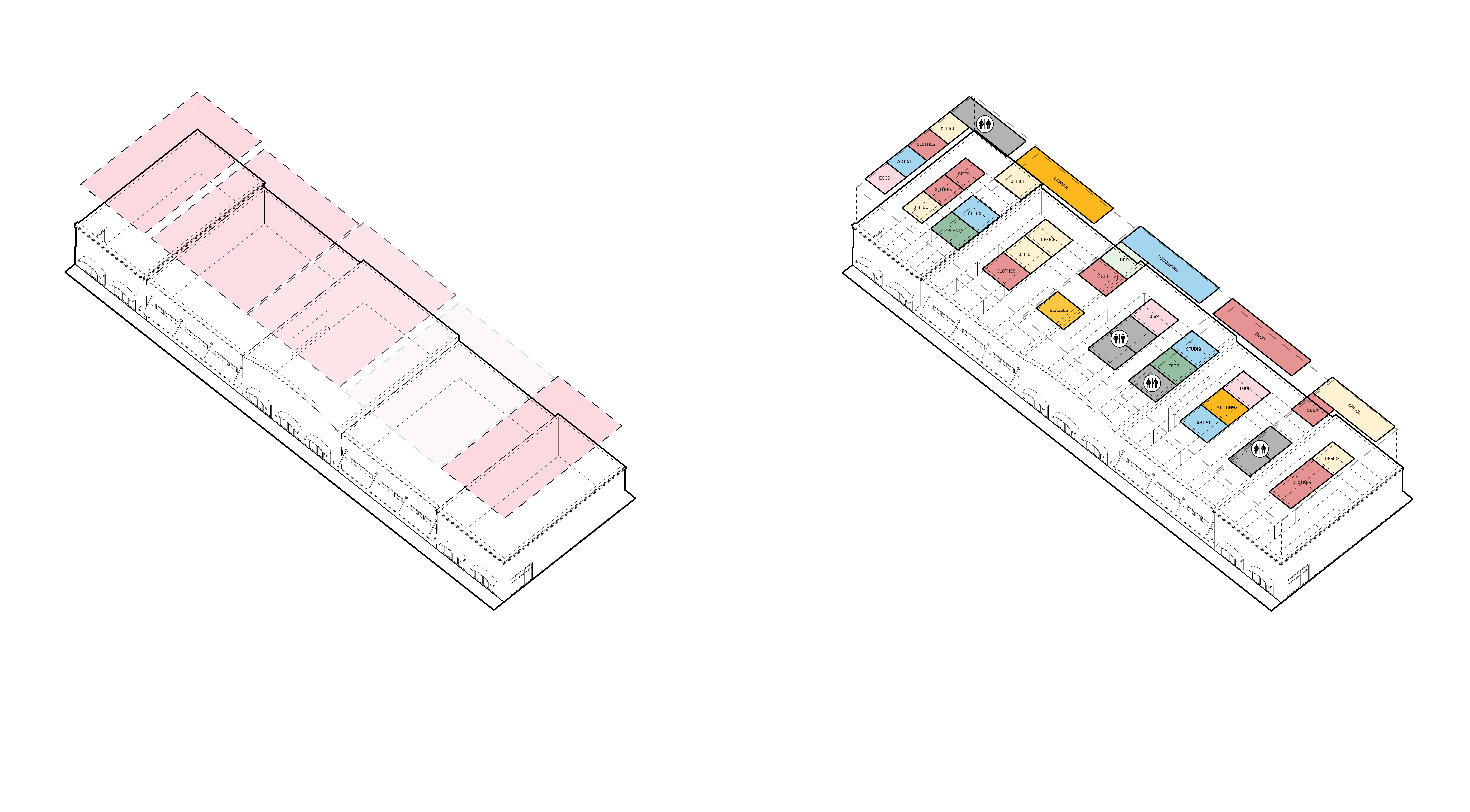
Do not try to simp out and attract national chains yet. You aren’t ready for them, and they won’t value you until you have the “place.” They maybe never will. But that’s okay! Thinking hyperlocally means we build off talent and goods we have in our own neighborhoods.
Step 3 → Break It Down (Lay the Infra and Replat)
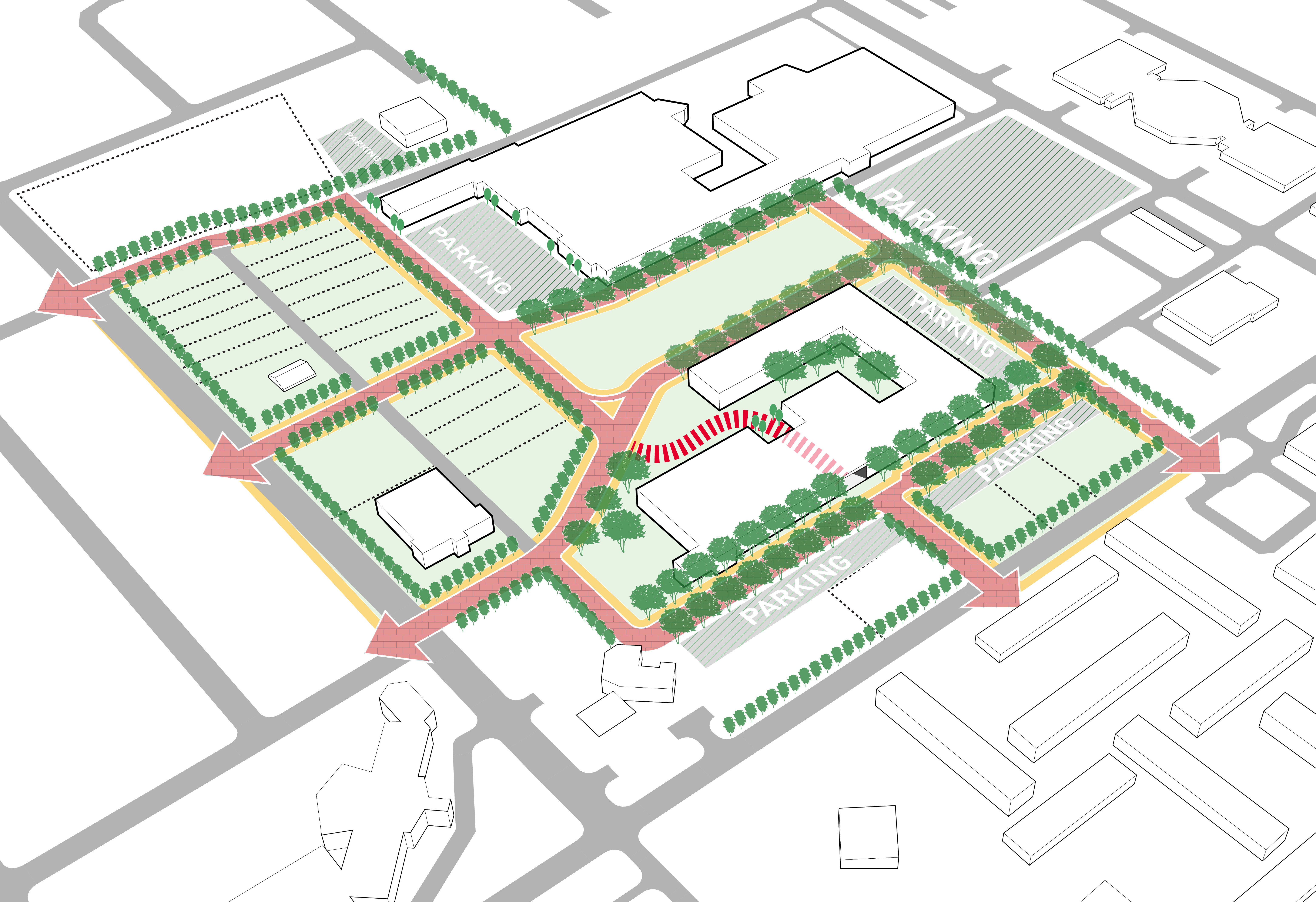
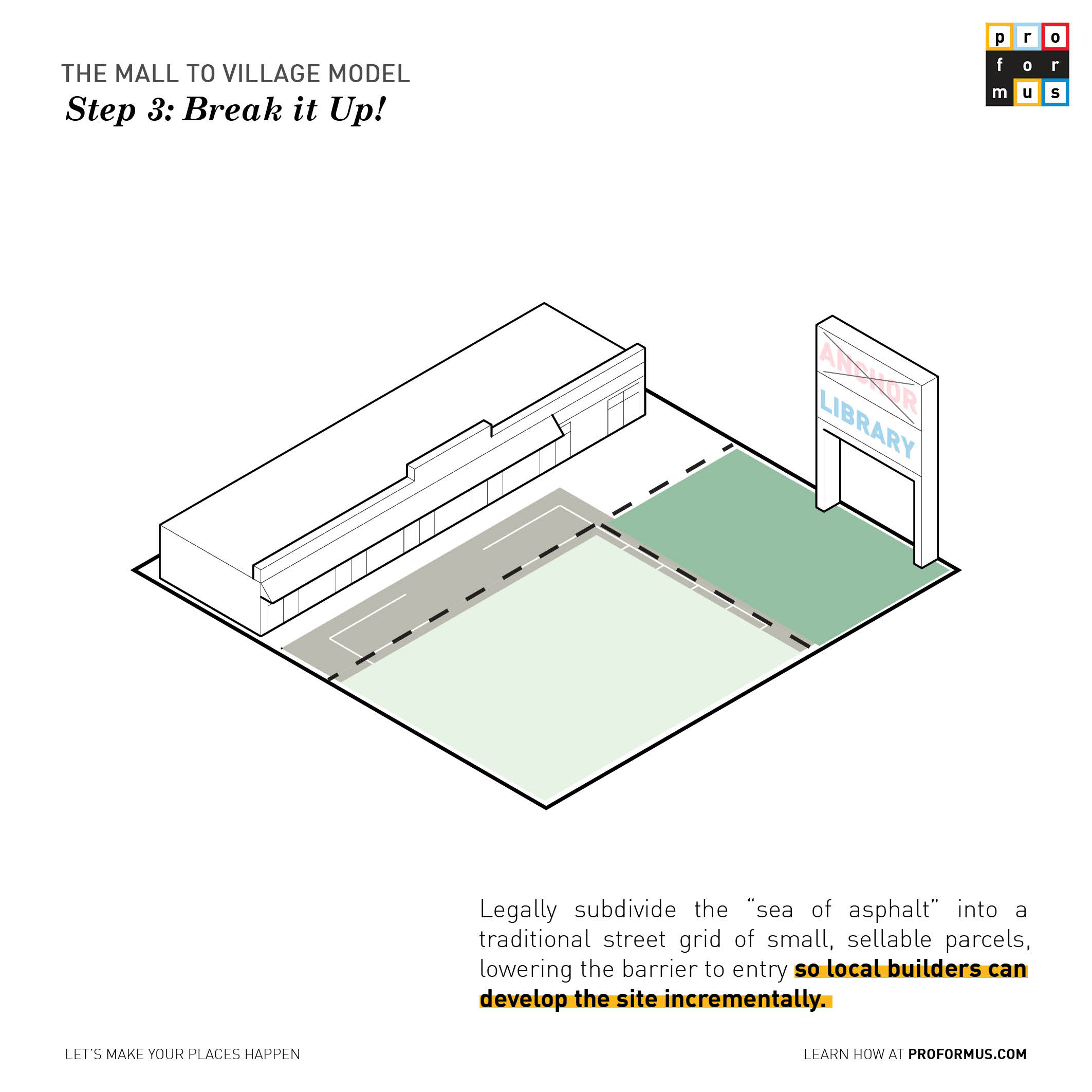
The Concept: While we are visualizing this concept specifically for the Woodland Crossing site in Elkhart, Indiana, this move could work for appropriate shopping centers across North America.
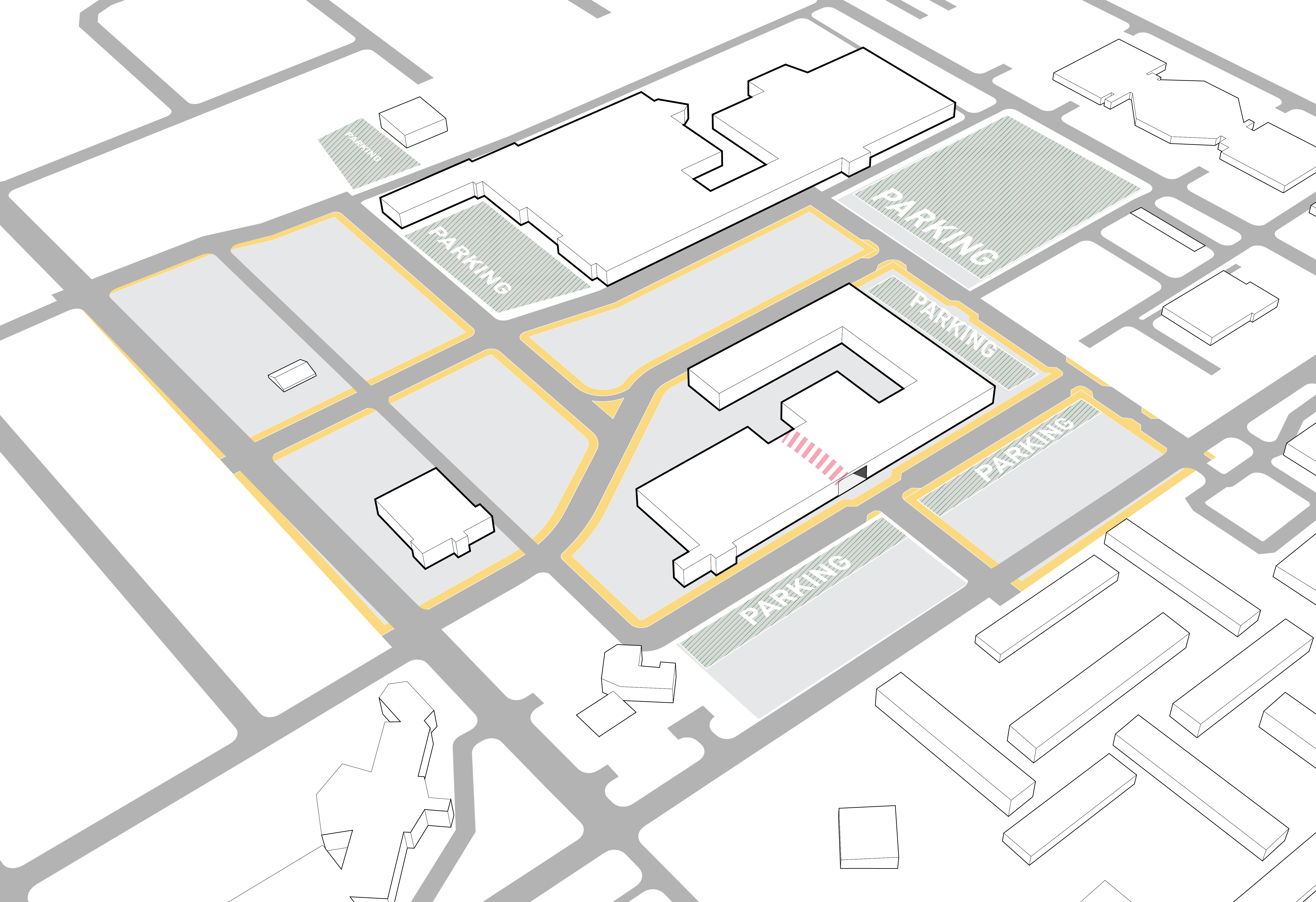
The Action: Break the Superblock into sellable pieces. You cannot develop a 100-acre parking lot as one piece overnight, at least, not without a billion-dollar investment trust. By legally subdividing the “Sea of Asphalt” into a traditional street grid of smaller, manageable parcels, you lower the barrier to entry. Suddenly, a local builder can afford to buy a single pad site to build a 6-plex, rather than needing a national developer to finance the whole district.
It is not wise to try and eat a giant cake in one bite. Creating smaller blocks allows for incremental phasing, taking small, manageable bites.
Additionally, be smart about parking. Your core anchors will still need to retain some parking and if your mall is like most other malls, it probably is still in a car-centric area. It will take time to become a village, so keep some parking lots strategically placed within the development zone to help augment and support future redevelopment efforts.
The Public Investment: Cities often ask how to incentivize this. The answer isn’t a tax break; it’s the road. Cities should use TIF or other financial tools to fund the “re-gridding” aka laying the physical streets and utilities. For millennia, cities simply laid the grid and let the market build the houses. We don’t need to reinvent the wheel; we just need to pave the street.
Step 4 → Create a Wonderwall (Perimeter Density)
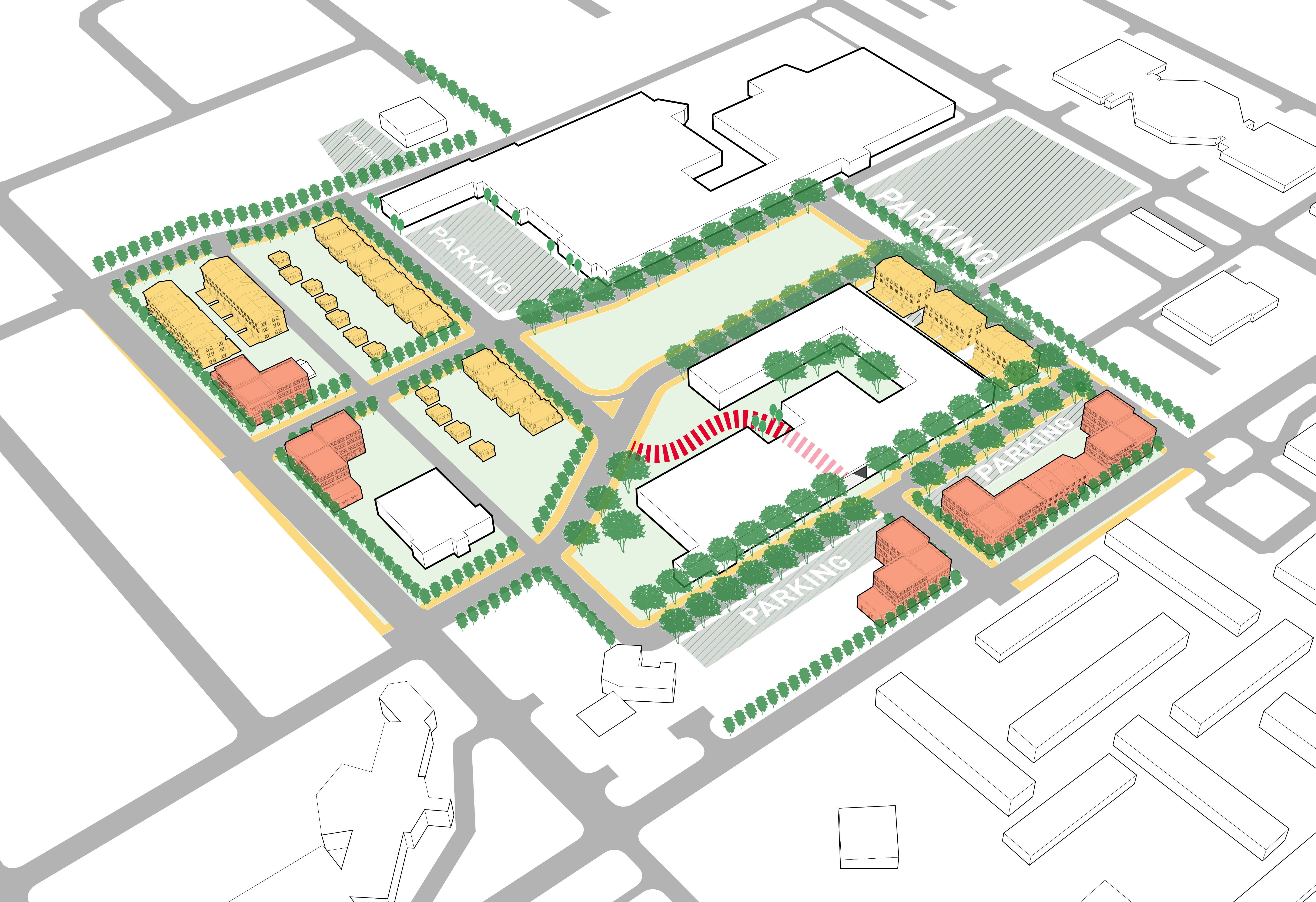
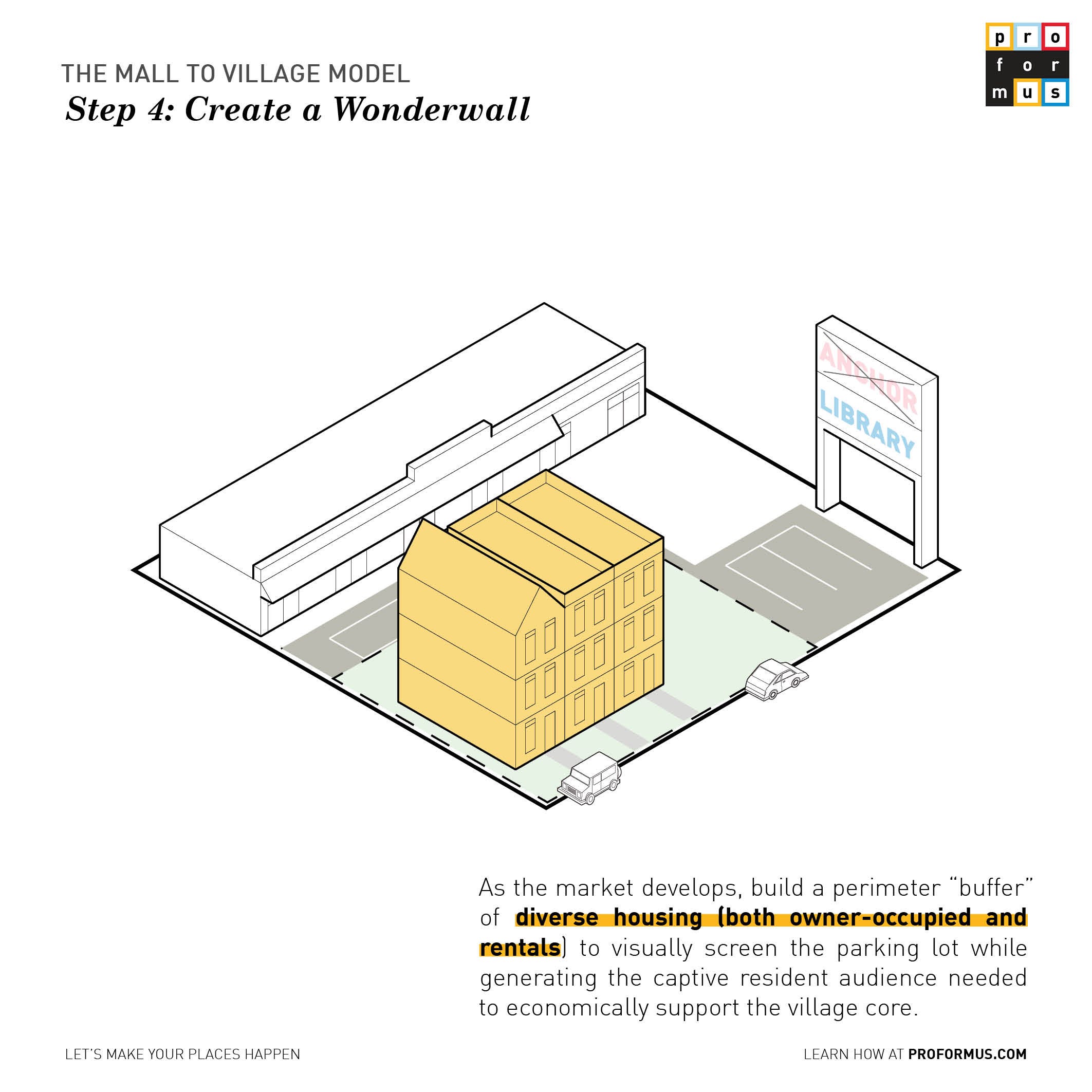
Strategy: Build the “Buffer” to fund the center. With the site subdivided, focus vertical construction on the outer ring of the parking lots first. By developing the street frontage, you achieve two critical urban design goals simultaneously:
The Screen: You physically hide the view of the “sea of asphalt” and the vacant mall interior from the main road, immediately changing the perception of the site from “blight” to “boom.”
The Captive Audience: You create the density needed to support the future uses before additional uses open.
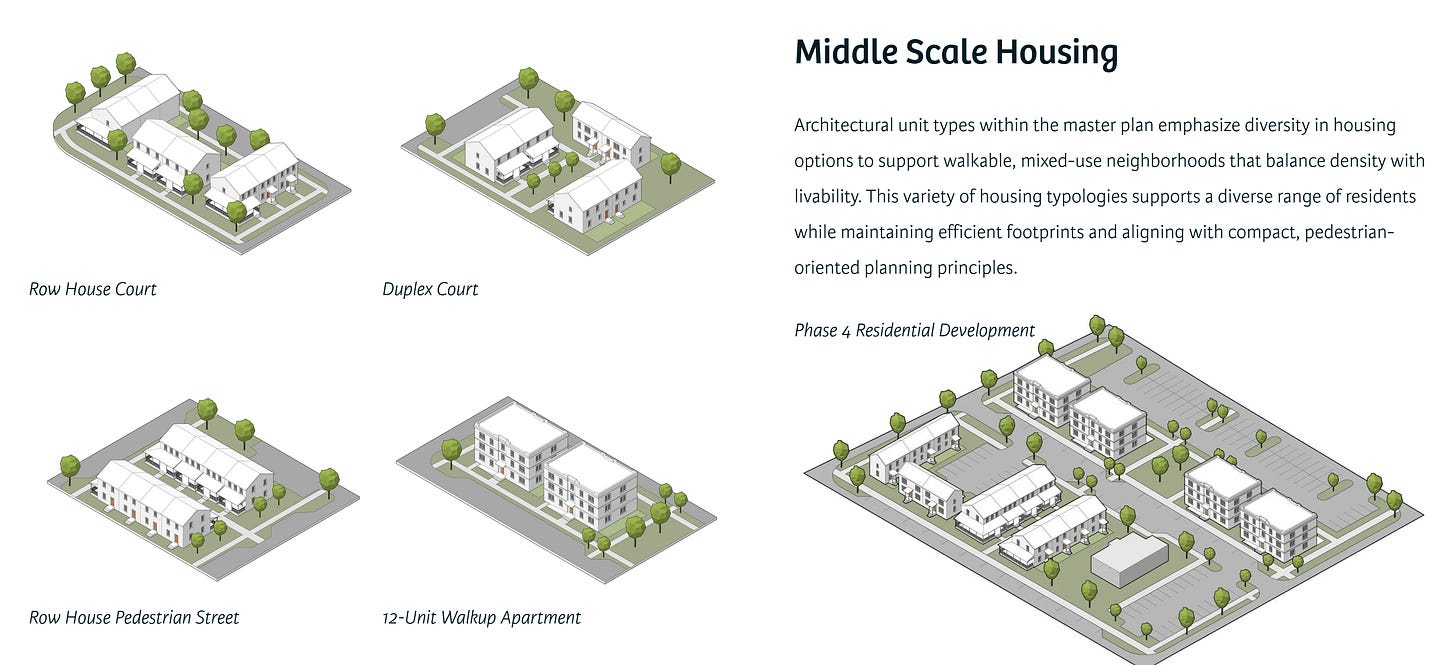
The City of Elkhart later brought in Neighborhood Evolution LLC to develop a “kit of parts” of missing housing typologies to develop at the Woodland Crossing site. Source: Neighborhood Evolution
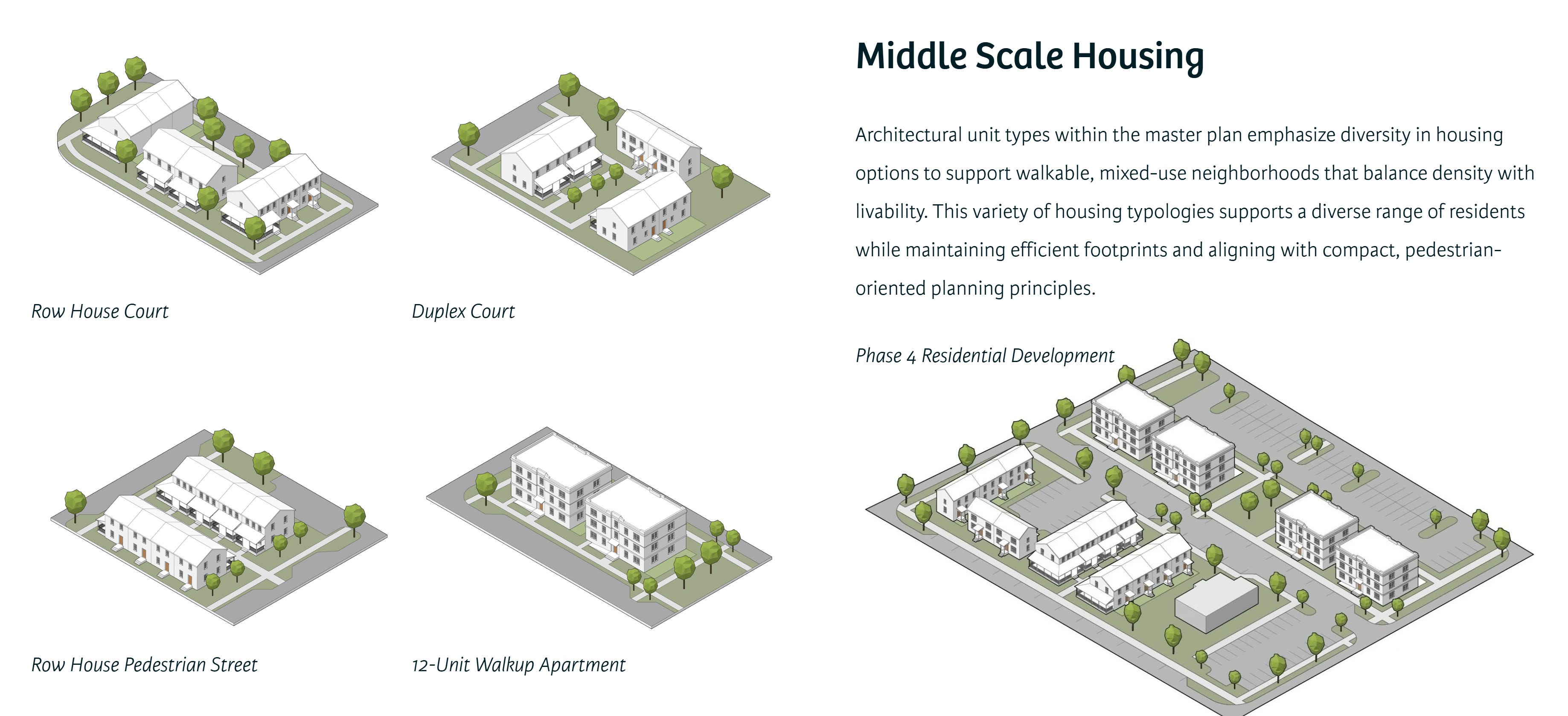
The Product Mix (Think Outside the Complex): We must avoid the trap of building generic “luxury” apartment complexes that only serve transient young professionals. To create a village, we need a “chaotic good” mix of housing typologies:
→ Live/Work Units: Ground-floor workspaces with living quarters above, activating the sidewalk all day long.
→ Owner-Occupied Density: Townhomes and condos that encourage long-term stakeholders, not just renters.
→ True Family Housing: This means units with 3+ bedrooms and access to village amenities (parks, libraries), rather than just a private clubhouse.
The Toolkit: To accelerate this, cities should pair this subdivision with Pre-Approved Housing Toolkits (similar to the successful model used nearby in South Bend). If a local developer buys a “re-gridded” lot at Woodland Crossing and uses a pre-approved plan, they get expedited permitting. These lots should have minimal restrictions, encouraging a “chaotic good” mix of diverse housing types.
The Result: By removing the regulatory risk, we enable small-scale local developers to build missing-middle housing that big REITs ignore. We don’t just build units; we build not just a neighborhood. We build a village.
Step 5 → Build Zones of Participation (The “Living Room”)
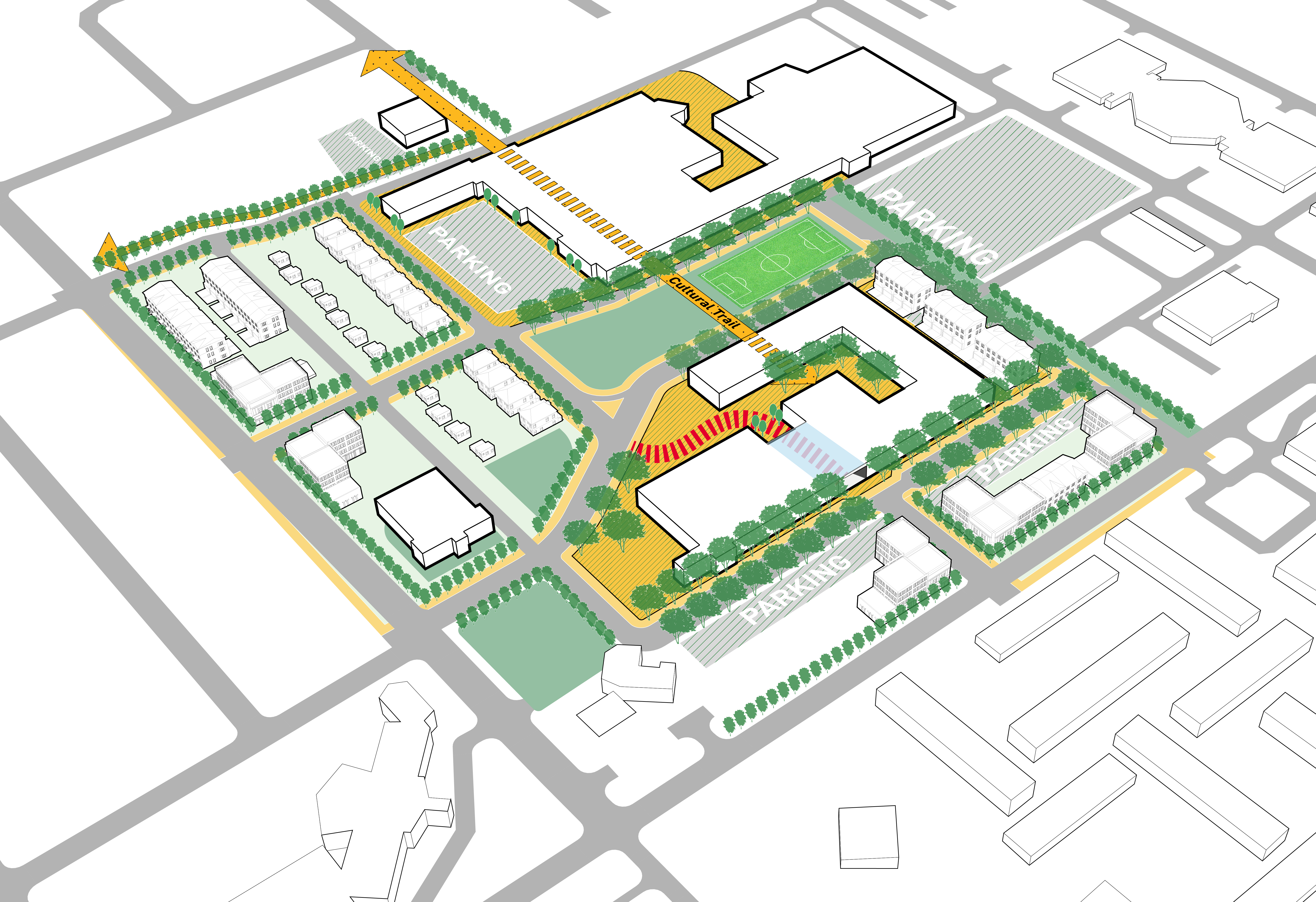
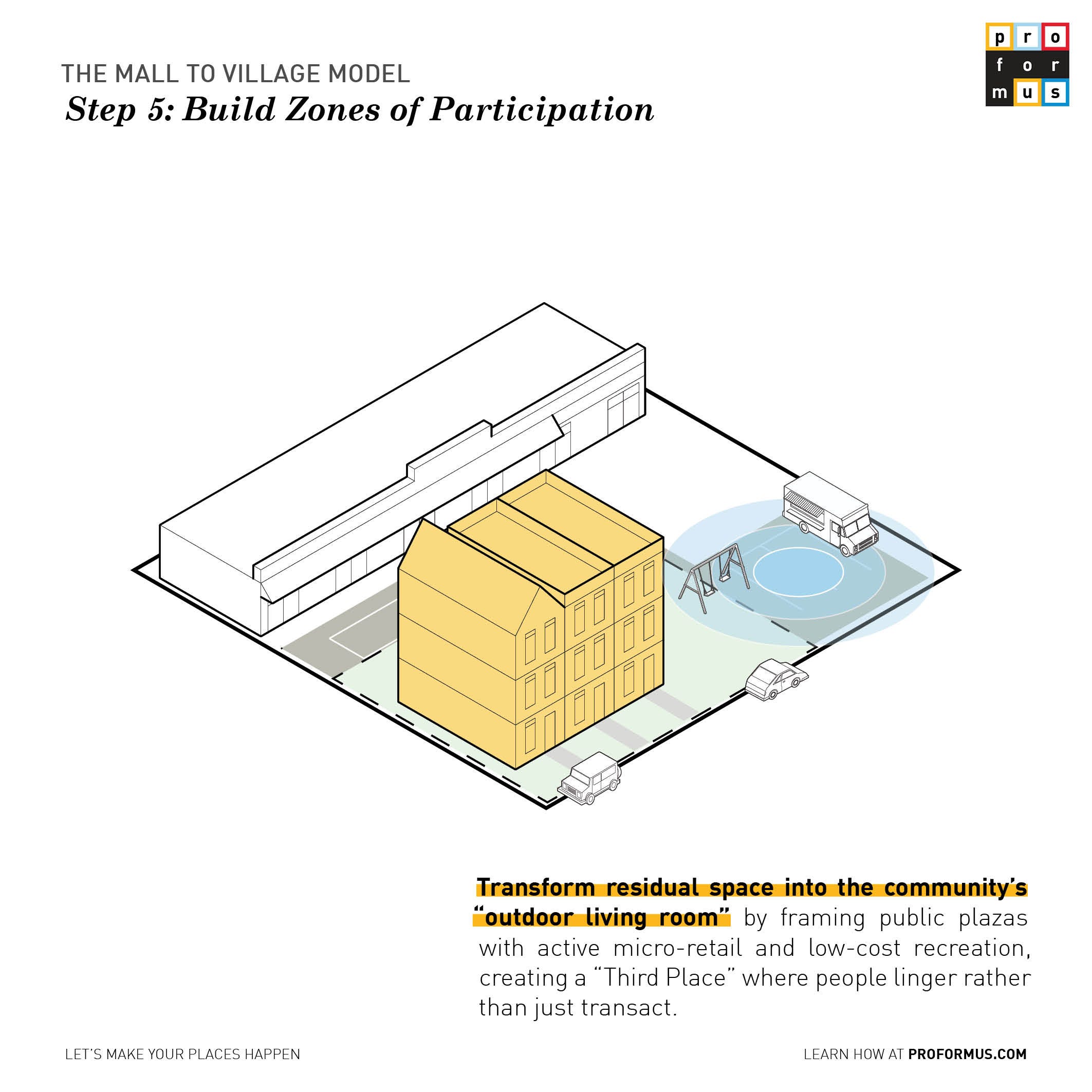
Strategy: You have the people (Step 4) and the purpose (Step 2). Now we need the reason to stay. We transform the residual space between the new grid and the old anchors into the community’s “Outdoor Living Room.”
The Hardscape (Creating the Room): An open parking lot is agoraphobic; a village green is cozy. We’ve define the edges of this public space with our new liner buildings and active storefronts to create a sense of enclosure. Central green spaces become the “Third Place” where the community gathers not to buy, but to be. Or just to watch the world go by.
Programming (Active Participation): Don’t just plant grass and put up a “Keep Off” sign. We need engagement. Activate the central plaza and support recreational activities. Expand the Food Hall or Micro-retail incubator concept. This lowers the rent threshold, allowing local businesses to create a unique cultural identity that makes the place “cool”— something a chain restaurant can never do.
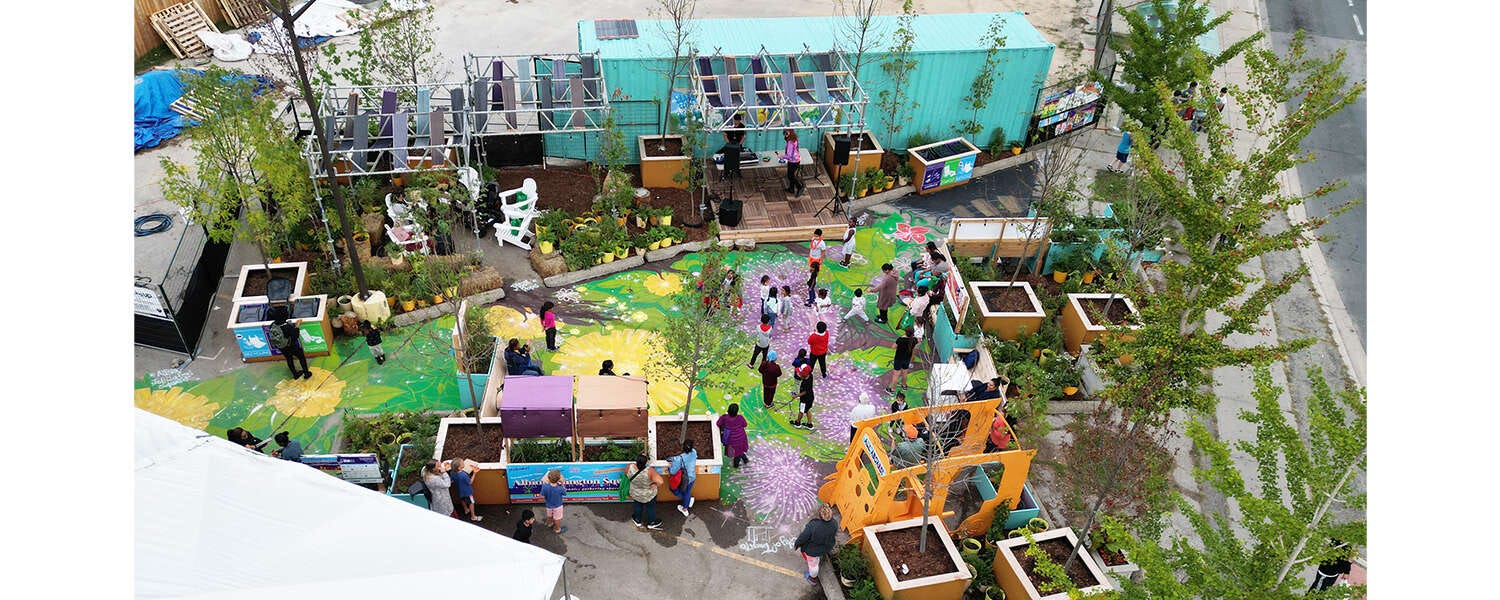
Low-Cost Recreation: Convert dead loading docks into skate spots or outdoor stages. Turn excess pavement into pickleball courts, experiential art, or playgrounds. These are low-cost activators that bring youth and families on evenings and weekends.
The “Soft” Infrastructure: Programming is just as important as pavement. Weekly farmers markets, food truck rallies, or outdoor movie nights turn the space from a physical location into a habitual destination. Give visitors and residents both a reason to come out.
Outside Connections: A village cannot survive as an island. Mall retrofits should explicitly connect the internal “Living Room” to local trails, bike lanes, and greenspaces. This means creating various (safe) ways to get to the village, not just by car. We stop treating the mall as a fortress and start treating it as a place.
Step 6 → Let it Go!
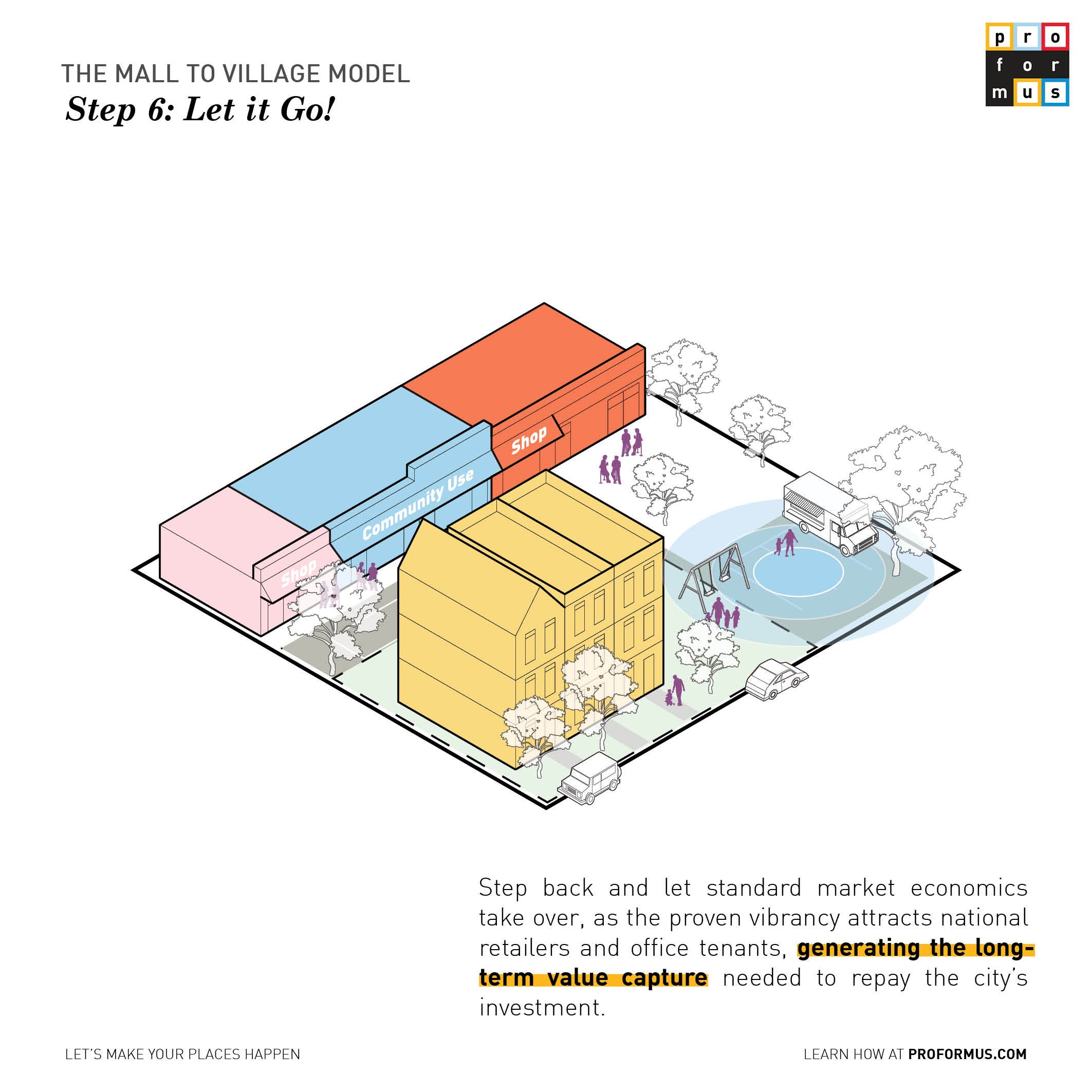
Unlike Elsa in Frozen, by Step 6, the heavy lifting is done. You have removed the number one killer of real estate development: Uncertainty.
In the beginning, banks wouldn’t lend because there were no “comps” (comparables) and no foot traffic.
Now, you have students attending a workforce development seminar (Step 2), residents headed home (Step 4), and kids biking over to play soccer or grandparents playing pickleball (Step 5).
The Market Tipping Point: We no longer need to subsidize or incentivize every single brick. We can let standard market economics take over. The remaining empty parcels, which were once worthless asphalt, are now premium real estate because the village is self-supported.
The Office Tenant: suddenly wants to be here because their employees can walk to lunch.
The National Retailer: (who ignored you in Step 1) suddenly wants a lease because they see 18-hour-a-day foot traffic.
The Exit Strategy: The development transitions from a risky “turnaround project” to a “stabilized asset.” This is where the municipality creates Value Capture. The increased property taxes from the new density begin to pay back the bond used to build the street grid in Step 3. The “Village” is no longer a project; it’s just a part of the city.
While what ends up happening at Woodland Crossing in particular will be up to market forces, civic leadership, and development partners, I think this site in particular is on the right track.
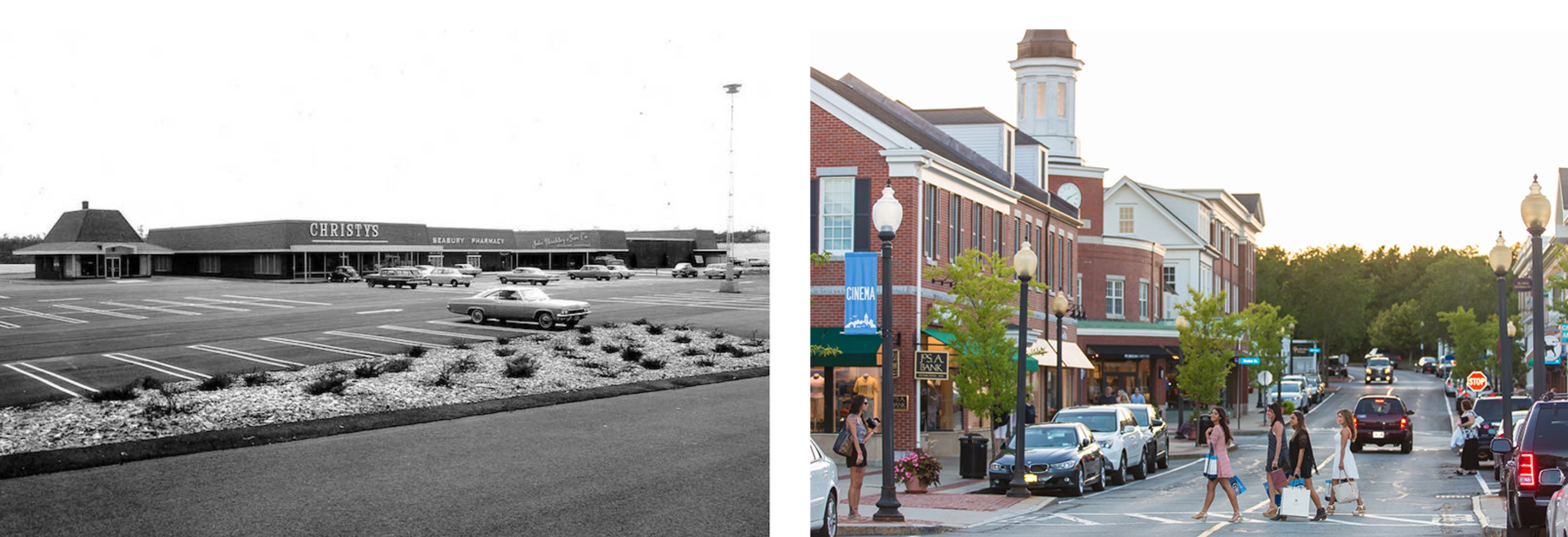
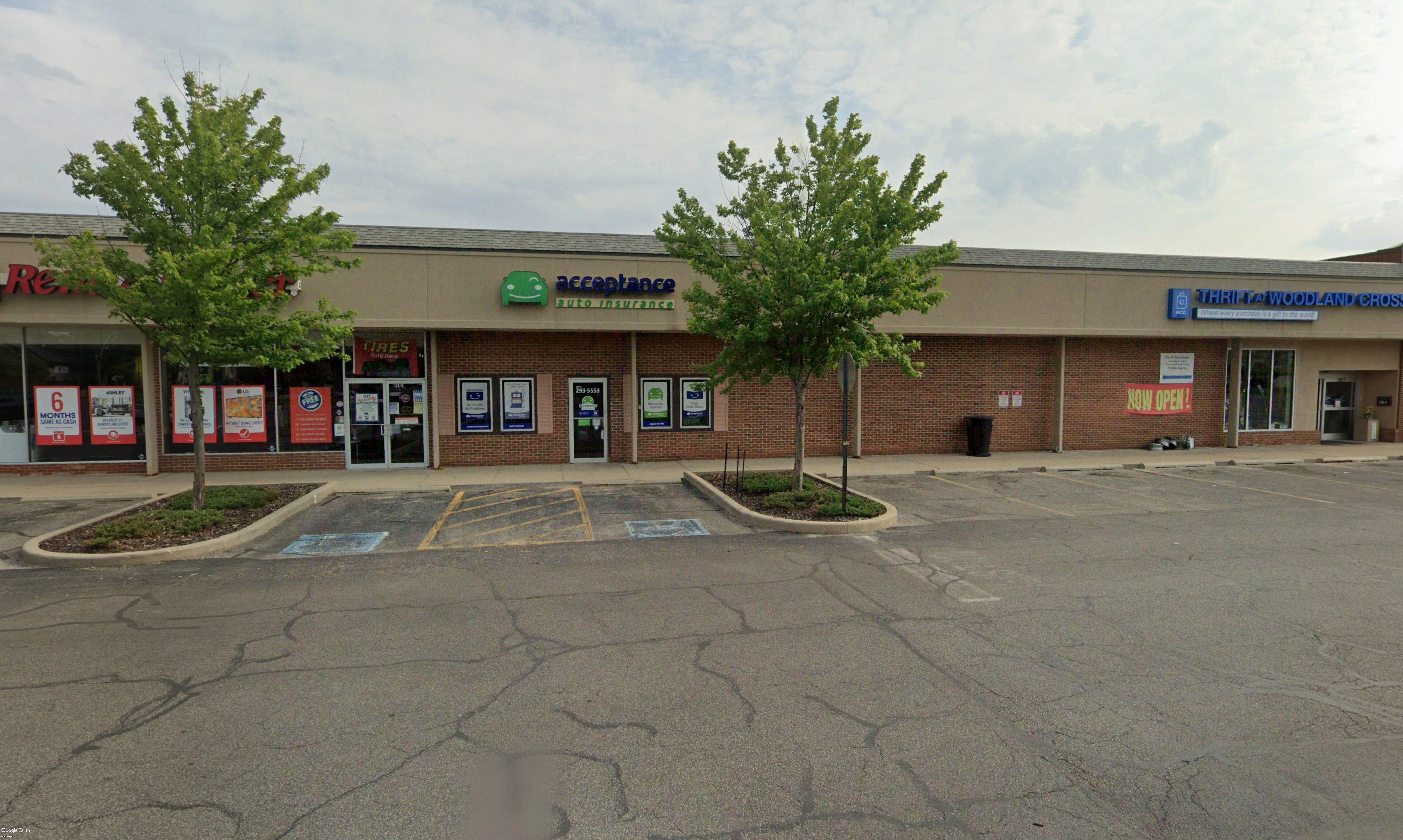
From this:
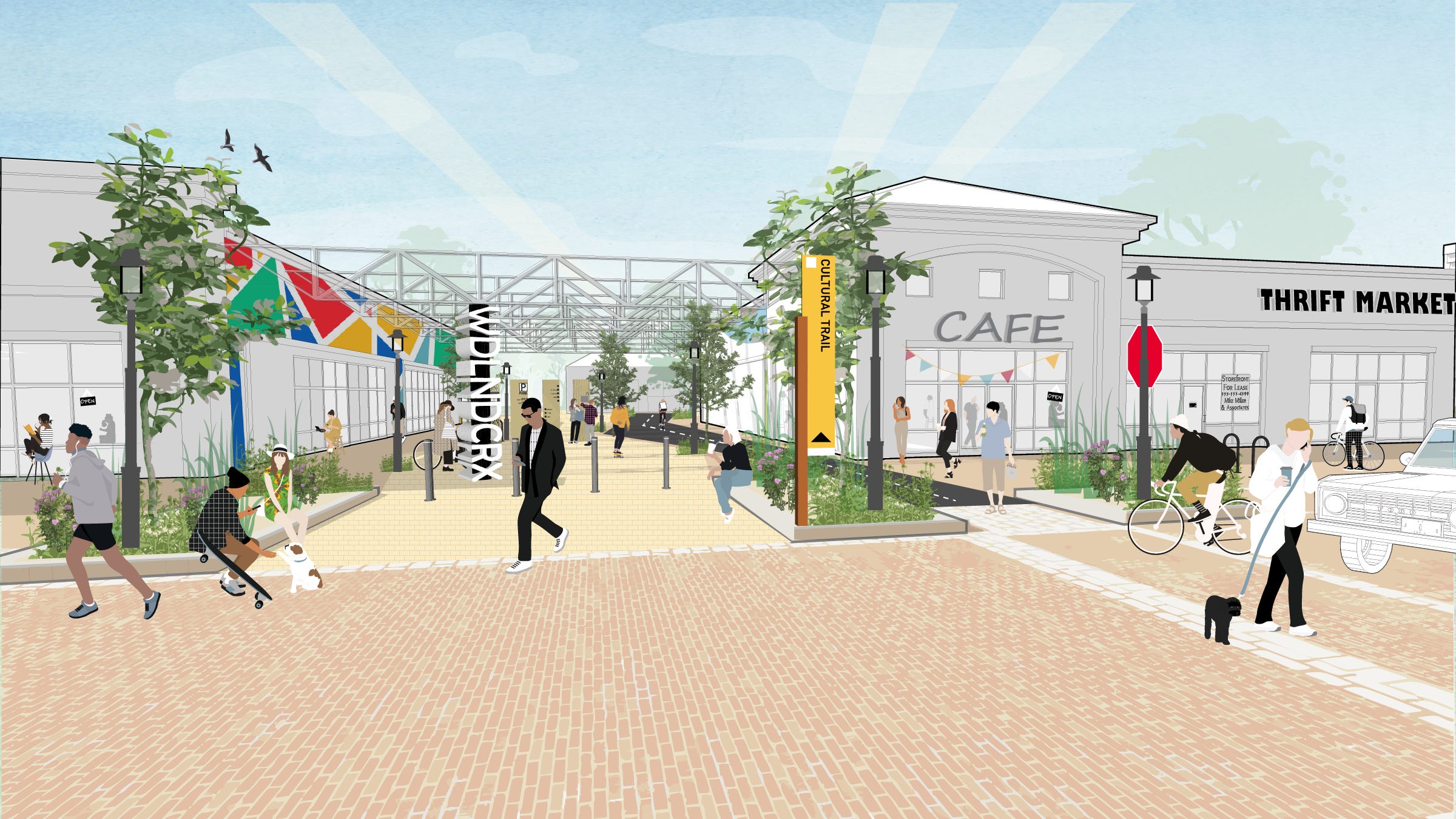
To this:
Things to Watch Out For
Before we try to save a mall, we have to check for a pulse. Two things usually kill a retrofit before it starts...”
The REA Nightmare (Reciprocal Easement Agreements): This is the silent killer. Department store anchors often own their own lots and have agreements that allow them to veto any changes to the rest of the mall (including the parking lot). If Macy’s says “Talk to the Hand,” the project is dead. You need unified control or a cooperative anchor.
The Geometry of Doom: Things like Residential conversions require light and air. A standard mall is 100+ feet deep. You can’t put apartments in the middle of a JCPenney without carving out a massive light well (the “donut” method). If the structural grid doesn’t allow for economical carving, the building is better off as gravel. So, come in with an open mind. It’s not just shopping to residential. Or office to shopping. Think outside your assumptions first.
Conclusion: Restoring the Village
If you can navigate the REAs and solve the geometry, the reward is far greater than just a stabilized asset. We’ve created a village.
In her book A Love Letter to Suburbia, Diane Alisa Tuft argues that while we constantly say “it takes a village” to raise a family, we have spent the last century effectively illegalizing the construction of one. We built distinct zones for sleeping and distinct zones for shopping, but we forgot to build places for living.
Retrofitting these key catalytic sites is our chance to reverse that. By turning those dead malls and vacant strips that should be redeveloped into Town Centers, we aren’t just solving a real estate problem; we are legalizing the village again. We are taking the spaces that divided us and transforming them into the places that finally bring us together.
The six steps of the Mall to Village Model are a good start.
Probably the best song of the entire 1990s, Oasis’s “Don’t Look Back in Anger” is their strongest song, and is the Gallagher brothers best backing to the claim of being John Lennon reincarnated.
Arguably the best song** of Radiohead’s 1995 album The Bends, the music video for “Fake Plastic Trees” features frontman Thom Yorke being pushed through a sterile, brightly lit grocery aisle in a shopping cart, surrounded by an endless array of identical, colorful cans.
This imagery captures exactly what the enclosed mall represented at its zenith: a hermetically sealed, commercially curated hallucination of a town center. A facsimile of place. It’s arguable that the mall was never designed to be a “place.” It was a machine for consumption, engineered to disorient you (the Gruen Effect) and sever your connection to the outside world, no clocks, no windows, just climate-controlled eternal noon. A fake plastic watering can, indeed. That fact that the mall did somehow become a “place” was not out of design, but simply because it put other people together. At their height in the 1980s, malls became a place to be seen, which is really the way a place becomes a place in the first place. This really just proves that our activity is based on emergent needs and desires, a lesson for future mall retrofits everywhere. For more on the history (and odd romanticism) of malls, I highly suggest Alexandra Lange’s Meet Me by the Fountain: An Inside History of the Mall
**There’s probably a larger argument for “Fade Out/Street Spirit” as the best song off The Bends. The song depicts the failed (maybe almost Sisyphean) battle against the oppressive and painful realities of existence; in interviews, Thom Yorke has called it probably the darkest thing he’s written — I’d be inclined to agree.
Essentially a “Shopping Center Potential Index” (SCPI) // a multi-variable scoring matrix to identify and promote the redevelopment of shopping centers. This assessment would set a baseline measurement of what is construed as a shopping center (by size or typology), then set available and measurable criteria to understand the potential of reuse, capacity, and future demand to match city policy with efficient development priorities.
Done while I was a Design Director at METICULOUS Design + Architecture.
This was great! We have a dead mall in a strategically ideal location for redevelopment in a smart way. A developer who acquired it has been stalled but there are a lot of solid, inspiring ideas here. I’ve already shared it with another local affordable housing developer and an engineer working on the plans.