


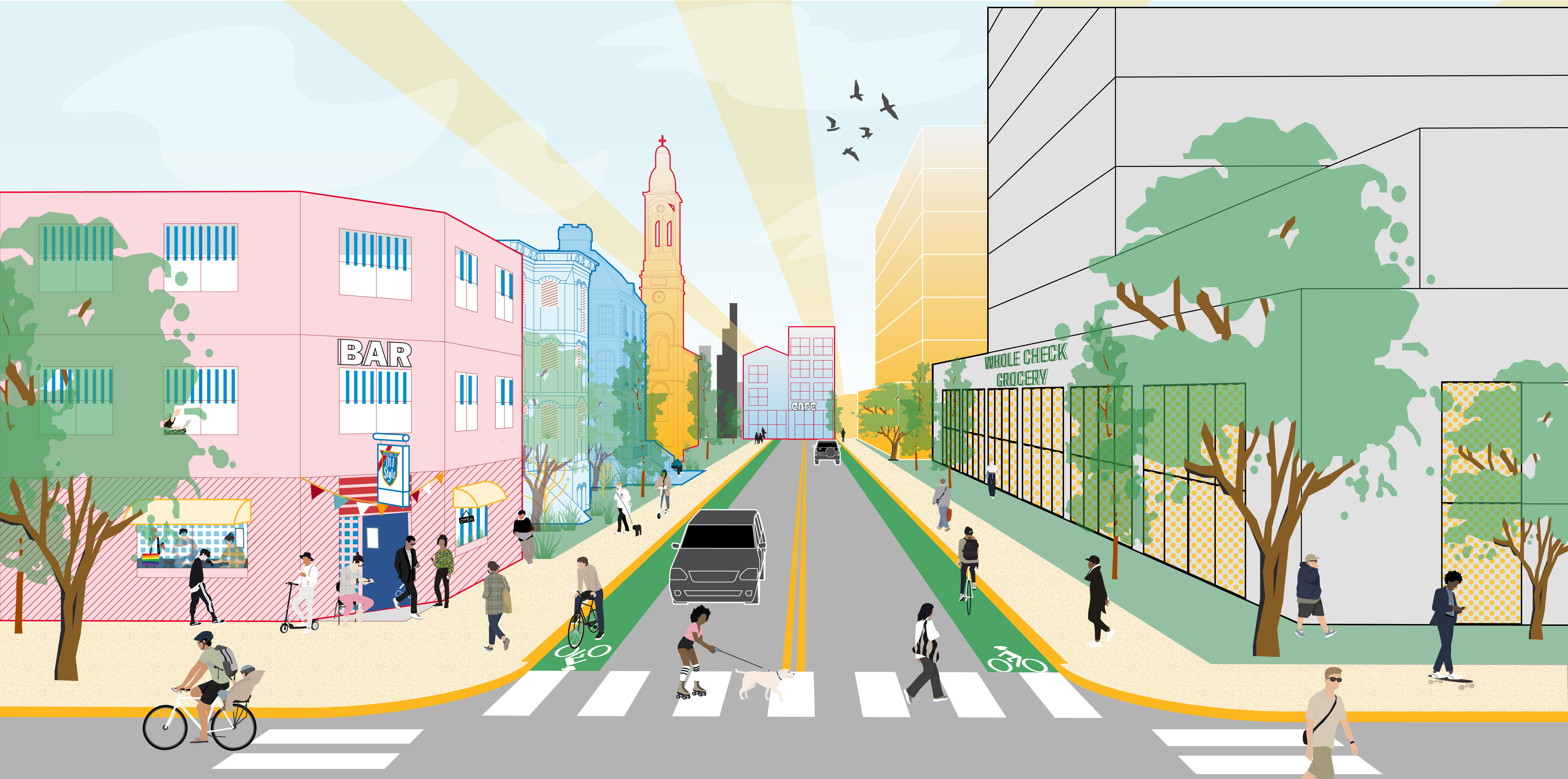
The following is an excerpt from our white paper Thinking Big by Thinking Small released in summer 2025. You can find more about Proformus and our full white paper here:
There is a key difference between the way we used to build places and the way we do now. For instance, in Chicago, traditional neighborhoods were built incrementally, shaped by emergent processes and market forces rather than blanket master plans. The city’s iconic neighborhoods grew on the backs of 25’ by 125’ parcels, subdivided from larger tracts of land.1 These parcels were sold to a diverse mix of small-scale investors, developers, and homebuilders, each contributing to the patchwork of the urban fabric.
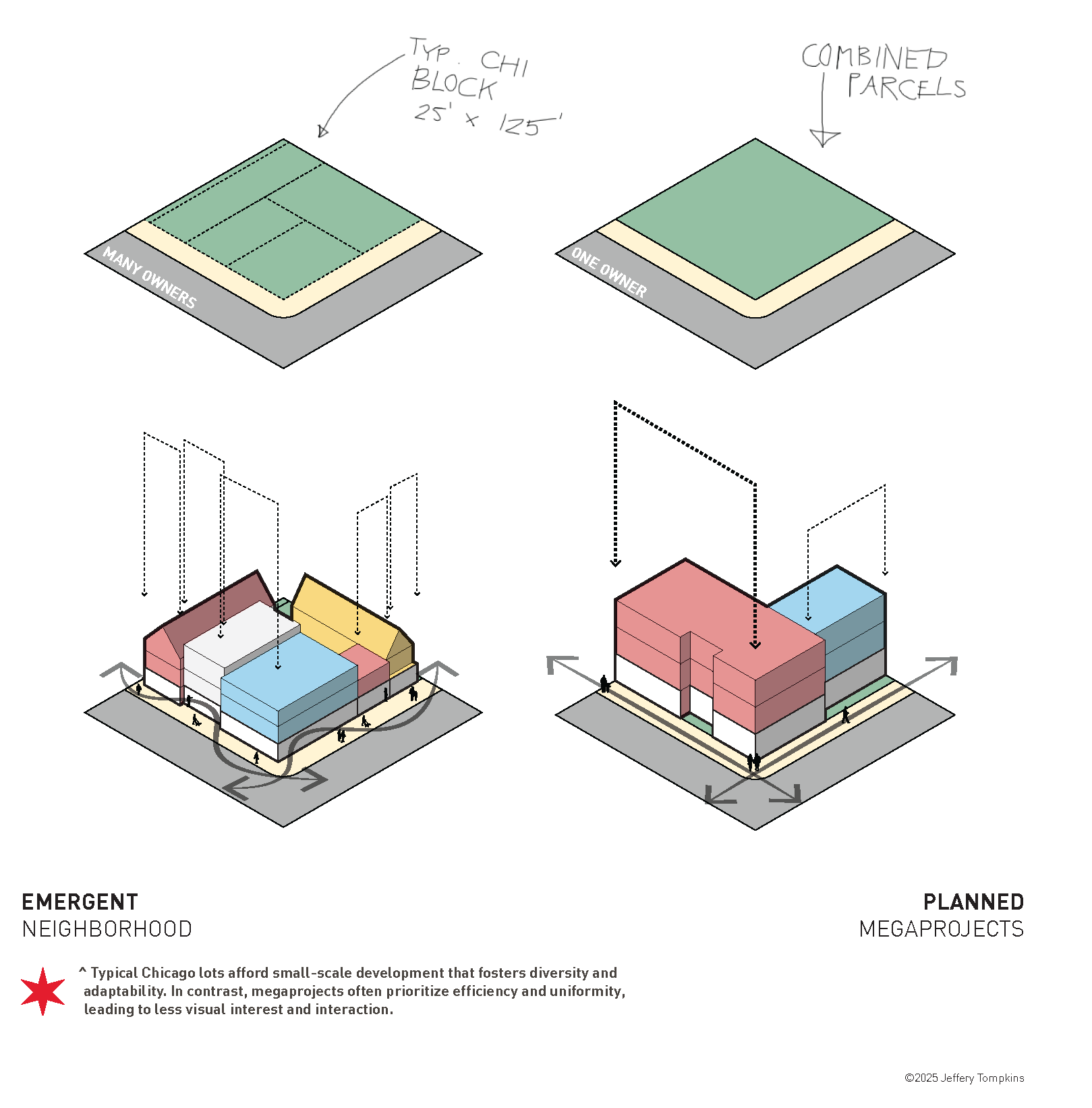
In the late 19th and early 20th centuries, this organic growth was driven by the convergence of several factors: a burgeoning population of immigrants, the availability of small parcels for affordable investment, and a lack of restrictive zoning regulations.2 Investors built two-flats, three-flats, and small commercial buildings, which enabled density to emerge naturally. Neighborhood commercial corridors like Clark Street or Halsted Street arose where transportation nodes such as streetcar lines intersected with residential demand.3 The result was a fine-grained urban environment that balanced housing diversity with walkable access to local businesses, schools, and community spaces.
The emergent model allowed Chicago to adapt to changing needs over time. Landowners were free to build according to market demand. Residential areas included homes for a variety of incomes, while commercial corridors hosted local grocers, cafes, and specialty shops, sustained by the surrounding community. Density was not imposed but evolved naturally as families converted single-family homes into flats or added storefronts to accommodate economic activity. Home owners could rent units to immigrants or those otherwise unable to afford new construction, allowing more affordability.4 What made this model successful was its flexibility which allowed filtering of use over lifecycles and micro- and macroeconomic trends.
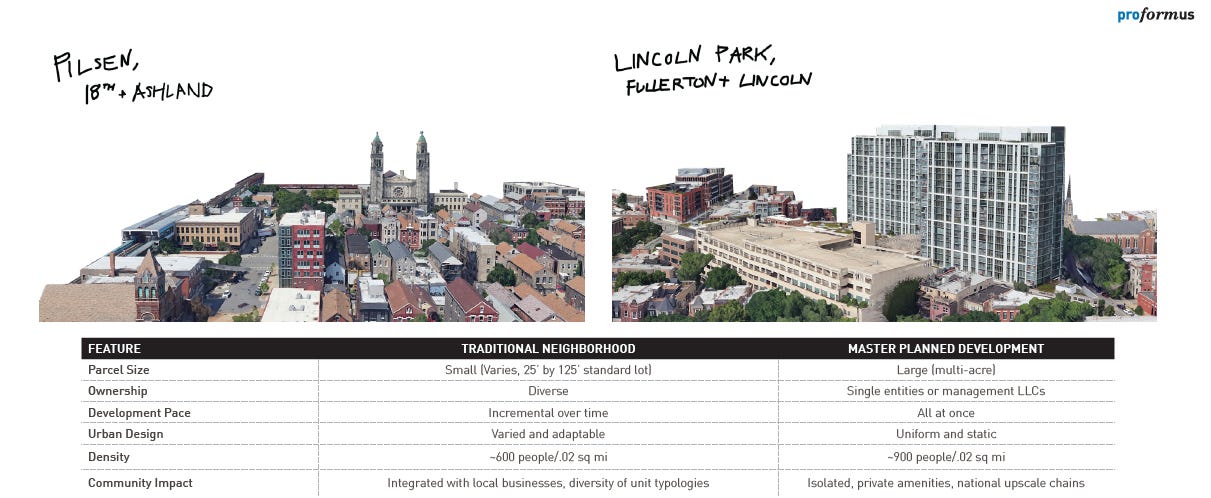
The grid layout of Chicago’s streets provided a framework for growth, but it did not dictate how individual parcels were developed. Instead, the interplay of individual decisions by property owners and entrepreneurs created neighborhoods that felt authentic and vibrant. Today, areas like Wicker Park, Pilsen, and Old Town retain the character of this organic development, showcasing a mix of residential, commercial, and cultural uses. So… what the heck happened?
1. The Rise of Zoning + Regulatory Constraints >>>
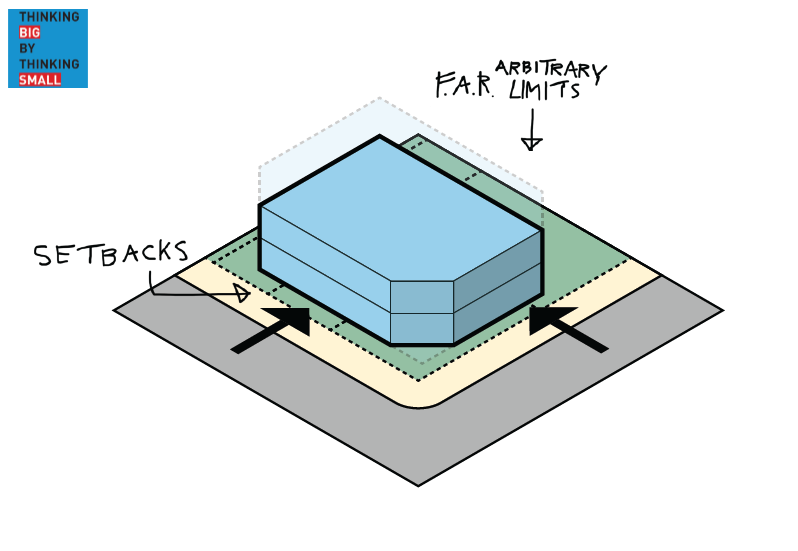
In the early 20th century, cities introduced zoning laws to address public health and safety concerns. While these regulations served an important purpose, they also imposed rigid standards and a bureaucratic legalese that limited organic development. Minimum lot sizes, bans on single-stair towers, setbacks, and floor area ratios (FAR) began to dictate how land could be used, making it difficult to replicate the mix of housing, shops, and cultural spaces found in older neighborhoods.5 Over time, these rules grew more complex, effectively making the development process extremely confusing.
2. Economic Barriers to Small-Scale Development >>>
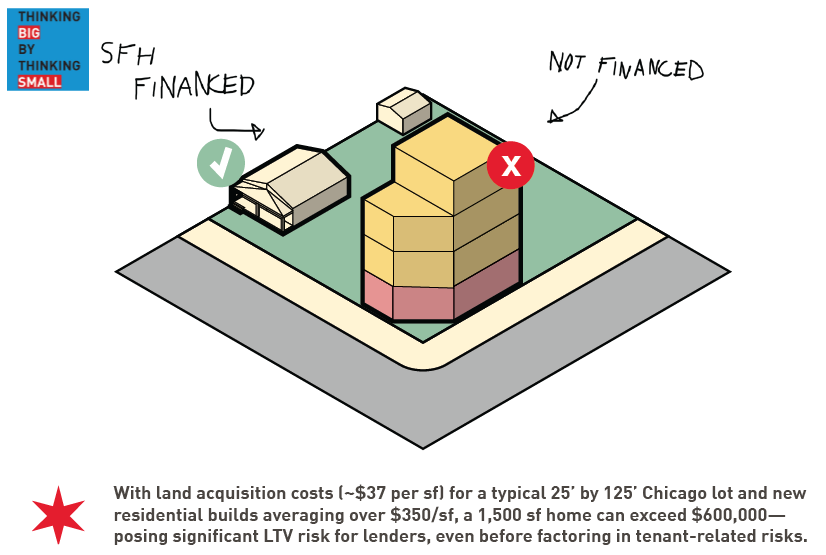
The financial landscape of urbanism has also shifted dramatically. In Chicago’s early days, an individual or small developer could purchase a 25’ by 125’ lot and build a modest home or mixed-use building. Today, land costs (average cost of residential land in Chicago is estimated around ~$37/sf 14) and hard construction fees (+$300/sf) make it difficult for low-equity developers to compete.6 Lenders typically favor large, uniform developments with predictable LTV (loan to value) ratios,7 further sidelining the possibility of incremental, diverse growth. Standardized FDIC underwriting criteria historically aligned with lender preference over missing infill, like townhomes or sixplexes.8 Mixed-use or creative, funky development is even harder to finance.9
3. The Influence of Transportation Infrastructure >>>
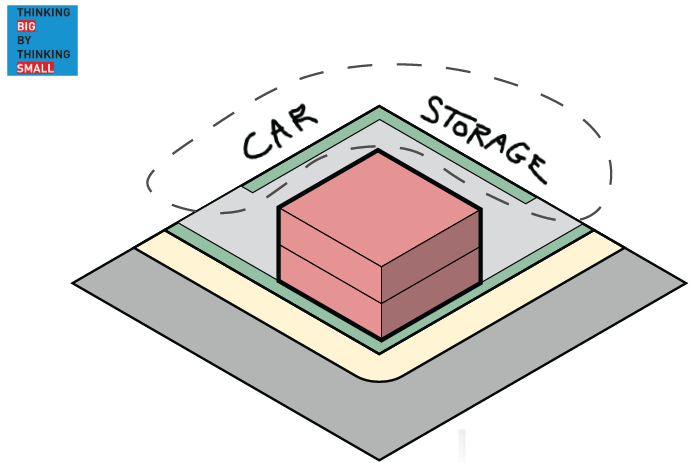
Early Chicago neighborhoods grew along streetcar lines, where transit accessibility encouraged compact development.10 This organic growth pattern was disrupted in the mid-20th century as car-centricism reshaped cities. Parking minimums of municipal codes prioritize automobile access over cheaper pedestrianfriendly design. Building for the car also meant hard construction costs increased as well,11 and often including parking in a development can range from $10k to more than $40k a stall.12 These cost externalities are often pushed on residents, regardless if they drive. More space for cars mean less for development.
4. Consolidation of Development Power + Institutions >>>
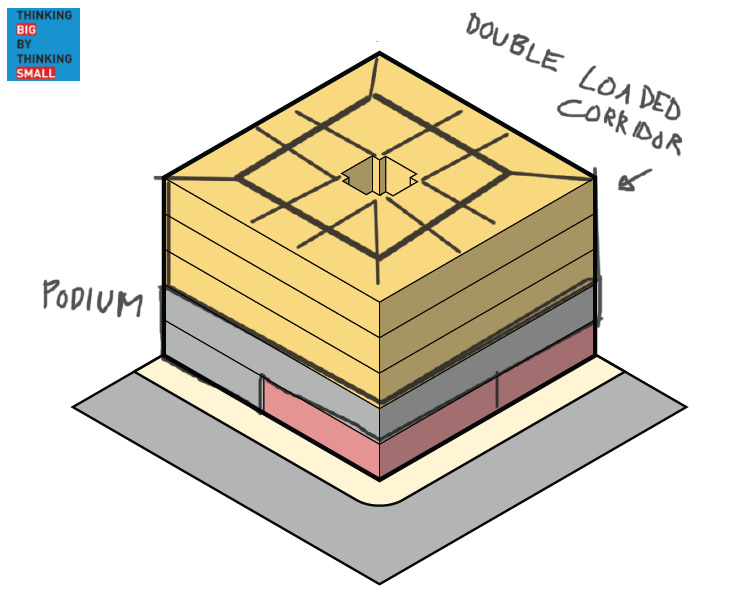
A significant shift has been the loss of local culture around infill development. Historically, neighborhoods were built by a diverse array of small investors and property owners. Today, urban development is dominated by global capital, CDCs, and institutional investors with the necessary equity.13 These entities often prioritize economies of scale, LIHTC requirements,14 and risk management over architectural diversity or community integration, resulting in more monolithic projects. This process typically prefers large tracts that can support required parking and loading rather than small infill parcels15
Together, these forces—rigid regulations, skyrocketing land costs, car-centric infrastructure, and the consolidation of development power—have coalesced to make small-scale, incremental development prohibitively expensive and inaccessible, effectively sidelining middle-class builders and homeowners from shaping the neighborhoods they call home.
Cities are and have continually been byproducts of markets and labor pools, but as land is finite, costs of land will always increase within in-demand labor pools. But as cities are also centers of consumption and services, how are the workers that enable consumption and services able to provide without entry-level places to contribute to the city? Meanwhile, if cities obviously have demand to support density in megaprojects then corporate development patterns have benefits.
But what are those benefits? >>> Follow for Part 2 on How Cities Lost the Art of Incremental Growth next week!
www.chicagocityscape.com/maps/
www.nber.org/system/files/working_papers/w28351/w28351.pdf
https://news.wttw.com/2016/06/01/ask-geoffrey-look-back-chicagos-streetcar-era?utm_source
journalism.columbia.edu/sites/journalism.columbia.edu/files/content/Careers/Lipman/Lipman%20Housing%20Report.pdf
www.secondcityzoning.org/resources/Chicago-Zoning-Ordinance.pdf
Estimate from average land prices in the City of Chicago, aggregated from online sources such as www.loopnet.com/search/land/chicago-il/for-sale/
www.occ.gov/publications-and-resources/publications/comptrollers-handbook/files/commercial-real-estate-lending/pub-ch-commercial-real-estate.pdf
www.fdic.gov/news/financial-institution-letters/2005/fil9005a.html
www.cnu.org/publicsquare/2017/07/31/yes-you-can-finance-mixed-use-development
cnt.org/sites/default/files/publications/CNT_TODInChicagoRegion.pdf
archive.strongtowns.org/journal/2017/1/29/the-cost-of-auto-orientation-rerun
grist.org/wp-content/uploads/2010/07/tca0504.pdf
www.researchgate.net/publication/339739944_The_Rise_of_Institutional_Investors
Harvard’s JointCenter for Housing Studies has alot on this, but this is especially appropriate: www.jchs.harvard.edu/blog/making-apartments-more-affordable-starts-with-understanding-the-costs-of-building-them
www.huduser.gov/publications/pdf/what_happens_lihtc_v2.pdf