


For two decades, America has quietly undergone one of the most consequential demographic shifts in its urban history and we’ve barely begun to talk about what it means for land use, zoning, or the future of “family housing.”
Look at the numbers.
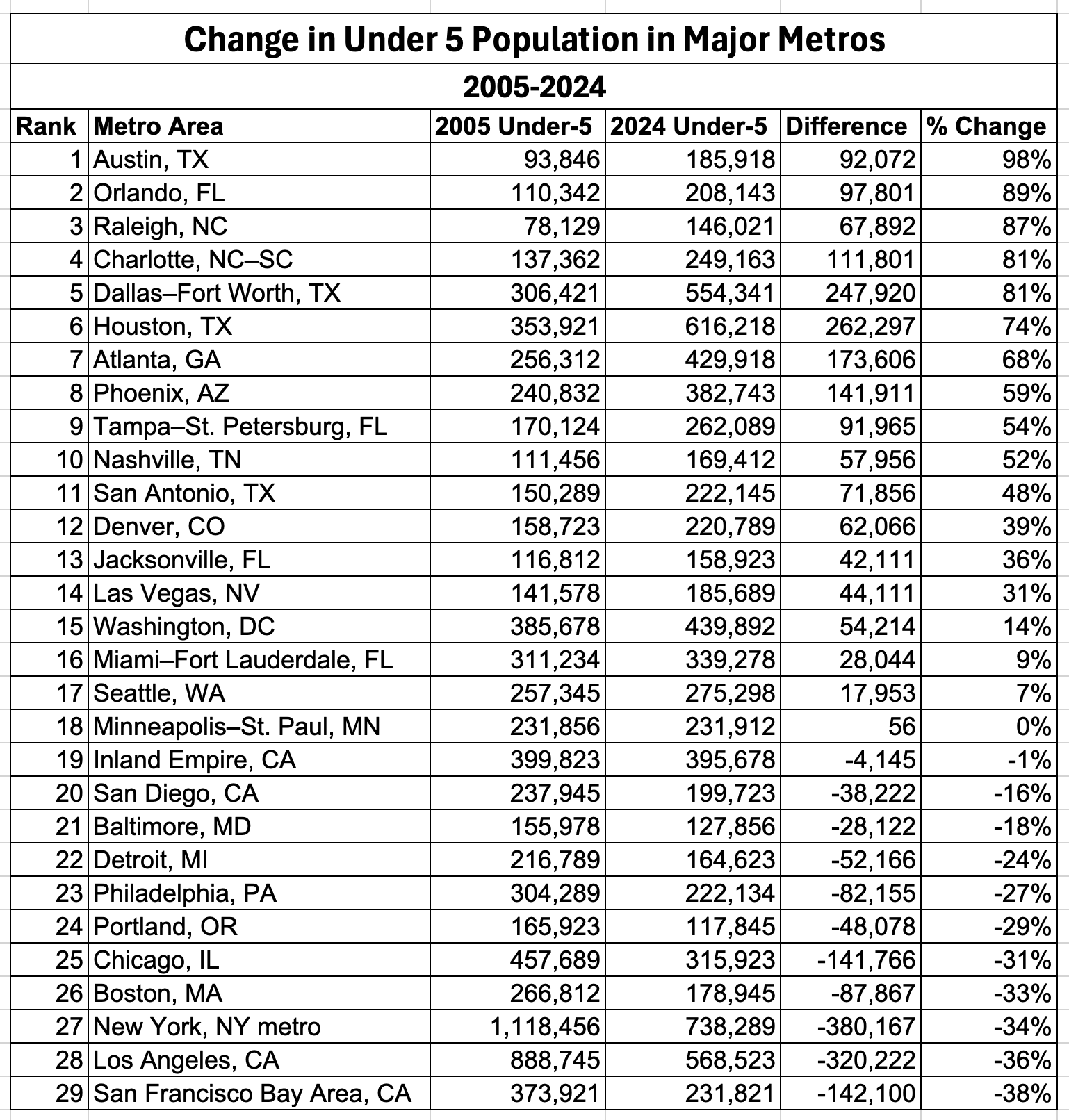
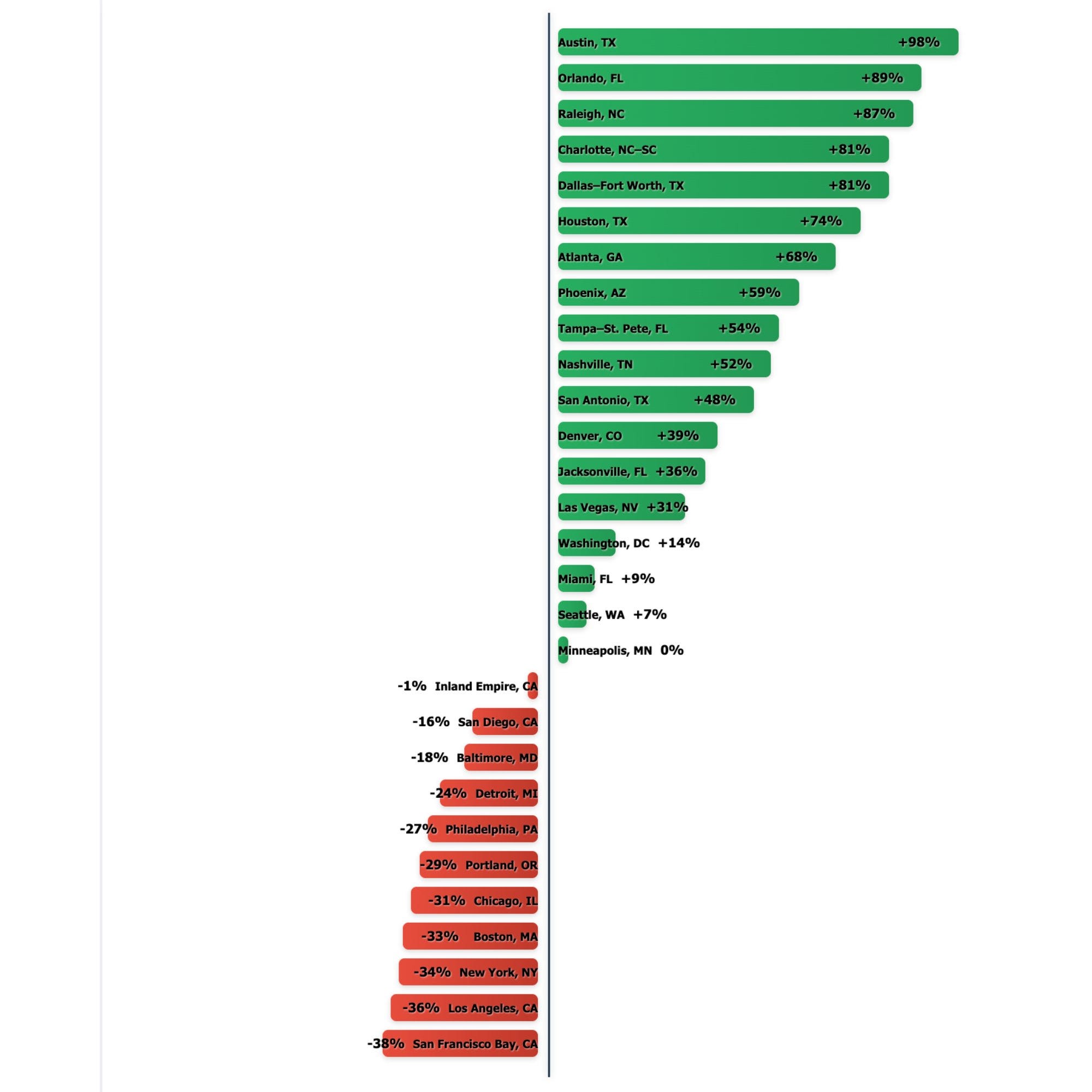
(Charts pulled from Bobby Fijan on X.)
Between 2005 and 2024, the under-five population — tthe clearest indicator of where young families are choosing to live — exploded in Sun Belt metros and collapsed in many coastal and legacy cities. Austin (+98%), Orlando (+89%), Raleigh (+87%), and Charlotte (+81%) surged. Meanwhile, Chicago (–31%), Boston (–33%), New York (–34%), Los Angeles (–36%), and the San Francisco Bay Area (–38%) lost enormous shares of their youngest residents.
Two patterns emerge:
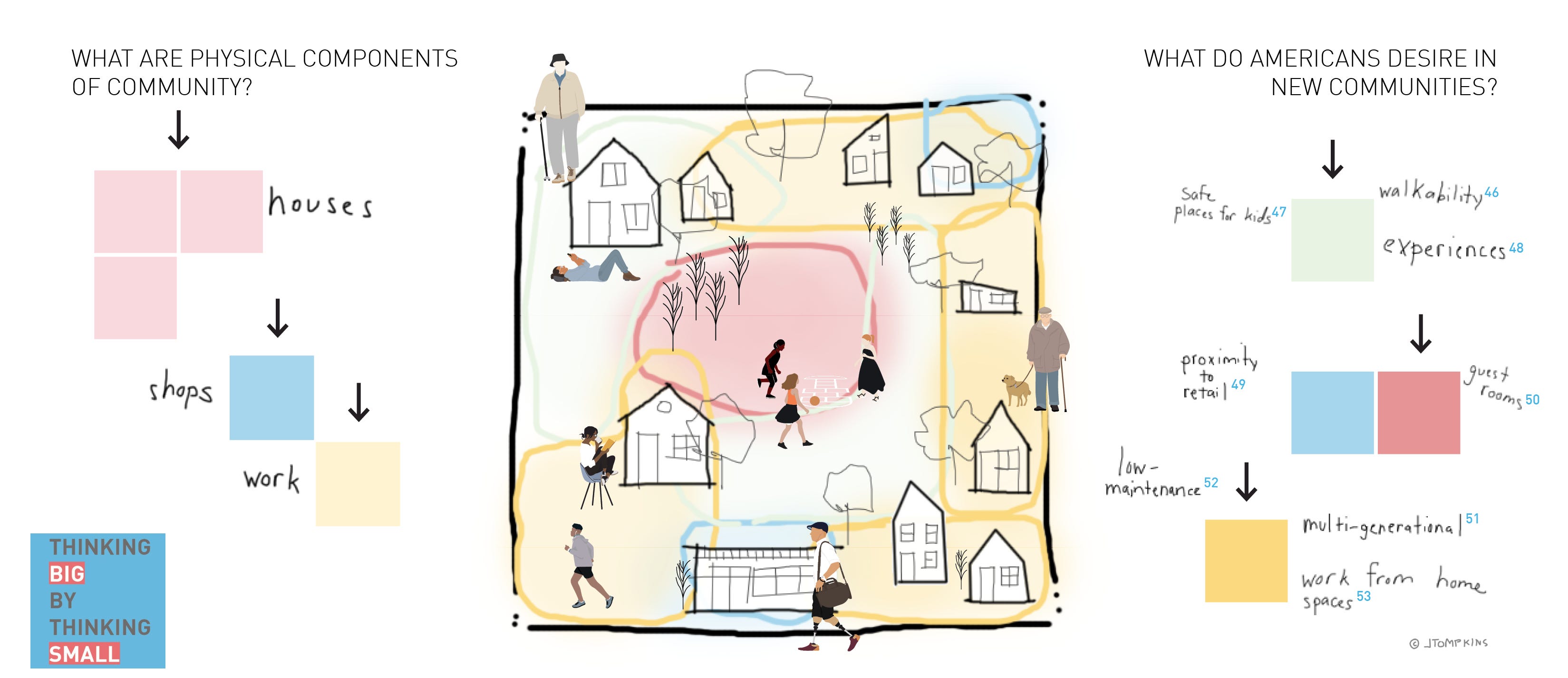
Families with young kids are flocking to places that let them live in attainable housing near schools and green space.
They are leaving places where these basics are too expensive, too rare, or too regulated to build.
This is not a story about “people fleeing cities” or “everyone moving to the Sun Belt.” It is a story about housing types, or, who gets to live near parks, good schools, and work and what forms of housing our zoning codes allow there.
And it leads to a difficult but necessary truth:
The problem isn’t single-family housing.
The problem is that we refuse to evolve what “family housing” looks like.**
Why Cities Are Losing Young Families
Demographers have been documenting this trend for years:
Families are having children later and having fewer children.
The cost of raising those children, especially childcare, has outpaced wages.
In high-cost metros, anything with 3+ bedrooms is priced like a luxury good.
But the structural issue is zoning.
More than 70% of residential land in many U.S. cities is reserved exclusively for single-family homes. And in most places, “single-family” still means:
one household
in one structure
on one lot
with one front door
with no other units allowed
This is an extraordinarily narrow definition of “family housing,” especially given that:
Multigenerational households are at their highest level in more than 50 years (Pew Research Center, 2022).
Immigrant and BIPOC families are significantly more likely to live in multi-generational settings.
One-third of U.S. households now include unrelated adults living together in cooperative or extended arrangements (U.S. Census, 2023).
Families today look different from the nuclear-family image baked into 1950s zoning. Yet we keep planning and regulating as if “family” still means a breadwinner, a stay-at-home parent, two children, and a car for every adult.
Cities are losing young families not because families don’t want urban life, but because urban life rarely offers the types of housing families need.
What Family-Oriented Housing Actually Requires
Look at the metros gaining young children: Austin, Orlando, Raleigh, Charlotte, Dallas, Houston.
These places, despite their flaws, have three things in common:
Flexible zoning that allows many forms of low-rise multifamily
Duplexes, triplexes, 4-plexes, courtyard apartments, ADUs, and townhomes can be built at scale.Abundant 3–4 bedroom options
Family-sized units (whether in single-family homes or multifamily) are attainable to middle-income households.Homes near parks and schools
The essential ingredients of family life (play, nature, education) are within reach.
Meanwhile, in Chicago, Boston, New York, LA, and the Bay Area, the largest declines occur in neighborhoods where multifamily is allowed — bbut family-sized multifamily is not.
Nearly every major apartment developer will tell you some semblance of what I’ve heard repeated ad nauseum:
“We would build more 3- and 4-bedroom units, but zoning makes it impossible and financing makes it irrational.”
Unit-count caps, FAR limits, minimum parking, and density bonuses structured around “number of units” rather than “number of bedrooms” all collide to create a system where developers maximize yield by building studios and one-bedrooms and not the family units cities desperately need.
In other words:
zoning is family-blind.
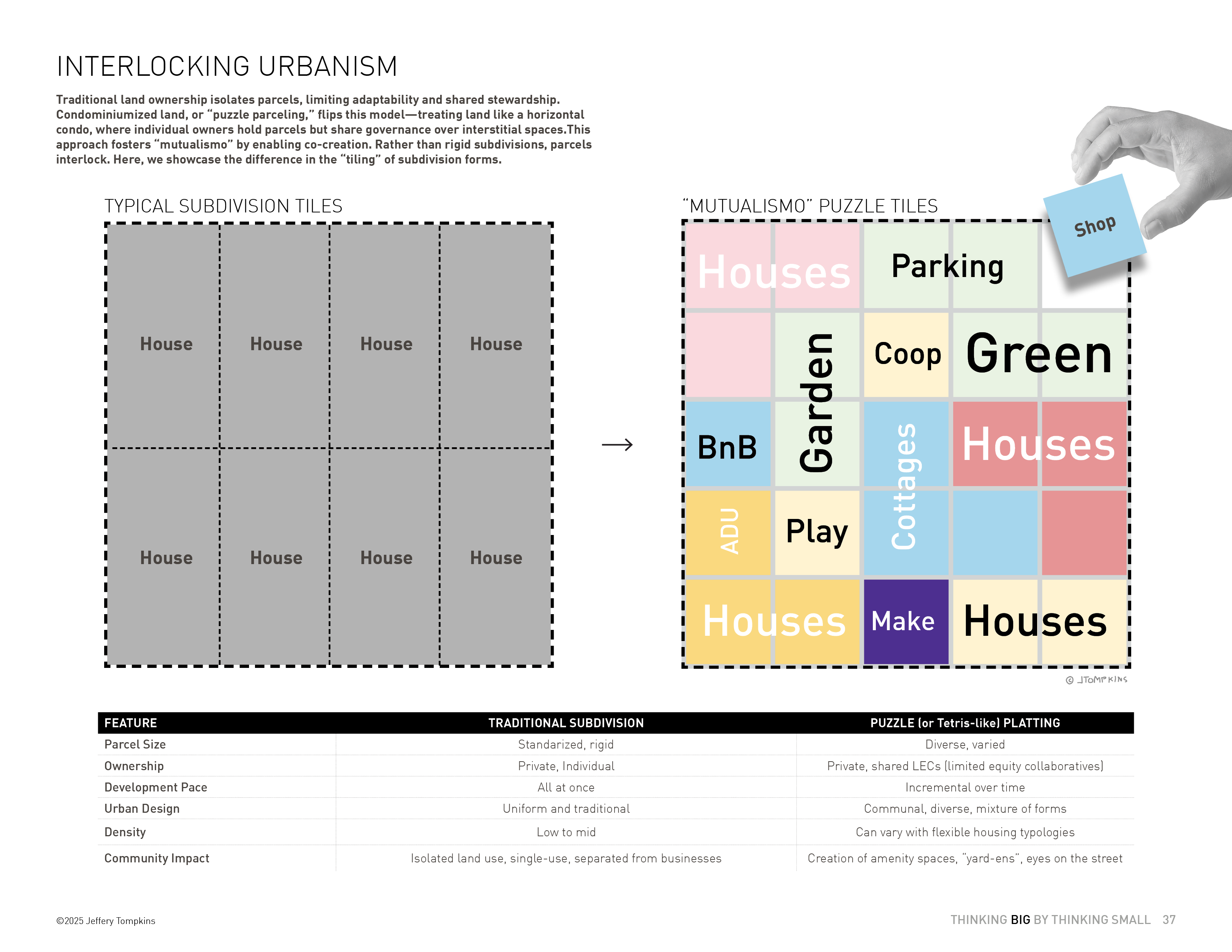
It regulates units, not households; square footage, not family size. Most zoning codes use dwelling-unit caps (“X units per acre”) or minimum lot sizes per unit.
A 3-bedroom unit “uses up” one whole unit allowance even though it houses more people. A studio also counts as one unit.
So developers maximize the unit count by building:
many small units (studios, 1BRs) and fewer large units (3BR/4BRs).
Fewer families.
Stop Arguing About Single-Family Housing. Start Expanding Its Definition.
There is a tired debate in American planning circles: Should we “ban” single-family zoning?
Hell no!
And it’s the wrong question.
Most people want some version of a single-family home: a front door, a yard, privacy, and room for children to grow. But that form can evolve.
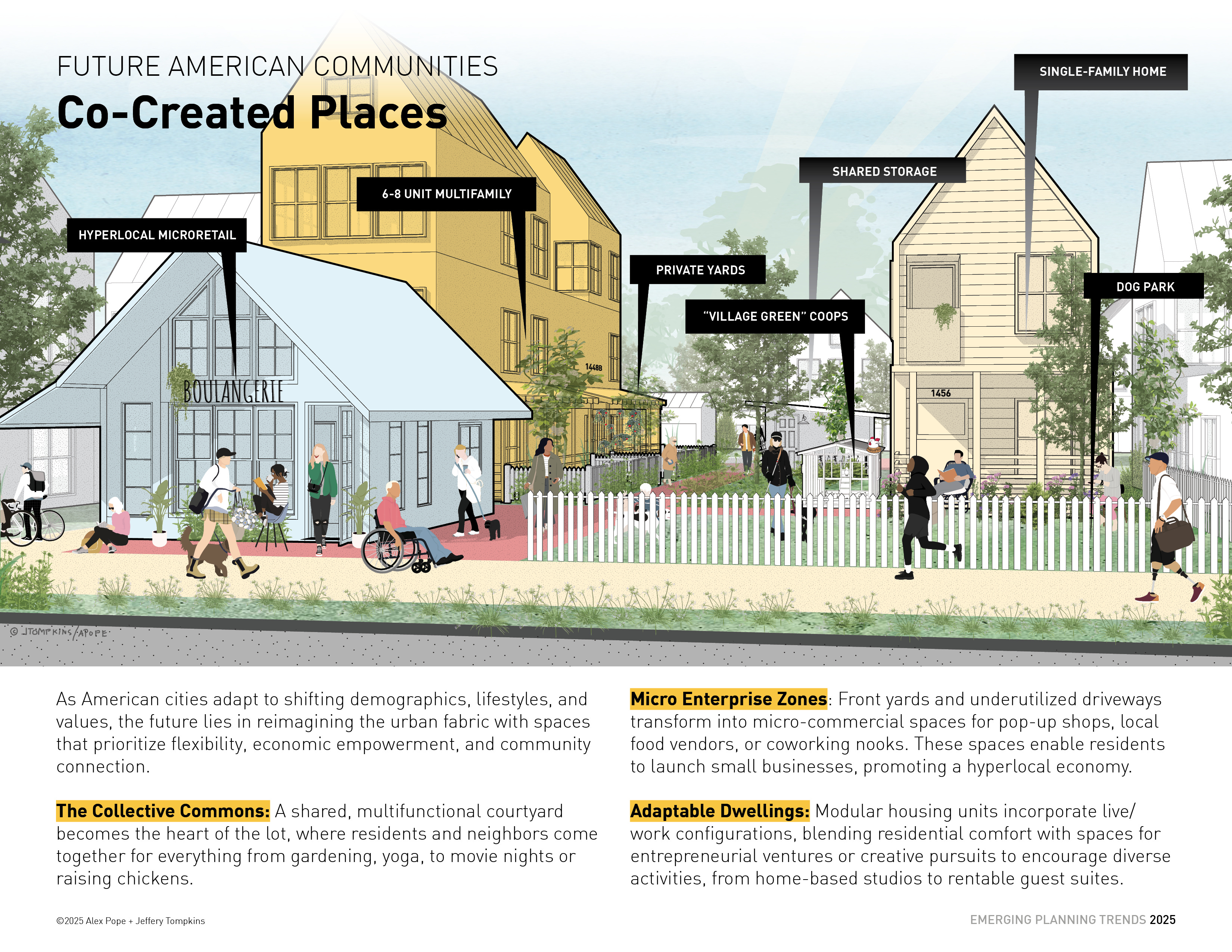
Instead of eliminating single-family zoning entirely, cities can expand the definition of low-rise, family-oriented housing to include:
multigenerational single-family homes with internal lock-off suites
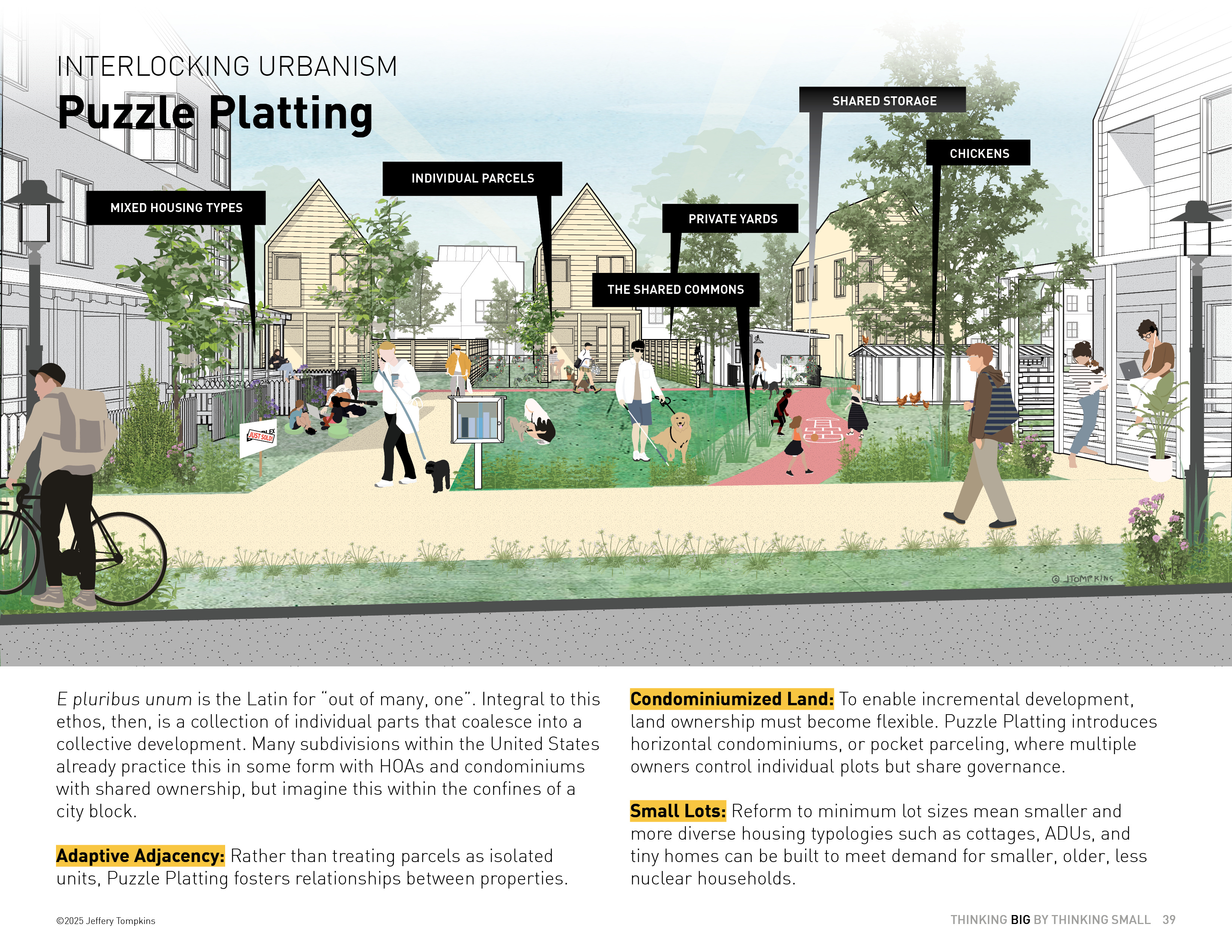
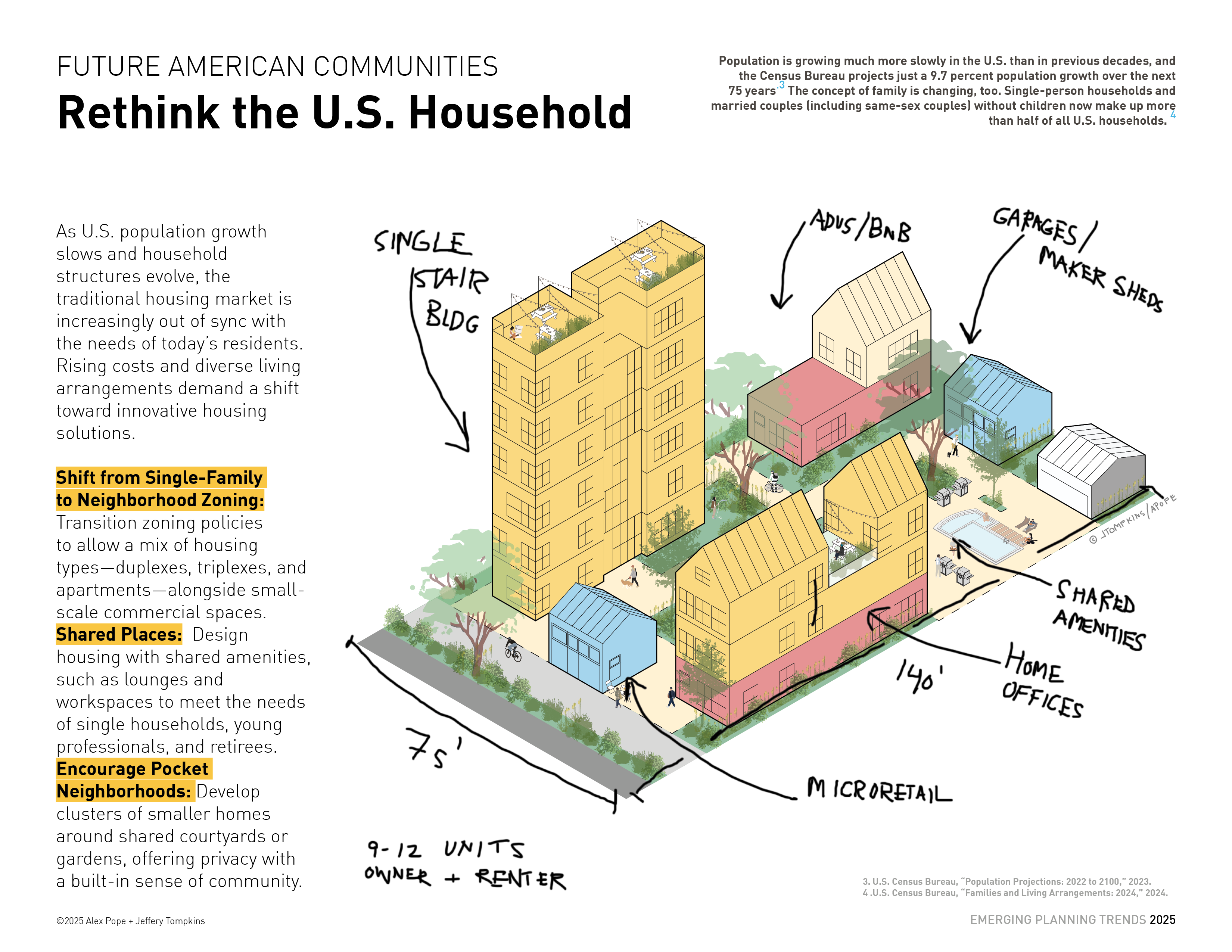
3–4 bedroom townhomes arranged around shared greens
fourplexes with family-sized units
stacked flats designed for families, not investors
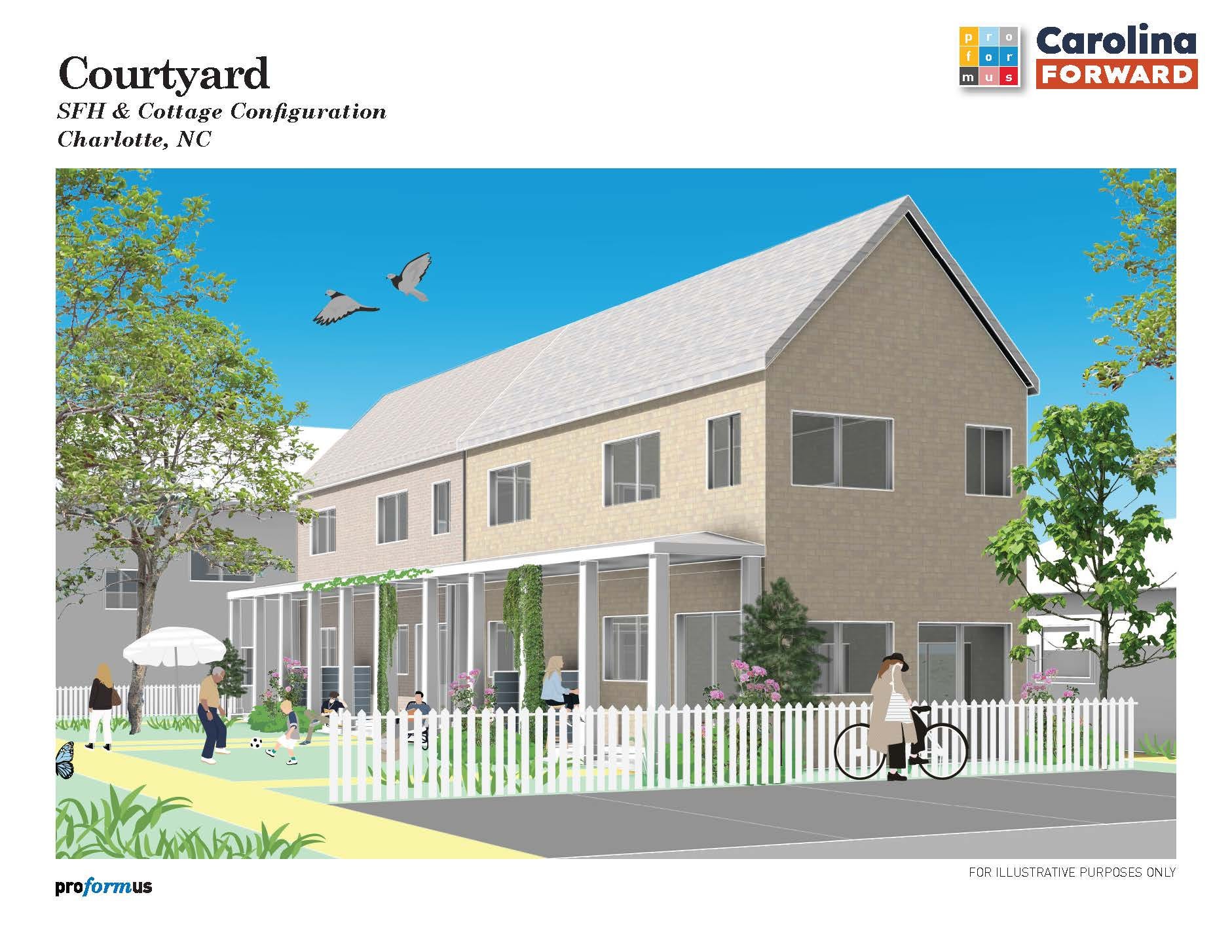
small-scale courtyard housing with play space at the center
co-housing and cooperative family clusters
ADU compounds where grandparents or adult siblings live alongside parents and children
These are still “single-family” in spirit—one household, one extended family, one community—but they break out of the rigid one-unit-per-lot template that excludes so many families today.
This is the core argument:
**Don’t ban the single-family idea.
Reinvent it so more families can participate in it.**
A Practical Solution: Family Housing Overlays Near Schools + Parks
Zoning reform doesn’t have to be ideological. It can be strategic, targeted, and extremely practical.
Here’s a path forward:
Create Family Housing Overlays (FHOs) within ½ mile of schools and parks.
For cities looking to encourage more families, here are six fixes as part of a Family-Housing Overlay. These overlays would:
1. Allow multifamily housing only if units include 3–4 bedrooms
No more buildings full of studios next to elementary schools.
Require developers to meet a minimum number of family-oriented units.
2. Permit multigenerational single-family housing by right
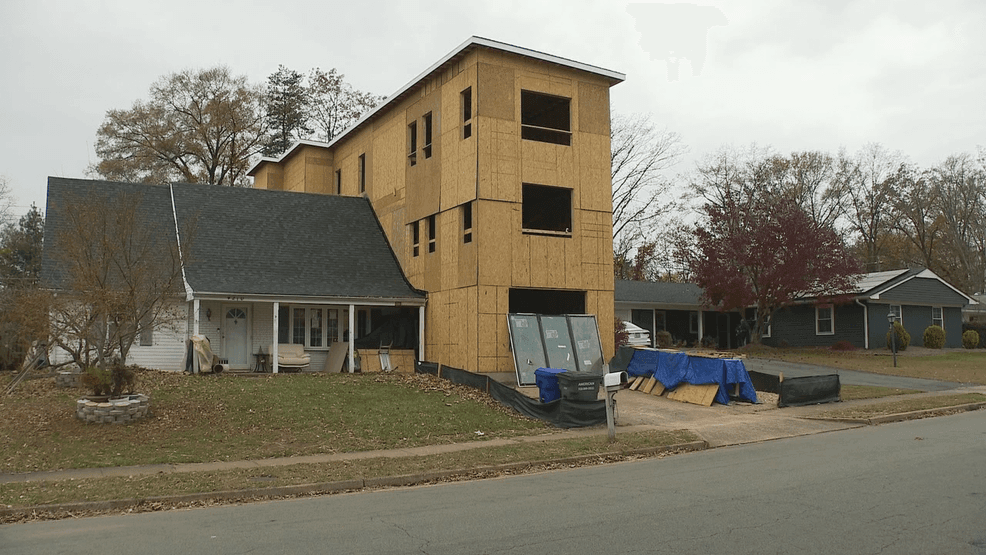
Internal lock-offs, attached ADUs, and dual-entry configurations should be legal without variances. We should stop demonizing people who decide to expand their property to include multiple members of their familia - allowing families to upzone their own property means less demand pressure in the adjacent neighborhood and corrals the chaos, so to say.
3. Replace unit-count caps with “bedroom caps” or FAR-based regulation
This rewards developers for building homes, not microunits.
4. Reduce or eliminate parking minimums for family-sized units
Families with young children often own fewer cars than assumed, especially near schools.
5. Encourage courtyard-oriented designs
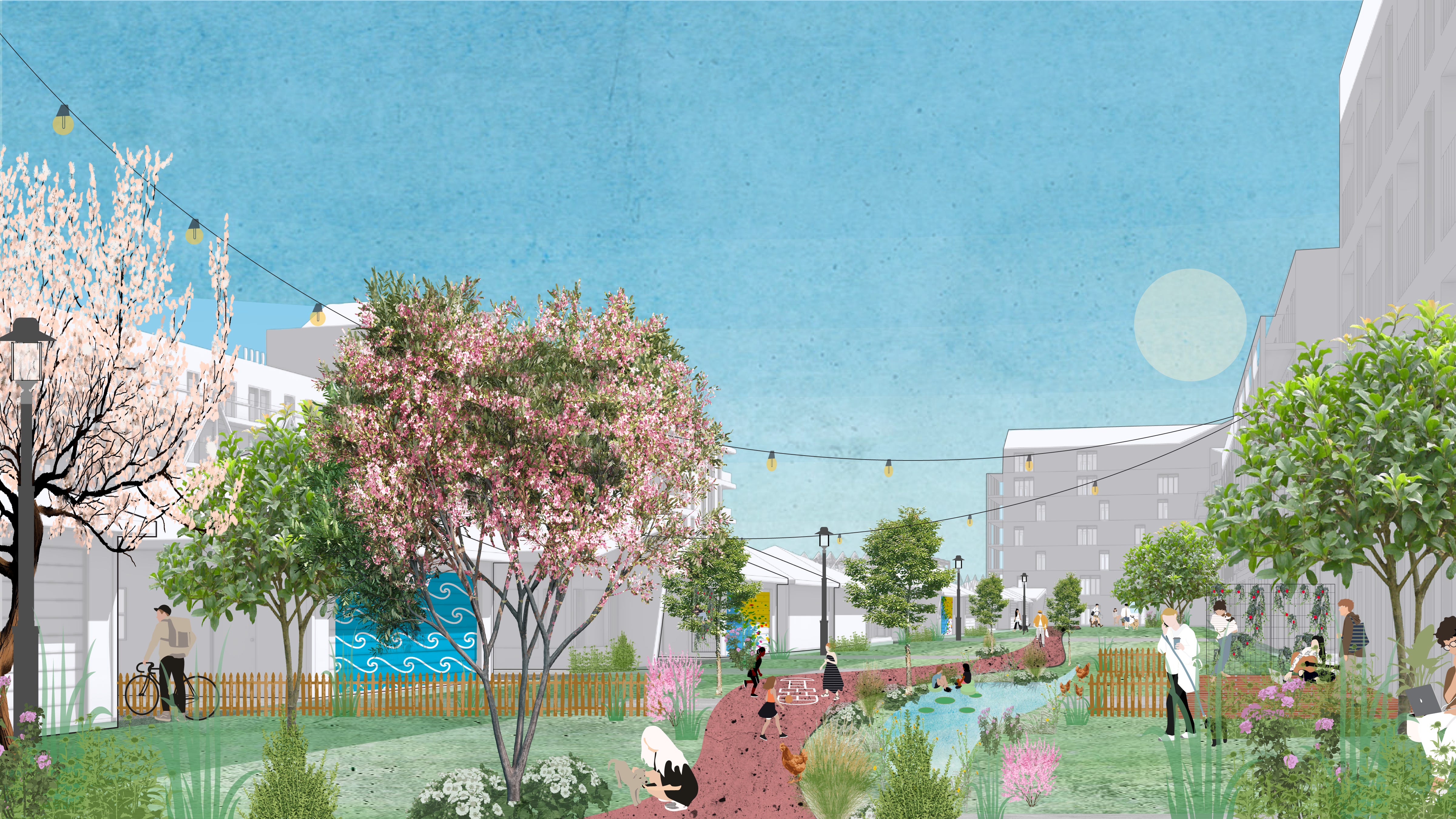
Shared greens, play areas, and cluster housing create safety and social fabric. For more on courtyard urbanism, I suggest a follow to the one and only Alicia Pederson.
6. Allow subdivision of large single-family lots into “family clusters”
Think: three units around a shared yard rather than one oversized house.
This approach respects neighborhood character while expanding choice. It supports schools by adding children. It increases housing supply without resorting to mid-rise construction. And it aligns with demographic reality: families are changing, and housing must change with them.
Why This Works
Evidence from cities around the world is clear:
Vancouver legalized “gentle density,” tripling its family-sized housing supply while preserving neighborhood form (City of Vancouver Housing Report, 2019).
Portland’s Residential Infill Project increased production of 3+ bedroom units after eliminating unit-count penalties (Sightline Institute, 2022).
Minneapolis’s 2040 Plan shows missing-middle housing has stabilized enrollment declines in several school clusters.
Tokyo, the fastest-growing family city in the developed world—allows small-scale multifamily everywhere (Shin & Kawaguchi, 2020).
The lesson is simple:
Cities that allow multiple forms of family housing keep families.
Cities that restrict it lose them.
If Cities Want Families, They Must Make Room for Them
The next generation of urban policy should not be about picking sides in a culture war over single-family zoning.
It should be about asking one clear question:
Can a working- or middle-class family with young kids realistically live in this neighborhood?
Historian Yuval Harari, in Sapiens, reminds us that humanity’s superpower is our ability to create intersubjective realities, shared ideas that exist only because we collectively believe in them. Corporations, nations, and currencies have no physical bodies; they are abstractions we imbue with meaning. A dollar bill, materially worthless, becomes valuable only through a mutually agreed-upon fiction. Because humans can ascribe value to ideas, we build mathematical systems, economies, governments, and ultimately, cities.
Cities themselves are physical manifestations of these shared constructs , agglomerations of people who make meaning together. Planning, then, is not merely arranging buildings but curating the conditions that allow ideas, relationships, culture, and purpose to flourish. If we want better cities, we must be intentional about the intersubjective realities we design into law.
This is where the concept of “single family” demands reexamination.
The term is not a natural law. It’s a regulatory fiction — an idea we’ve chosen to define narrowly, historically tied to a mid-20th-century vision of the nuclear household. But what if we understood “family” in its older, broader philosophical sense, more Godfather than zoning code? In that world, a familia includes blood ties, marriage, business partnerships, mutual care networks, chosen family, and the people with whom one shares daily life and responsibilities.
Under this more human definition, we’d recognize that co-housing with bandmates, roommates who become lifelong friends, multi-generational households, siblings living together, and even small cooperative living groups are all, in essence, single-family arrangements. They reflect real human behavior and not the narrow, idealized template we’ve regulated for.
If cities are places where ideas and relationships take form, then clinging to a brittle, outdated definition of “single family” limits how people can live, support one another, and create meaning together. Expanding the definition doesn’t abolish the idea, it just brings it back in line with human reality. It aligns our regulations with the way people already form families in practice, and with the intersubjective truth that “family” is something we create together, not something prescribed by midcentury zoning language.
In short: because cities are built from the shared ideas we choose to believe in, we should choose ideas that support human flourishing. And rethinking what “single family” means is a critical step toward that.
If the answer is no, it is the zoning code—not the family—that needs to change.
The future of American cities depends on this shift. Families anchor neighborhoods, stabilize schools, and build intergenerational wealth. They keep parks full, sidewalks lively, and civic life meaningful.
We don’t need to eliminate single-family housing.
We need to expand its possibilities so it can meet the needs of the families who are still choosing cities, still building communities, and still trying to make place.
This reminds me of a book called "Urbanism for a Difficult Future" by Korkut Onaran. His ideas of iterative family compounds are really important for adding flexibility. I hope we see more Americans move towards this model, as it well help strengthen family and community bonds. I wonder how urban planners at the city level feel about this.